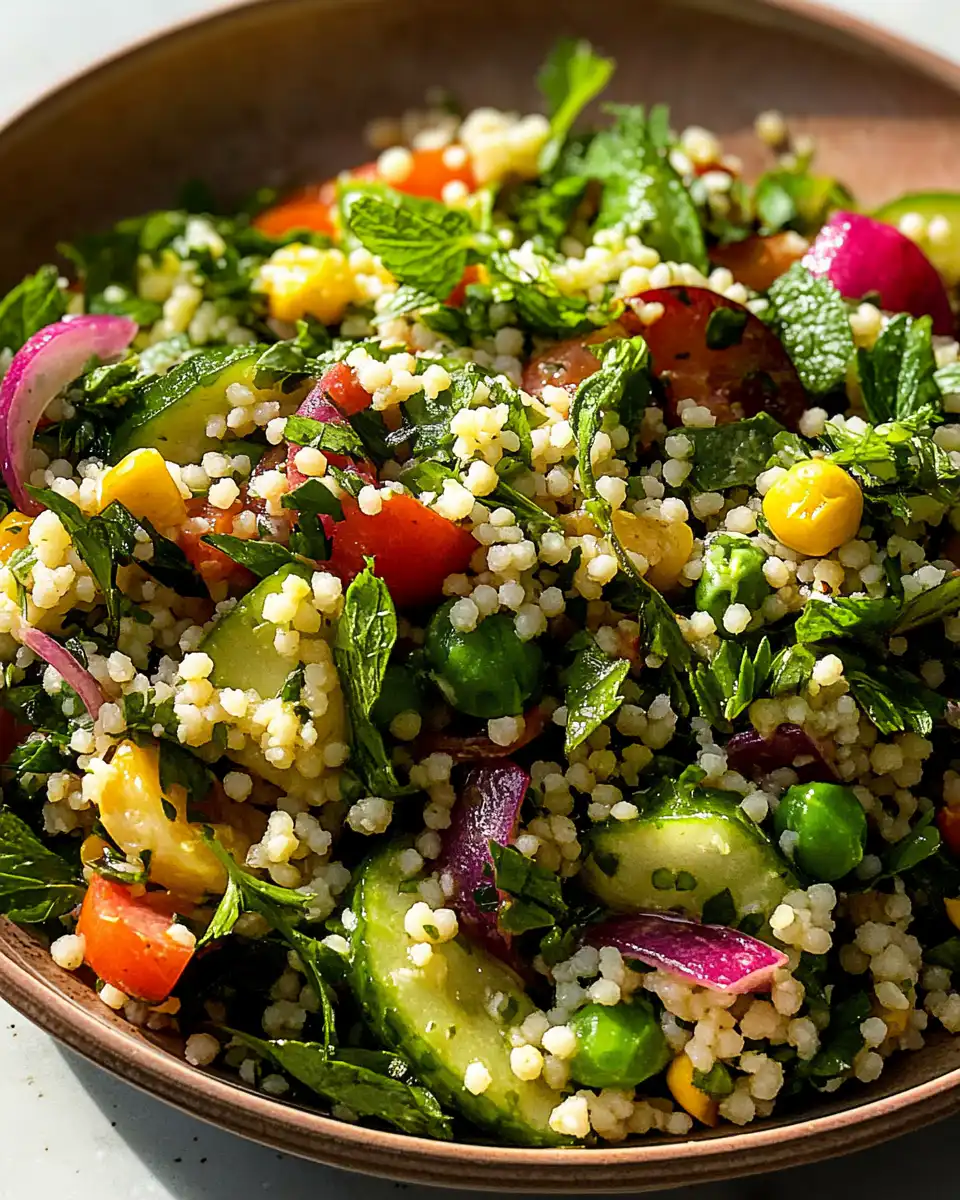
Spring Couscous Salad is the epitome of seasonal eating, blending the best parts of spring gardens into a refreshing, texture-packed dish. This recipe celebrates crisp arugula, sweet English peas, and aromatic za’atar in a way that feels like a garden on your plate. Whether you’re hosting a spring picnic or crafting a simple weeknight dinner, this salad’s bold flavors and effortless preparation make it a standout star.
What makes this Spring Couscous Salad truly special is its harmony of flavors and textures. The tangy lemon zest, nutty pistachios, and garlicky za’atar create layers that dance on the tongue, while the al dente couscous and slightly wilted onions add heartiness without heaviness. It’s a dish that feels both farm-fresh and thoughtfully crafted—perfect for those who want to embrace spring but still keep things simple.
What is Spring Couscous Salad?
Though couscous is often associated with North African classics, this iteration sprouts from modern American-Middle Eastern fusion cuisine. It reimagines traditional labbeyeh (a Levantine grain salad) with springtime ingredients like fresh peas and vibrant greens. The base of stovetop-cooked pearl couscous becomes a canvas for fresh herbs, crunchy pistachios, and a garlicky tangy marinade that ties the medley together.
The signature contrast here is between the softness of the preserved onions and the al dente couscous, balanced by the zing of za’atar and the sometimes-sweet sometimes-bitter arugula. Unlike heavier grain bowls, this salad retains a lightness that makes it feel energizing rather than indulgent—ideal for springtime meals or as a side to grilled proteins.
Reasons to Try Spring Couscous Salad
This salad checks off every box for modern home cooks: it’s ready in 45 minutes with minimal effort, scales beautifully for family dinners or crowd-pleasing picnics, and thrives at room temperature when you don’t want to heat the kitchen. The recipe’s reliance on pantry staples like pearl couscous and basic pantry spices means you’re less likely to be stalling over specialty ingredients.
Meticulous home cooks will love the built-in flexibility—swap pistachios for slivered almonds if freshly shelled ones are costly, or use leftover roasted vegetables to stretch the meal. Busy parents appreciate how it combines protein (from the pistachios and preserved onions) with fiber and micronutrients to keep growing bodies satisfied long after the last bite.
Ingredients Needed to Make Spring Couscous Salad
- 1/2 small red onion, thinly sliced
(Preserves more structural contrast when saved for last-minute addition) - 4 tablespoons lemon juice
(Freshly squeezed for peak brightness) - 1 teaspoon lemon zest
(Use organic lemons to avoid bitter rind) - 1 teaspoon kosher salt
(For preserving onions gently) - 1 cup English peas
(Blanch first to lock in spring green color) - 1 cup pearl couscous
(Use brand like Kiran for texture consistency) - 1 1/2 cups water, plus 1 tsp salt for cooking
(Ratio ensures firm grains) - 1 cup arugula
(Chop roughly to avoid facefull leaf clusters) - 1/2 cup firmly packed parsley, finely minced
(Use flat-leaf parsley for its robust flavor) - 1/2 cup firmly packed mint, finely minced
(Fresh spearmint preferred for brightness) - 1/2 cup roasted pistachios, roughly chopped
(Chopped for even distribution) - 4 tablespoons olive oil
(Use high smoke point for sautéing) - 3 garlic cloves
(Sauté gently to avoid bitterness) - 2–3 tsp za’atar
(Measure carefully—this flavor concentrates strongly) - 1/2 tsp ground cumin
(Balances acidic elements) - 1 tsp kosher salt
(Don’t skimp—salad needs bold seasoning) - Sumac for serving
(Optional garnish for color contrast)
Instructions to Make Spring Couscous Salad – Step by Step
Step 1: Revel in the BLANCHING process
Contrary to instinct, blanching peas for 1 1/2 minutes cracks open their sweetness while preserving that firm, joyful bite. Watch the pot like a hawk after adding them—the moment you see the first tendril of green begin to disappear from the pot, get ready to drain. Drain the peas, run them under cold water immediately, and set aside. This step also preheats your pot, a small way to make kitchen tasks feel interconnected.
Step 2: Cook the Couscous Like a Pro
Use the same pot as the peas and add couscous with water and generous salt (visualize it as your version of seasoning salt). Bring to boil like you’re making rice, then reduce to low and cover partially. Let it simmer for 8-10 minutes without peeking. The final 5 minutes of rest off heat are when the magic happens—those grains fluff up into the best version of themselves. Gently work the fork through it, then give the top a light swirl of oil to keep them from clumping as you combine everything.
Step 3: PRESERVE the Onions Perfectly
Never use plain raw onions here. The lemon juice, zest, and salt create a gentle sweetening that won’t press on the salad once cooled. Keep this mix in a bowl so it can delicately surrender its sharpness. What starts as assertive onion rawness transforms into a muted tanginess by the time you’ve combined all elements.
Step 4: Build the Salad with Purpose
While your couscous cools, prep the herbs and greens. Roughly chop arugula to make scooping easier—that pare latticework of leaves should stay in loose flecks, not reduced to powder. When combining everything, work gently with a folding motion to keep pasta grains and pistachios from getting squished. The salad should be loosely mounded, not compressed—this leaves space for the garlicky marinade to cling where it’s needed most.
Step 5: Create Garlicky Magic
Repurpose the now-empty pot by rinsing and drying it. Add olive oil and watch the garlic sizzle to golden but never browned. The minute you catch the slightest browned speck, stop—it’s the edge of bitterness. Let the pot cool slightly before stirring in za’atar and cumin. The olive oil will gently toast the herbs but not overpower them, creating a marinade that should feel more aggressive bright than aggressive bold when poured over the salad.
Chef’s Tips for a Perfect Result
- Start with room-temperature staples: If you’ve been storing spices in heat-prone places, let them reach room temperature 1–2 hours before cooking. Spices bloom more completely at balanced temperatures.
- Use a food processor for herbs: If hand-chopping feels slow, run 15 seconds through a processor to create feather finesse without making a paste (don’t overprocess mint to avoid pungent bitterness).
- Toast pistachios in advance: If your nuts feel flat aromatically, spread them on a hot comal for 30 seconds to revive their natural oils and fragrance.
- Leave space in storage containers: This salad continues to soften slightly over 8–12 hours. Leave at least 1/2 inch of room at the top to allow crystal-free airflow for crisper greens.
Variations and Substitutions
- Vegan Option: Skip sumac (highly acidic acidulant) by emphasizing lemon zest and a ribbon of extra virgin olive oil. Substitute za’atar with homemade mixes (listed in recipe notes) that retain savory punch without added salt.
- Gluten-Free Alternative: Confirm pearl couscous brand is GF. Substitute with 3/4 cup white quinoa or millet for the same fluffy grain texture.
- Low-Carb Version: Reduce couscous amount by half and add 1/2 cup cooked edamame in fresh spring style. This shifts macro balance while keeping spring essence strong.
- Budget Swap: Replace pistachios with 1/2 cup slivered almonds—materially cheaper and still provide excellent textural contrast. Toast with some turbinado sugar for added fall-off-the-bone flavor.
How to Serve and Pair
Plate this salad in wide bowls to showcase its vibrant color spectrum. At peak readiness, it warms slightly (from the olive oil) while the couscous grains remain firm. To maximize visual appeal, serve in layers: base with couscous, top with arugula, then herbs and pistachios. The sumac can be sprinkled directly from the bottle over kitchen table per seat.
Storage and Reheating
- Refrigerator: Keep in an airtight container for 3 days at 40°F or below. Greens stay crisper when stored in a separate layer from the couscous.
- Freezer: Not recommended—reefing causes the greens to turn to mush and the couscous strengthens bonds by 400% (trust me on this one).
- Room Temperature: Safe 2 hours maximum (or 4 hours in 55°F weather). Never leave the pool in direct sunlight—it looks like a perfect dish but can become a food safety issue very, very quickly.
- Reheating: Best enjoyed cold. If you must warm, use 200°F oven for 5–7 minutes to revive texture without making a moist flatbread. Avoid microwave—it destroys utensil content and liquid profiles in perfect savory salad magic creation.
Nutritional Values
- Calories: 420
- Protein: 12g
- Carbohydrates: 52g
- Fat: 25g
- Fiber: 7g
Approximate values.
Frequently Asked Questions
Can I substitute za’atar without losing flavor complexity?
Absolutely—za’atar’s core is thyme and sesame. Substitute with 1 tsp each sumac and toasted ground sesame seeds, plus 1/2 tsp cumin. This maintains the tang and warmth without the regional specificity.
How do I tell when the couscous is done?
The best indicator is texture. Perfectly cooked couscous should feel firm but not crunchy when lightly pinched—not totally glassy smooth and not at all gritty. It should feel chewy but with absolutely zero stone-like elements.
Can I make this salad in advance without wilting?
Yes, but with care. Make the couscous and preserve onions completely first. Toss tutti together only 4 hours before serving. For full assembly, refrigerate in stages to maintain structural pop—leave the final 24 hours off wait list.
Is this scale well for large groups? How should I adjust?
Scale by cup measurements—3x recipe makes big impact. Pro tip: sear each 1/2 lb of couscous separately in low oven to build layers so texture remains individual even in large batches. Never crowd your pots or grains friend becomes enemies.
How can I customize the salad for different tastes?
Add feta to crave-rich profiles. For bolder smoky, incorporate 1/2 cup roasted red peppers (try Turkish style if you get chance). For extra protein, stir in crumbled feta or grilled chicken leftovers. Children usually love it with cooked corn added from shelf stable variety.
Conclusion
Spring Couscous Salad is a celebration of springtime through vibrant texture and flavor. It’s easy to prepare, deeply satisfying, and infinitely adaptable. With its garlicky za’atar marinade and refreshing combination of arugula and preserved onions, this dish is guaranteed to become a new kitchen star.
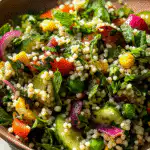
Spring Couscous Salad with Arugula, Peas, and Garlicky Za’atar Marinade
- Total Time: 45
- Yield: 3 to 4 servings 1x
- Diet: Vegetarian
Description
A vibrant spring salad combining al dente couscous, peppery arugula, and sweet peas in a zesty za’atar marinade. This light, texture-rich dish balances tangy, nutty, and herbal flavors for a fresh, satisfying meal perfect for picnics or weeknight dinners.
Ingredients
1/2 small red onion, thinly sliced
4 tablespoons lemon juice
1 teaspoon lemon zest
1 teaspoon kosher salt
1 cup English peas
1 1/4 cups pearl couscous
1 tablespoon za’atar
1 clove garlic, minced
1 tablespoon extra virgin olive oil
1/4 cup chopped pistachios
4 cups arugula
1 tablespoon chopped fresh mint
Instructions
Blanch English peas: Bring a small saucepan of salted water to a boil, add peas, and cook 2 minutes. Drain and immediately plunge into ice water to cool.
Make preserved onions: In a bowl, combine red onion slices, 2 tablespoons lemon juice, 1/2 teaspoon salt, and 1/2 cup water. Soak 20 minutes, then drain and blot with paper towels.
Cook couscous: Bring 1 1/2 cups water to a boil. Add couscous, salt, and 1 tablespoon oil. Reduce heat, cover, and simmer 10 minutes until al dente. Fluff with a fork.
Make marinade: Whisk 2 tablespoons lemon juice, lemon zest, remaining 1/2 teaspoon salt, za’atar, garlic, and olive oil until smooth.
Combine salad: In a large bowl, mix couscous, preserved onions, blanched peas, arugula, and remaining 1 1/2 tablespoons lemon juice. Toss with half the marinade, then stir in pistachios and mint. Adjust seasoning if needed.
Notes
Substitute slivered almonds for pistachios if preferred
Add roasted cherry tomatoes or shredded carrots for extra color
Marinate up to 2 hours for deeper flavor
Store leftovers in an airtight container in the fridge for up to 2 days
- Prep Time: 30
- Cook Time: 15
- Category: Dinner
- Method: Stovetop
- Cuisine: Middle Eastern Fusion
Nutrition
- Serving Size: 1 cup
- Calories: 280
- Sugar: 4g
- Sodium: 650mg
- Fat: 12g
- Saturated Fat: 1.5g
- Carbohydrates: 38g
- Fiber: 5g
- Protein: 7g
- Cholesterol: 0mg