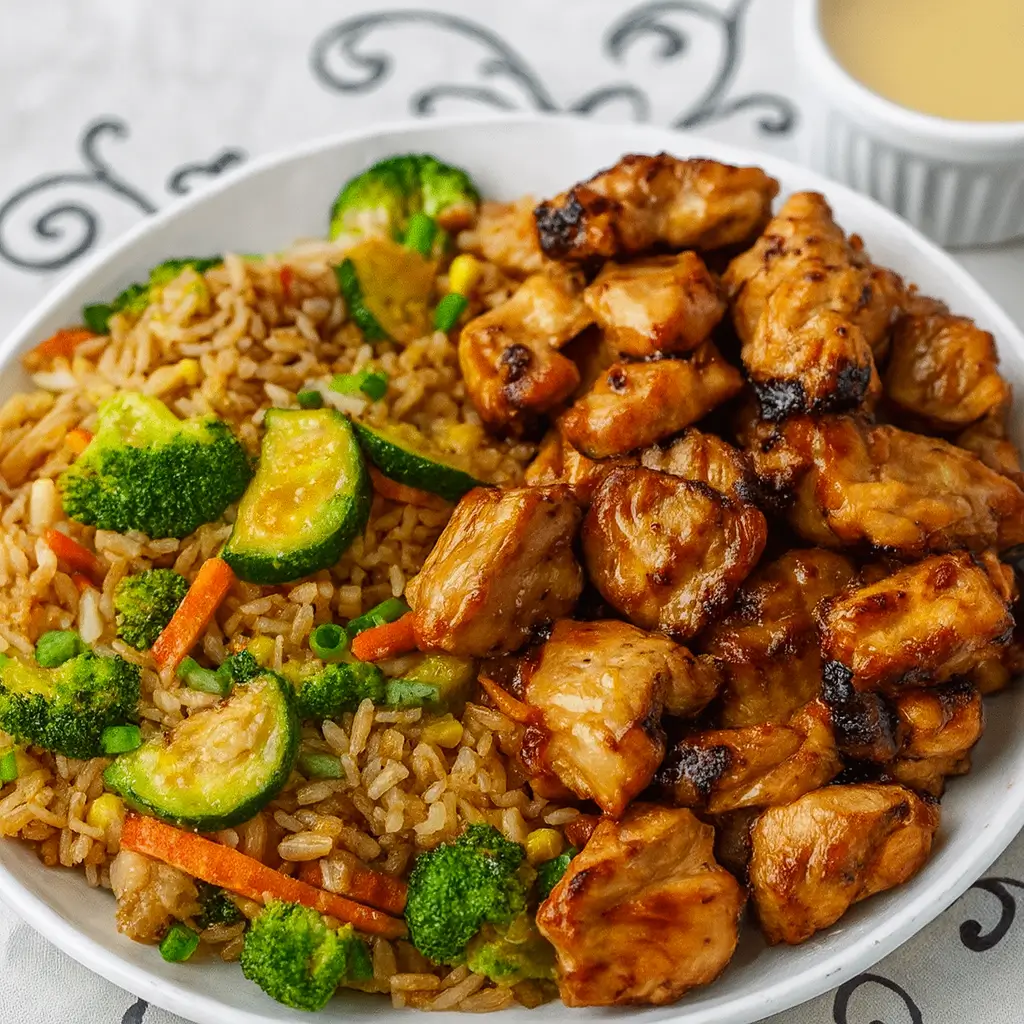
Hibachi Chicken is your new go-to when you’re tired of playing dinner roulette with picky eaters, tight schedules, and yet another night of takeout regret. This easy Hibachi Chicken recipe brings the sizzle and flavor of your favorite Japanese steakhouse right to your kitchen—no onion volcano required. Tender chicken, crisp-tender veggies, buttery garlic fried rice, and that dreamy mustard sauce? Oh, it’s happening. And the best part? Everything cooks in one skillet.
So yes, fewer dishes, more flavor, and an at-home dinner that somehow feels like a little escape. Whether it’s Monday madness or Friday “let’s not cook but still eat well” vibes, Hibachi Chicken is the kind of no-fuss, high-reward meal that’s just downright fun to make.
Table of Contents
What is Hibachi Chicken?
Hibachi Chicken is a Japanese-American classic that typically stars on the menu at popular teppanyaki-style restaurants, where food is cooked on a big, hot flat grill in front of guests. It’s all about quick-cooking techniques, bold umami flavors, and a little dinner theater flair. But guess what? You can totally recreate that experience without needing a showy chef or a tabletop grill.
This homemade version keeps the chicken juicy with a marinade of soy sauce, sesame oil, garlic, hoisin, and ginger, then cooks it up hot and fast. Add a simple mustard dipping sauce (that zingy magic!), sautéed veggies, and garlic fried rice, and you’ve got the full experience at home. It’s everything you love about dining out—minus the bill and awkward small talk with strangers.
Reasons to Try Hibachi Chicken
Okay, let’s be honest. Hibachi Chicken checks every box. First, it’s fast. Like, 30-minutes-or-less fast (especially if you’ve got day-old rice ready to go). Second, it’s family-approved—because when buttery garlic rice and crispy chicken hit the table, even the pickiest eaters get quiet. Third, it’s customizable.
Don’t like mushrooms? Skip ‘em. Want to add shrimp? Go wild. Lastly, it just feels a little special without being complicated. Whether you’re cooking for a crowd or just trying to get through Tuesday night, this dish delivers. Plus, it’s a great way to sneak in veggies and turn that leftover rice into something seriously craveable. If you love meals like Easy Beef Stir Fry with Vegetables or Garlic Sesame Noodles, Hibachi Chicken is going to be your next obsession.
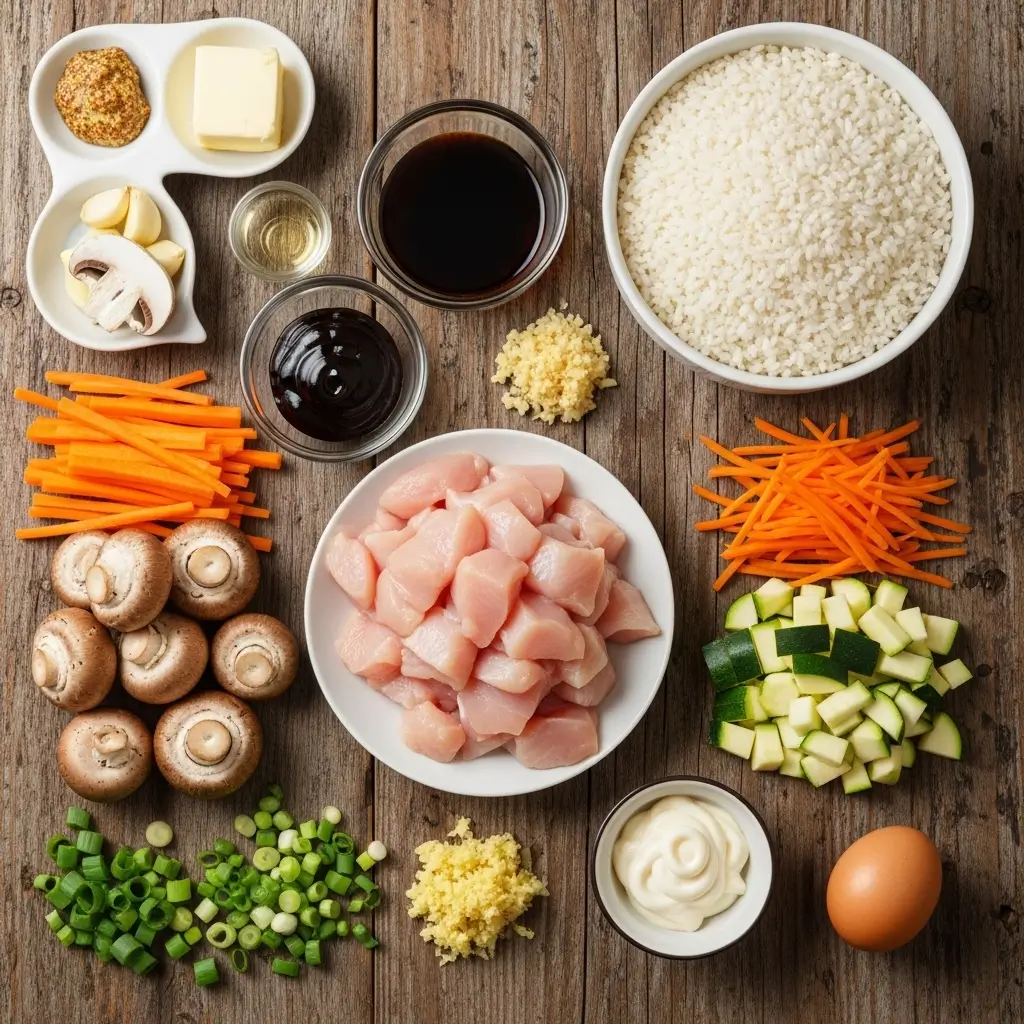
Ingredients Needed to Make Hibachi Chicken
For the Chicken:
- 1 lb boneless, skinless chicken breasts, diced
- 1 tbsp sesame oil
- 2 tbsp soy sauce
- 2 tbsp hoisin sauce
- 4 cloves garlic, minced
- 1 tsp fresh ginger, minced
For the Mustard Sauce:
- ½ cup light mayo
- 1 tbsp soy sauce
- 1 tbsp rice vinegar
- 1 tbsp Dijon mustard
For the Sautéed Vegetables:
- 1 tbsp olive oil
- 1 carrot, thinly sliced
- 1 cup mushrooms, halved
- 1 yellow onion, chopped
- 1 zucchini, chopped
- 1 tbsp soy sauce
- Salt and pepper, to taste
For the Fried Rice:
- 2 cups cooked white rice (preferably day-old)
- 2 tbsp butter
- 4 cloves garlic, minced
- 3 tbsp soy sauce
- 1 egg
- 4 green onions, sliced
Instructions to Make Hibachi Chicken
Let’s dive into this step by step walkthrough for making the perfect Hibachi Chicken right in your own kitchen. Whether you’re a meal-prep queen or just trying to survive the dinner rush, these expanded instructions will guide you from raw ingredients to a sizzling, restaurant-worthy plate. Bonus: it all comes together in one pan, and you’ll pick up a few kitchen tips along the way.
Step 1: Marinate the Chicken
Start by dicing 1 pound of boneless, skinless chicken breasts into bite-sized pieces. This helps them cook faster and soak up all that savory flavor. In a medium bowl, combine the chicken with 1 tablespoon of sesame oil, 2 tablespoons of soy sauce, 2 tablespoons of hoisin sauce, 4 minced garlic cloves, and 1 teaspoon of freshly grated ginger.
Stir well so each piece is coated, then let it sit for at least 10 minutes. If you’re planning ahead, marinating the chicken for 1–2 hours in the fridge will deepen the flavor. For more ways to build flavor fast, check out our guide to ingredient swaps that boost umami.
Step 2: Sear the Chicken
Heat a large nonstick or cast iron skillet over medium-high heat. Once the pan is hot, add a splash of oil if needed (a teaspoon of neutral oil like avocado or canola works well). Add the marinated chicken and spread it out evenly.
Sear the chicken without stirring for 2–3 minutes to get some golden brown edges, then flip and continue cooking for another 7–8 minutes, or until it’s cooked through. Chicken should reach an internal temp of 165°F and look slightly caramelized from the hoisin. Remove from the skillet and set aside on a plate.
Want to use thighs instead? Our post on how to cook juicy chicken thighs might help.
Step 3: Whisk Up the Mustard Sauce
In a small bowl, mix together ½ cup of light mayo, 1 tablespoon of soy sauce, 1 tablespoon of rice vinegar, and 1 tablespoon of Dijon mustard. Stir until smooth and creamy. This sauce is tangy, rich, and just the right amount of bold.
If you prefer a touch of sweetness or spice, feel free to add a drop of honey or a pinch of cayenne. It’s the perfect dipping sauce—and also great on sandwiches or even chicken tenders.
Step 4: Sauté the Vegetables
Using the same skillet (because who needs more dishes?), add 1 tablespoon of olive oil over medium heat. Toss in 1 thinly sliced carrot, 1 cup halved mushrooms, 1 chopped yellow onion, and 1 chopped zucchini.
Season with 1 tablespoon of soy sauce, and a pinch of salt and pepper. Sauté everything for about 5–6 minutes, or until the vegetables are tender-crisp with a slight char. If you like softer veggies, cook a minute longer. For more veggie inspiration, try our Anti-Inflammatory Harvest Glow Bowl—it’s packed with ways to make produce exciting again.
Remove the vegetables from the pan and keep them warm with the chicken.
Step 5: Fry the Garlic Rice
Still using that same magic skillet, melt 2 tablespoons of butter over medium heat. Add 4 minced garlic cloves and cook for 30 seconds—just until fragrant but not browned (burnt garlic is a dinner buzzkill).
Next, toss in 2 cups of cold, day-old white rice. Using a spatula, break up any clumps and stir to coat the rice with the garlicky butter. Stir-fry for 4–5 minutes, letting the rice get a little golden and slightly crispy in spots.
Push the rice to one side of the pan, crack in an egg, and scramble it on the empty side. Once it’s mostly cooked, mix it into the rice. Finish with 3 tablespoons of soy sauce and 4 sliced green onions. Give it one last toss to combine.
Pro tip: If you don’t have day-old rice, you can make a quick batch and cool it in the fridge or freezer for 20 minutes—just like we suggest in our Crispy Salmon and Rice Bowl.
Step 6: Assemble Your Hibachi Plate
Now comes the fun part. Scoop a generous serving of fried rice onto your plate. Top it with the sautéed vegetables and that juicy seared chicken. Drizzle or serve the mustard sauce on the side for dipping.
Want to add a little garnish? Sprinkle on sesame seeds or a few more chopped green onions. For extra heat, a squiggle of sriracha doesn’t hurt either.
Looking for more weeknight hits with similar vibes? You’ll love our Sweet and Spicy Thai Chicken or this Garlic Butter Cheeseburger Rollup.
What to Serve with Hibachi Chicken
Hibachi Chicken is basically a full meal in one, but if you’re feeling extra, a few sides can take it over the top. Try it with a light miso soup or a fresh cucumber salad for that refreshing contrast. Or, if you’re leaning into comfort, a scoop of edamame sprinkled with sea salt or even a soft dinner roll (because why not?) works great too. Want to stick with the theme? Whip up a quick ginger salad like the ones from Japanese steakhouses. And if you’re craving a drink pairing, a sparkling ginger lemonade or even a light white wine will balance the savory richness perfectly.
Key Tips for Making Hibachi Chicken
- Use day-old rice. Fresh rice just turns mushy in the skillet. Cold rice = crispy, chewy fried rice perfection.
- Don’t overcrowd the pan. Cook your chicken and veggies in batches if needed. A crowded pan steams instead of sears.
- Prep everything first. Hibachi cooking goes fast. Having all your ingredients chopped and ready avoids last-minute chaos.
- Customize it. Toss in shrimp, switch the mustard sauce for yum yum sauce, or add hot sauce to the rice. Make it yours.
- Heat matters. Use medium-high heat for that golden sear—especially on the chicken and fried rice.
Storage and Reheating Tips for Hibachi Chicken
This recipe makes amazing leftovers (hello, meal prep!). Store each component—chicken, veggies, rice, and mustard sauce—in separate airtight containers in the fridge for up to 4 days. To reheat, toss rice and veggies in a skillet over medium heat with a splash of water or soy sauce. Chicken can go in the same pan or microwave if you’re in a pinch. The mustard sauce keeps beautifully in the fridge—just give it a quick stir before serving. Pro tip: this whole dish reheats well for lunch and tastes even better after those flavors have had time to mingle.
FAQs
Can I use chicken thighs instead of breasts?
Absolutely! Thighs will be juicier and more flavorful. Just trim the fat and adjust cook time slightly.
Is the mustard sauce spicy?
Not really. It’s tangy and savory with a mild bite. If you want more heat, add a dash of sriracha or wasabi.
Can I make this gluten-free?
Yes! Just swap out soy sauce for tamari or coconut aminos, and make sure your hoisin and Dijon are gluten-free.
What’s the best pan to use?
A large cast iron or nonstick skillet works great. If you’ve got a flat griddle, even better—it mimics restaurant hibachi style.
Can I make this vegetarian?
Totally. Use tofu instead of chicken and add extra veggies. You can also skip the egg in the rice or use a plant-based alternative.
Final Thoughts
Hibachi Chicken brings big flavor, sizzle, and fun to your dinner table with surprisingly little effort. It’s one of those meals that feels indulgent but is secretly easy, budget-friendly, and completely customizable. From the garlicky fried rice to the crave-worthy mustard sauce, every bite gives you that “why don’t I make this more often?” moment. Whether you’re trying to impress guests or just make Monday night feel less… Monday-ish, Hibachi Chicken delivers every single time. And hey, if this recipe hit the spot, be sure to check out more bold and easy meals like Garlic Butter Cheeseburger Rollups or Crockpot Cheesy Ranch Beef Pasta Shells for your next dinner win.
Visit our Pinterest for regular slow cooker recipe updates, or join our Facebook discussions where cooking fans exchange their favorite hearty meal ideas.
Print
Hibachi Chicken Recipe: Easy, Flavorful, and Better Than Takeout
- Total Time: 45 minutes
- Yield: Serves 4
Description
This Hibachi Chicken recipe brings restaurant-style Japanese flavors to your kitchen with tender chicken, savory fried rice, sautéed vegetables, and a creamy mustard dipping sauce. A complete and satisfying meal perfect for weeknights or special occasions.
Ingredients
For Hibachi Chicken:
- 1 lb boneless, skinless chicken breasts, diced
- 1 tbsp sesame oil
- 2 tbsp soy sauce
- 2 tbsp hoisin sauce
- 4 cloves garlic, minced
- 1 tsp fresh ginger, minced
For Mustard Sauce:
- ½ cup light mayo
- 1 tbsp soy sauce
- 1 tbsp rice vinegar
- 1 tbsp Dijon mustard
For Sautéed Vegetables:
- 1 tbsp olive oil
- 1 carrot, thinly sliced
- 1 cup mushrooms, halved
- 1 yellow onion, chopped
- 1 zucchini, chopped
- 1 tbsp soy sauce
- Salt and pepper, to taste
For Fried Rice:
- 2 cups cooked white rice (preferably day-old)
- 2 tbsp butter
- 4 cloves garlic, minced
- 3 tbsp soy sauce
- 1 egg
- 4 green onions, sliced
Instructions
1. Mix chicken with sesame oil, soy sauce, hoisin, garlic, and ginger. Cook in a skillet over medium-high heat for about 10 minutes until fully cooked. Set aside.
2. Ensure rice is pre-cooked (day-old rice is best for frying).
3. In a small bowl, whisk together mayo, soy sauce, rice vinegar, and Dijon mustard to make the mustard sauce. Set aside.
4. Heat olive oil in the same skillet. Add carrots, mushrooms, onion, zucchini, soy sauce, salt, and pepper. Sauté for about 5 minutes until vegetables are tender-crisp. Remove and set aside.
5. Melt butter in the skillet, add minced garlic and sauté for 30 seconds.
6. Add the cooked rice and soy sauce. Stir and fry for about 5 minutes.
7. Push rice to one side of the skillet and crack in the egg. Scramble until cooked through, then mix into the rice along with sliced green onions.
8. To serve, plate the fried rice and top with cooked chicken and sautéed vegetables. Serve mustard sauce on the side for dipping.
Notes
For the best texture, use day-old rice when making fried rice.
You can swap chicken breasts with chicken thighs for a juicier result.
Add shrimp or steak for a deluxe hibachi combo.
Customize your vegetables based on what you have on hand — bell peppers and broccoli also work well.
Serve with extra soy sauce or sriracha for added flavor.
- Prep Time: 20 minutes
- Cook Time: 25 minutes
- Category: Dinner
- Method: Stovetop
- Cuisine: Japanese-Inspired
Nutrition
- Serving Size: 1 plate
- Calories: 499
- Sugar: 8g
- Sodium: 2106mg
- Fat: 24g
- Saturated Fat: 7g
- Carbohydrates: 37g
- Fiber: 3g
- Protein: 33g