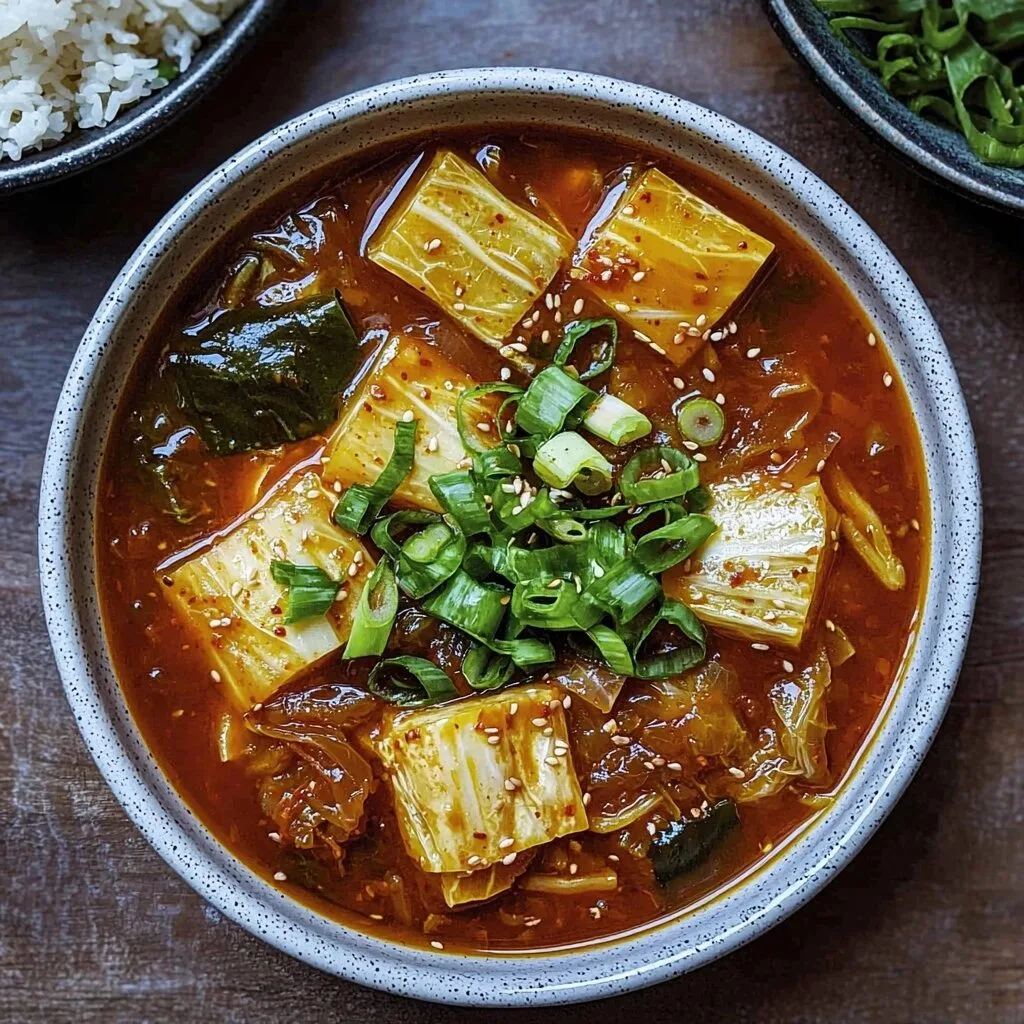
Vegetarian Kimchi Jjigae is one of those meals that feels like a big, warm hug after a long day on the farm. If you have ever opened your fridge and felt completely uninspired, this spicy, tangy Korean stew is exactly what you need to wake up your taste buds. It relies on the deep, fermented funk of well-aged kimchi and the silky texture of soft tofu to create a flavor profile that is surprisingly complex but incredibly simple to put together.
Creating a delicious Vegetarian Kimchi Jjigae does not require spending hours in the kitchen, even if your kids are running around the house or the laundry pile is calling your name. Because I have always been a fan of honest, soul-satisfying comfort food, this recipe has become a staple in my home. It is perfectly spicy, deeply savory, and ready to serve in about 30 minutes, making it a dream for busy families who still want a wholesome dinner.
What is Vegetarian Kimchi Jjigae?
This Korean classic is essentially a hearty, rustic soup that centers on kimchi—garlicky, fermented cabbage that packs a serious punch. Unlike a stir-fry, a jjigae is meant to be bubbling and stew-like, traditionally using fatty pork for richness. However, in this vegetarian version, we lean on the natural acidity of the kimchi and a bit of sesame oil to mimic that satisfying depth.
The magic really happens when you simmer the kimchi until it is soft and translucent, allowing the broth to take on a bright, crimson hue. By adding tofu, we get a beautiful contrast of textures. The soup is acidic, savory, and just spicy enough to clear your sinuses without being overwhelming, which is why it has earned a permanent spot in my weekly rotation.
Reasons to Try Vegetarian Kimchi Jjigae
If you are looking to branch out from the usual pasta and salad routine, this is the perfect starting point. It is incredibly forgiving, meaning you do not have to be a master chef to nail the balance of flavors. The reliance on pantry staples like soy sauce and sugar means you likely have most of what you need already sitting in your cupboards.
Beyond the taste, it feels like a genuine accomplishment to make something this authentic from scratch. It is wholesome, protein-rich thanks to the tofu, and happens to be naturally comforting. Whether you are a dedicated vegetarian or just someone trying to incorporate more meatless nights into your schedule, you will find this dish hearty enough to satisfy anyone at the table.
Ingredients Needed to Make Vegetarian Kimchi Jjigae
- 1 tablespoon gochujang paste (use a gluten-free brand if needed)
- 1 tablespoon gochugaru (Korean red chili flakes)
- 1 tablespoon soy sauce
- 1 teaspoon granulated sugar
- A pinch of MSG (optional, for that extra savory kick)
- 1 tablespoon canola oil
- 1 medium white onion, sliced thin
- 2-3 cloves of garlic, minced
- 14-15 oz kimchi with juices (the older and more fermented, the better)
- 2 cups vegan dashi broth or vegetable broth
- 10 oz soft or silken tofu, sliced into 1/2-inch pieces
- 2 teaspoons toasted sesame oil
- Green onion and sesame seeds for garnish
Instructions to Make Vegetarian Kimchi Jjigae – Step by Step
Step 1: Grab a small bowl and whisk together your gochujang, gochugaru, soy sauce, sugar, and that optional pinch of MSG. Getting this paste ready beforehand ensures the flavors are well-integrated when it hits the hot pot.
Step 2: Place a medium pot over medium-high heat and add the canola oil. Once it shimmers, toss in your sliced onions and sauté them until they start turning golden and soft, which usually takes about 3 to 4 minutes. Add the minced garlic during the last 30 seconds so it does not burn, just until it becomes fragrant.
Step 3: Pour the kimchi and all of its flavorful juices into the pot. Stir in the spicy paste you prepared earlier, then pour in your vegetable or dashi broth. Cover the pot with a tight lid, bring it to a boil, and then turn the heat down to a gentle simmer for 15 minutes.
Step 4: Carefully tuck the tofu slices into the bubbling broth. Try not to stir too vigorously here, as we want to keep the tofu in nice chunks. Cover again and simmer for another 5 minutes, allowing the tofu to soak up those bold, spicy flavors.
Step 5: Finish the stew by drizzling the toasted sesame oil over the top right before turning off the heat. Sprinkle with fresh green onions and sesame seeds, then serve it hot while it is still steaming.
Chef’s Tips for a Perfect Result
- Always use well-fermented, older kimchi because the acidity increases as it ages, providing a much deeper flavor profile for the broth.
- If you get store-bought kimchi that still tastes too fresh, leave the jar in a cool cupboard for a few days to speed up the natural fermentation.
- Add the tofu during the final stages of cooking to ensure it stays in beautiful, tender pieces instead of breaking down into the soup.
- For a richer color and intensity, do not skip the gochugaru, as it provides that signature vibrant look of traditional Korean stews.
Variations and Substitutions
Vegan Option: This recipe is already naturally vegan if you ensure your kimchi is made without shrimp or fish sauce, which is common in older commercial brands.
Gluten-Free Alternative: Ensure your gochujang and soy sauce are certified gluten-free, as many conventional versions use wheat additives.
Low-Carb Version: Skip the sugar if you are watching your intake, though it is usually minimal and helps cut through the acidity of the kimchi.
Budget Swap: Feel free to use plain water in a pinch, although a mushroom-based vegetable broth will always yield a superior, more savory result.
How to Serve and Pair
This stew is best served in individual clay pots or deep bowls while it is piping hot. The classic pairing is a bowl of steaming short-grain white rice, which helps balance the heat and acidity. If you want to go the extra mile, serve this with a side of steamed spinach or pickled radishes for a true Korean-inspired feast.
Storage and Reheating
Refrigerator: Once cool, store the leftovers in an airtight container for up to one week. The flavors will actually continue to meld and become even better the next day.
Freezer: Transfer the cooled stew into a freezer-safe container. It freezes perfectly for up to 3 months, though the tofu texture may become slightly firmer after thawing.
Reheating: Reheat slowly on the stovetop over medium-low heat. If the broth seems too thick after being in the fridge, add a tiny splash of water to bring back the original consistency.
Nutritional Values
Calories: 231 kcal | Protein: 12g | Carbohydrates: 18g | Fat: 11g | Fiber: 4g. (Approximate values.)
Frequently Asked Questions (FAQ)
Can I substitute vegetable broth for something else?
You can use plain water, but a kombu or dried shiitake mushroom dashi will provide the best umami depth similar to traditional recipes.
How do I know when the kimchi is done cooking?
The kimchi is ready when it has softened significantly and becomes translucent, which usually takes about 15 minutes of simmering.
My stew tastes too sour, what should I do?
If the kimchi is too sour, simply add another half teaspoon of sugar or a small splash of mirin to neutralize the acidity without compromising the flavor.
Can I prep all the components in advance?
Yes, you can assemble the spice paste and slice your aromatics the night before to make the final cooking process even faster.
What other vegetables work well in this dish?
Enoki mushrooms, sliced zucchini, and bok choy are excellent additions that hold up well to the intense heat and flavor of the kimchi base.
Conclusion
Vegetarian Kimchi Jjigae is a testament to how simple ingredients can transform into a bold, deeply satisfying meal. I encourage you to set aside 30 minutes this week to get this bubbling on your stove, filling your home with that unmistakable aroma. It is that perfect harmony of spicy, fermented, and savory notes that makes this recipe one I turn to time and time again.
Print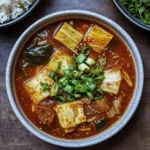
Vegetarian Kimchi Jjigae
- Total Time: 30
- Yield: 3 servings 1x
- Diet: Vegetarian
Description
A comforting and vibrant Korean stew that proves vegetarian cooking can be deeply savory and soulful. This Kimchi Jjigae replaces traditional pork with the bright acidity of aged kimchi and soft, silky tofu. It is a quick, 30-minute meal that delivers a hit of heat and a complex, fermented depth, making it an ideal choice for busy weeknights when you need a hearty, restaurant-quality meal in the comfort of your own home.
Ingredients
1 tbsp gochujang paste
1 tbsp gochugaru (Korean red chili flakes)
1 tbsp soy sauce
1 tsp granulated sugar
A pinch of MSG (optional)
1 tbsp canola oil
1 medium white onion, thinly sliced
3 cloves garlic, minced
15 oz aged kimchi, chopped with juices
1 block (14 oz) firm or soft tofu, sliced into cubes
2 cups vegetable broth or water
1 stalk green onion, thinly sliced (for garnish)
1 tsp toasted sesame oil
Instructions
Heat the canola oil in a pot over medium heat.
Add the onion and garlic, sautéing until fragrant and translucent.
Add the chopped kimchi and sauté for 5 minutes until it softens.
Stir in the gochujang, gochugaru, soy sauce, sugar, and MSG until well combined.
Pour in the vegetable broth and bring the mixture to a gentle boil.
Reduce heat to low and simmer for 10-15 minutes to allow flavors to meld.
Carefully add the tofu cubes into the bubbling broth and simmer for another 5 minutes.
Finish by drizzling with sesame oil and topping with fresh green onions before serving.
Notes
The older and more fermented your kimchi is, the deeper the flavor of the stew will be. If your kimchi is quite sour, you may add an extra pinch of sugar to balance the acidity. You can use silken tofu for a softer texture or firm tofu if you prefer more bite.
- Prep Time: 10
- Cook Time: 20
- Category: Dinner
- Method: Stovetop Simmering
- Cuisine: Korean
Nutrition
- Serving Size: 1 bowl
- Calories: 210
- Sugar: 4g
- Sodium: 850mg
- Fat: 9g
- Saturated Fat: 1g
- Carbohydrates: 18g
- Fiber: 4g
- Protein: 12g
- Cholesterol: 0mg