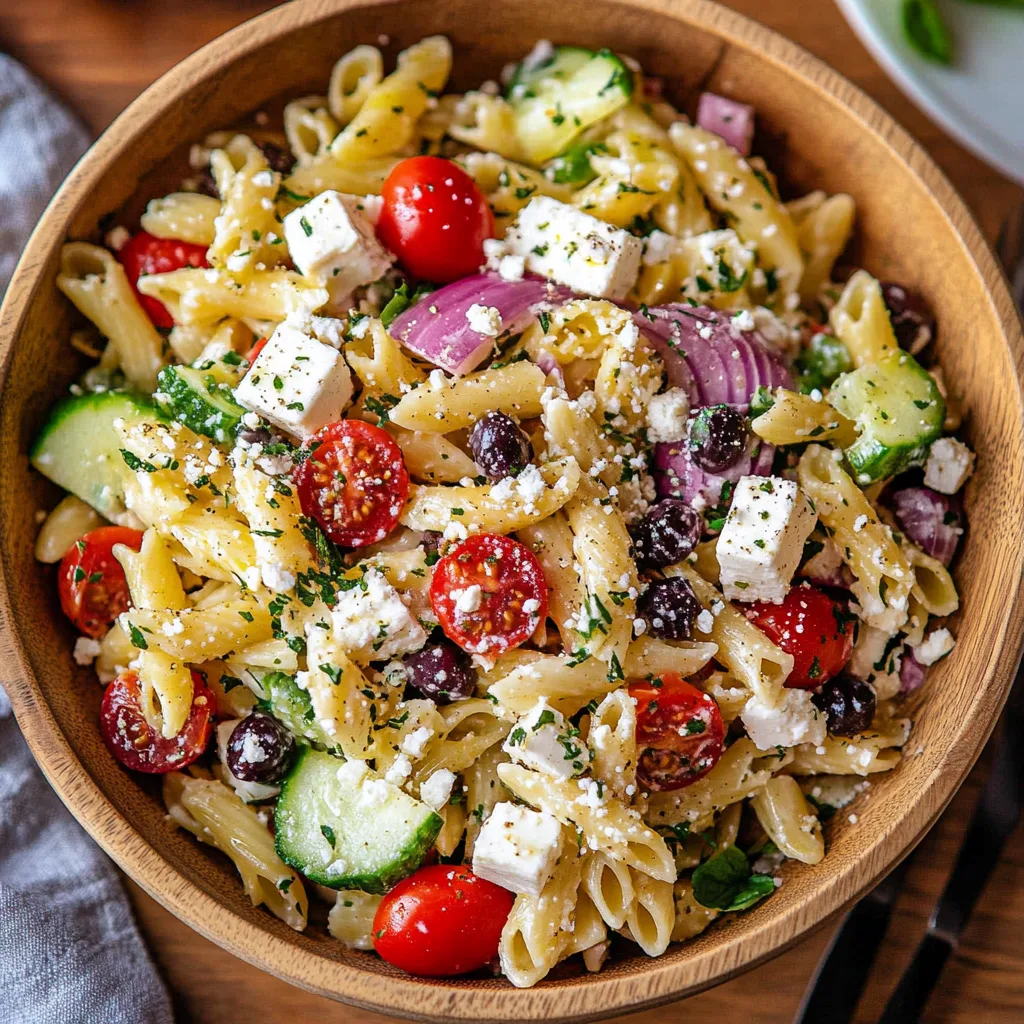
Traditional Greek Pasta Salad brings the bright, sunny flavors of Greece to your kitchen. This dish combines plump pasta, crisp vegetables, briny olives, tangy feta, and a garlicky olive oil dressing into a refreshing, crowd-pleasing meal. Whether you’re hosting a summer barbecue or need a satisfying weekday lunch, this salad is a versatile, vibrant choice that’s packed with Mediterranean goodness from start to finish.
What makes this recipe essential? It’s a masterclass in flavor balance: the acidity from the vinegar cuts through the richness of the olive oil, the salty feta contrasts with the mild peppers, and the herbal notes from the oregano and basil tie everything together. Best of all, it comes together with just 30 minutes of work and keeps in the fridge for days, making it perfect for meal prep or potlucks.
What is Traditional Greek Pasta Salad?
Though not a traditional Greek recipe in the historical sense, this salad captures the spirit of Mediterranean cuisine by combining Italian pasta with Greek ingredients. At its core, it’s a colorful, refreshing salad that marries simple, high-quality components: al dente pasta, crunchy veggies, antioxidant-rich herbs, and a dressing that’s more seasoning than sauce.
The origins of this dish trace back to American cooks adapting Mediterranean ingredients with pasta. What makes it special is how the ingredients work together – olive oil keeps everything moist, feta adds protein and salt, and the vinegar provides needed acidity to balance the richness. This approach is common in Greek meze platters, where individual components shine while creating harmony in each bite.
Reasons to Try Traditional Greek Pasta Salad
For busy weeknights, this salad is a lifeline. The components can be prepped in advance, with the sticking being the final step. The 30-minute total time includes active work during which you could grill meats or prepare extra sides. It’s also incredibly flexible – we’ll share easy ways to add protein or swap ingredients for dietary needs.
What makes this salad stand out is its bold, authentic flavor without artificial ingredients. The dried herbs and olive oil create a comforting Mediterranean aroma that’s addictive. Home cooks of all levels will feel accomplished after making it, since the recipe has only a few precise steps that cannot fail with basic kitchen skills.
Ingredients Needed to Make Traditional Greek Pasta Salad
- 1 pound short pasta (farfalle, rotini, or orzo preferred)
- 1 red bell pepper (chopped, needs no peeling)
- 1 green bell pepper (cored and chopped)
- 1 English cucumber (sliced thinly after quartering lengthwise)
- 1 cup cherry tomatoes (seeded and halved)
- 1/2 cup thinly sliced red onion (soaked in ice water to mellow if preferred)
- 3/4 cup kalamata olives (pitted, or substitute black olives)
- 1/2 cup crumbled feta (store-bought works, for extra tang use fresh)
- 1/4 cup freshly chopped parsley (stems removed for brightness)
- Dressing: 2/3 cup olive oil, 1/3 cup red wine vinegar, 2 tsp dried oregano, 1 tsp dried basil, 3/4 tsp garlic powder, 1 tsp Dijon mustard, 1/2 tsp salt, 1/4 tsp pepper
Instructions to Make Traditional Greek Pasta Salad – Step by Step
Step 1: Start by boiling the pasta differently than you might for dinner. While most pasta dishes require soft noodles, this salad needs pasta that will hold up to chilling. You’ll want to cook it al dente, as the rigidity will maintain the salad’s texture during storage. I learned this the hard way once when overcooked pasta turned my salad into a gloppy mess during a family picnic!
Step 2: As the pasta cooks, prep your vegetables. This is where you can really play with knife skills – thinly slicing the cucumber gives it that extra crunch. For the bell peppers, I find their texture is best when just roughly chopped rather than diced. Be sure to remove all the seeds from the cucumber to avoid excess water that could dilute the dressing.
Step 3: Making the dressing ahead is a great tip. Let all those olive oil, vinegar, and herbs emulsify for at least 15 minutes. You’ll notice the flavors really bloom and become more cohesive. The Dijon mustard not only adds tang but also helps the dressing cling to the pasta better. While whisking, notice how the emulsion thickens slightly, creating a richer texture.
Step 4: Combine everything in a large bowl. This is a good time to get the kids involved – they can help toss the salad, especially when the feta gets added. The key is to coat everything evenly but not drown it, since this is a salad with substance. Once mixed, don’t refrigerate immediately – let it sit at room temperature for 15 minutes first. The pasta absorbs excess dressing better when warm.
Step 5: Chilling transforms this dish completely. Plan for at least 2 hours of refrigeration, though I actually prefer making it the day before serving. You’ll notice the flavors intensify during this time, and the noodles will retain just the right texture. Before serving, give it a quick stir and adjust seasoning if needed. The nice thing is you can taste for salt after chilling!
Chef’s Tips for a Perfect Result
- Use firm yet tender pasta: Rotini or farfalle hold dressing and ingredients best; avoid long noodles like spaghetti.
- Pat dry cooked pasta thoroughly: Excess moisture makes salad soggy. A fan helps speed up drying between colanders.
- Soak red onion for 5 minutes: Ice water reduces sharpness without compromising crunch or texture.
- Store dressing separately: If making ahead, keep dressing in a sealed jar until just before serving to preserve vibrant colors and prevent sogginess.
- Use vintage feta: Its crumbly texture adds better bursts of salt compared to soft, creamy blocks.
- Cool noodles after mixing: Let salad rest at room temp 15-30 minutes before fridge to allow even dressing absorption.
Variations and Substitutions
- Vegan Option: Substitute nutritional yeast for feta, use vegan olives, and skip feta altogether (salad still works well without dairy)
- Gluten-Free Alternative: Use gluten-free pasta (corn or chickpea-based works well here)
- Low-Carb Version: Replace pasta with zucchini noodles or make it a pasta-free salad (add more cucumber and green beans)
- Budget Swap: Substitute sweet Vidalia onions for raw red onion small cents, more sweetness
- Protein Additions: Toss with canned chickpeas, grilled chicken breasts, or 3-4 shrimp per serving
- Extra Depth: Add 1/4 cup crumbled cooked lentils for fiber, or toasted pine nuts for crunch
How to Serve and Pair
This salad makes an excellent side for grilled meats like lemon-herb chicken or marinated lamb chops. For a vegetarian main course, pair it with baked feta with tomatoes and olives for a protein-rich meal. Presentation-wise, serve in a transparent bowl or on a large platter where the rainbow of colors can be seen. A spritz of lemon juice over the top just before serving adds a beautiful final presentation touch.
Storage and Reheating
- Refrigerator
- Keep in airtight container for 4 days. Dressing may separate – give it a good stir before serving
- Freezer
- Not recommended. The pasta becomes too soggy upon thawing
- Room Temperature
- Can sit out 2-3 hours, ideal for parties or picnics
- Reheating
- Best served chilled, but for warm versions: Pulse in air fryer at 300°F (150°C) for 3-4 minutes to remove sogginess. Add fresh herbs after reheating to preserve color
Nutritional Values
- Calories: 292 kcal (24% free)
- Protein: 7g (28% DV)
- Carbohydrates: 32g (12% DV)
- Fat: 15g (23% DV)
- Fiber: 2g (8% DV)
Approximate values.
Frequently Asked Questions
Q1: Can I substitute the feta with another cheese?
Yes, but the flavor won’t be the same – ricotta salata or peasant cheese work for texture, while cotija gives a similar salty kick. Avoid soft cheeses like goat cheese as they’ll make salad soggy.
Q2: How do I tell when the pasta is done?
Timing is key. Cook just until al dente (check package instructions first). The pasta should be tender but still have a slight bite to it. After rinsing, it should hold its shape without being gummy or falling apart.
Q3: Why is my pasta salad too watery?
Common causes: Overcooked pasta, pre-frozen cucumbers, or not drying ingredients properly. Always pat all components dry before mixing, especially cucumbers and cherry tomatoes which release liquid when cut.
Q4: Can I prep parts of this in advance?
Absolutely! Prep pasta, veggies, and dressing separately up to 24 hours ahead. Store in separate airtight containers in fridge, then toss everything together just before chilling. This maintains optimal texture and freshness.
Q5: What are best customization tips?
For richer flavor, add 1/4 cup crumbled cooked lentils or 1/3 cup canned chickpeas. Make it into a main course by adding 2 grilled chicken breasts per 6 servings. For extra herbs, toss in 2-3 fresh oregano sprigs before serving for more aroma.
Conclusion
Traditional Greek Pasta Salad brings the flavors of the Mediterranean to the modern kitchen with minimal effort. With its vibrant colors, bold flavors, and satisfying textures, this salad is a celebration of fresh ingredients working in harmony. Let the zesty dressing and salty feta carry you away to Greek shores, one flavorful bite at a time.
Print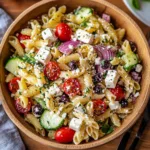
Traditional Greek Pasta Salad
- Total Time: 30
- Yield: 8 servings 1x
- Diet: Vegetarian
Description
A vibrant, Mediterranean-inspired salad featuring al dente pasta, crisp vegetables, briny olives, tangy feta, and a garlicky olive oil dressing. Perfect for summer gatherings or quick lunches.
Ingredients
1 pound short pasta (farfalle, rotini, or orzo preferred)
1 red bell pepper (chopped, needs no peeling)
1 green bell pepper (cored and chopped)
1 English cucumber (sliced thinly after quartering lengthwise)
1 cup cherry tomatoes (seeded and halved)
1/2 cup thinly sliced red onion (soaked in ice water to mellow if preferred)
3/4 cup kalamata olives (pitted, or substitute black olives)
1/2 cup crumbled feta cheese
1/4 cup extra virgin olive oil
2 tablespoons red wine vinegar
1 clove garlic, minced
1 teaspoon dried oregano (or fresh, if available)
1/2 teaspoon salt
1/4 teaspoon black pepper
Instructions
Cook the pasta according to package instructions until al dente, then drain and let cool to room temperature.
In a large bowl, combine the cooked pasta, chopped red and green bell peppers, sliced cucumber, halved cherry tomatoes, and red onion.
In a separate small bowl, whisk together olive oil, red wine vinegar, minced garlic, oregano, salt, and black pepper to make the dressing.
Pour the dressing over the pasta mixture. Gently toss everything until evenly combined. Add the olives and feta cheese, then mix just before serving.
Adjust seasoning as needed and serve chilled or at room temperature.
Notes
Soak the red onion in ice water for 10 minutes to reduce its sharpness if desired.
Use orzo for a no-shell pasta base, or substitute Kalamata olives with black olives if unavailable.
Store in an airtight container in the refrigerator for up to 2 days.
- Prep Time: 15
- Cook Time: 10
- Category: Dinner
- Method: Stovetop
- Cuisine: Greek
Nutrition
- Serving Size: 1 serving
- Calories: 250
- Sugar: 3g
- Sodium: 400mg
- Fat: 15g
- Saturated Fat: 3g
- Carbohydrates: 30g
- Fiber: 3g
- Protein: 6g