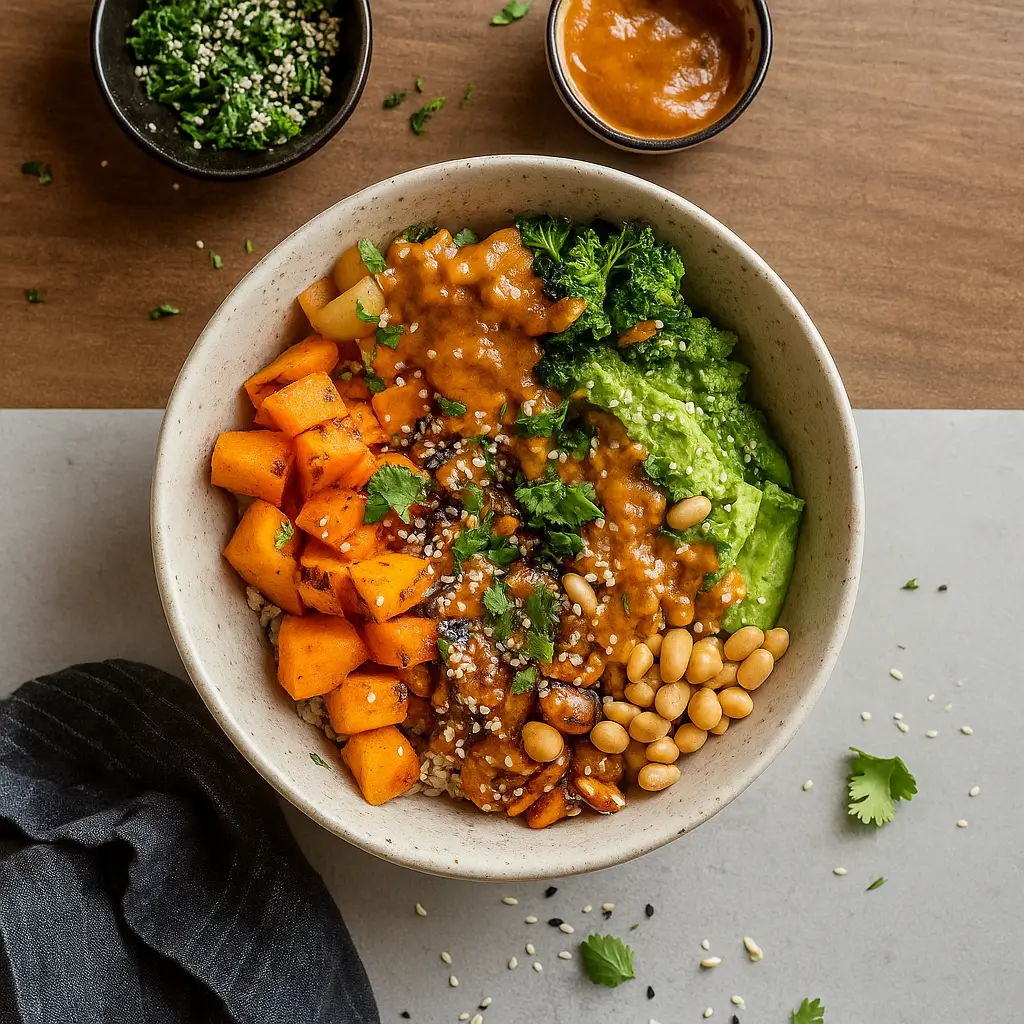
Thai Peanut Sweet Potato Buddha Bowl is a cozy, colorful, and flavor-packed meal that makes plant-based eating feel like an indulgent treat—not a compromise. Imagine a bowl full of vibrant roasted sweet potatoes, fluffy quinoa, crunchy veggies, and a creamy peanut sauce that’s basically sunshine in drizzle form. This isn’t one of those “sad desk salads.” Oh no, this bowl means business.
Whether you’re trying to eat a little healthier, need a break from chicken dinners, or just want to wow your tastebuds without scaring off your picky eaters—this one’s for you. Even if the word “Buddha” has you thinking you need to meditate for 45 minutes before cooking—relax. You’ll be roasting, whisking, and assembling like a kitchen ninja in no time. This Thai Peanut Sweet Potato Buddha Bowl is just what your weeknight dinner (and your lunch leftovers!) have been missing.
Table of Contents
What is Thai Peanut Sweet Potato Buddha Bowl?
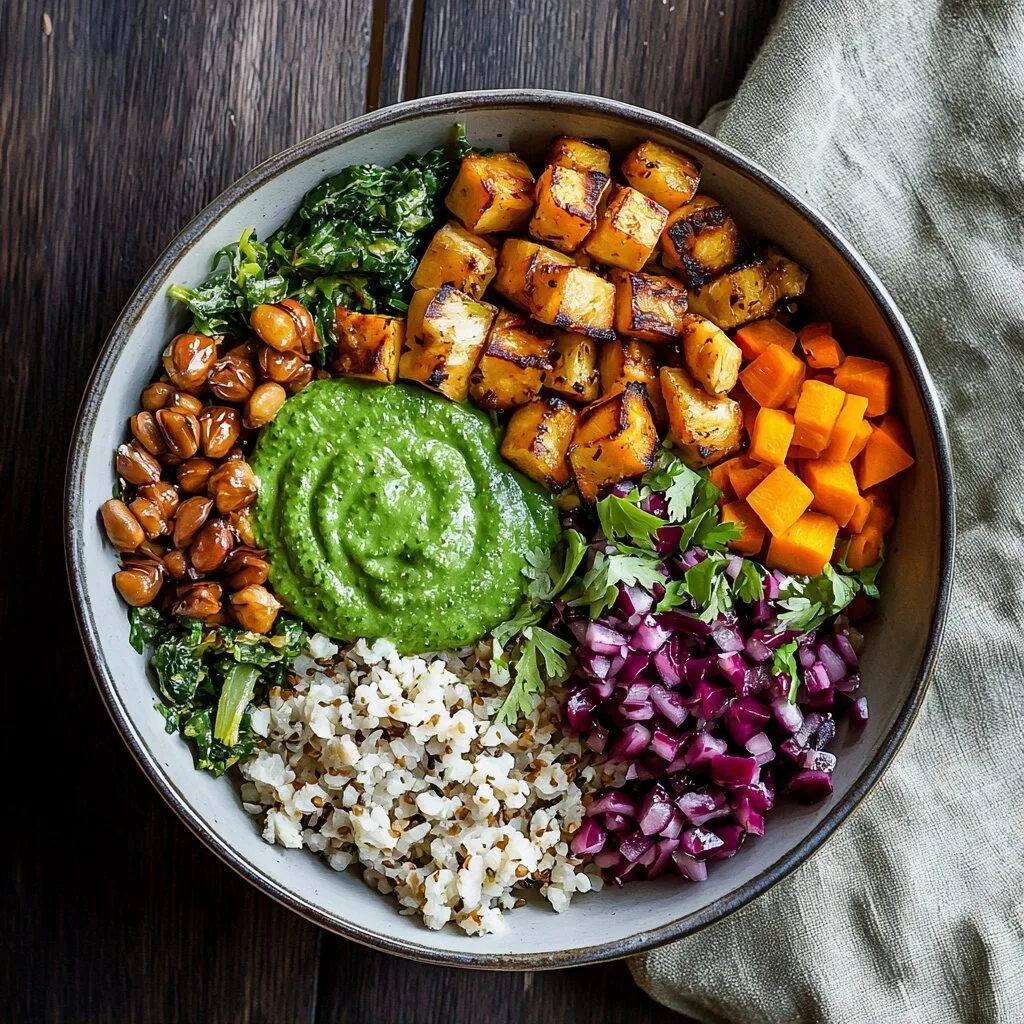
A Thai Peanut Sweet Potato Buddha Bowl is basically a big ol’ hug in a bowl. It’s a nourishing, plant-based meal that layers hearty roasted sweet potatoes with nutty quinoa, vibrant raw veggies like cabbage and bell peppers, and a luscious Thai-inspired peanut sauce. And if you’re wondering about the name—Buddha bowls get their name from being full and rounded, kind of like Buddha’s belly (adorable, right?).
This dish pulls in Thai flavors—creamy peanut butter, zingy lime juice, a bit of soy sauce—for a sweet, savory, and slightly spicy sauce that ties it all together. The best part? It’s endlessly customizable. Not into cucumbers? Skip ’em. Want to toss in some shredded chicken or tofu? Go for it. It’s plant-forward but doesn’t require you to go full-on vegan unless you want to. And hey, even meat-lovers won’t be mad about this one.
Reasons to Try Thai Peanut Sweet Potato Buddha Bowl
Let’s be real—dinner can feel like a chore. Especially when your brain’s fried from a long day, and the kids are asking “what’s for dinner?” on repeat like it’s a Top 40 hit. This Thai Peanut Sweet Potato Buddha Bowl solves that dinner dilemma beautifully. First, it’s meal-prep friendly. Roast a bunch of sweet potatoes, make a batch of quinoa, and you’ve got lunches (or emergency dinners) sorted for days.
Second, it checks all the boxes: it’s vegetarian, naturally gluten-free (just use tamari), and easy to adapt for other dietary needs. Plus, that peanut sauce? It’s borderline addictive. It transforms even the pickiest eater’s plate from “meh” to “more please.” And bonus: this recipe helps you sneak in loads of veggies without it feeling like a salad punishment. It’s nutritious, filling, colorful, and just plain happy food.
Ingredients Needed to Make Thai Peanut Sweet Potato Buddha Bowl
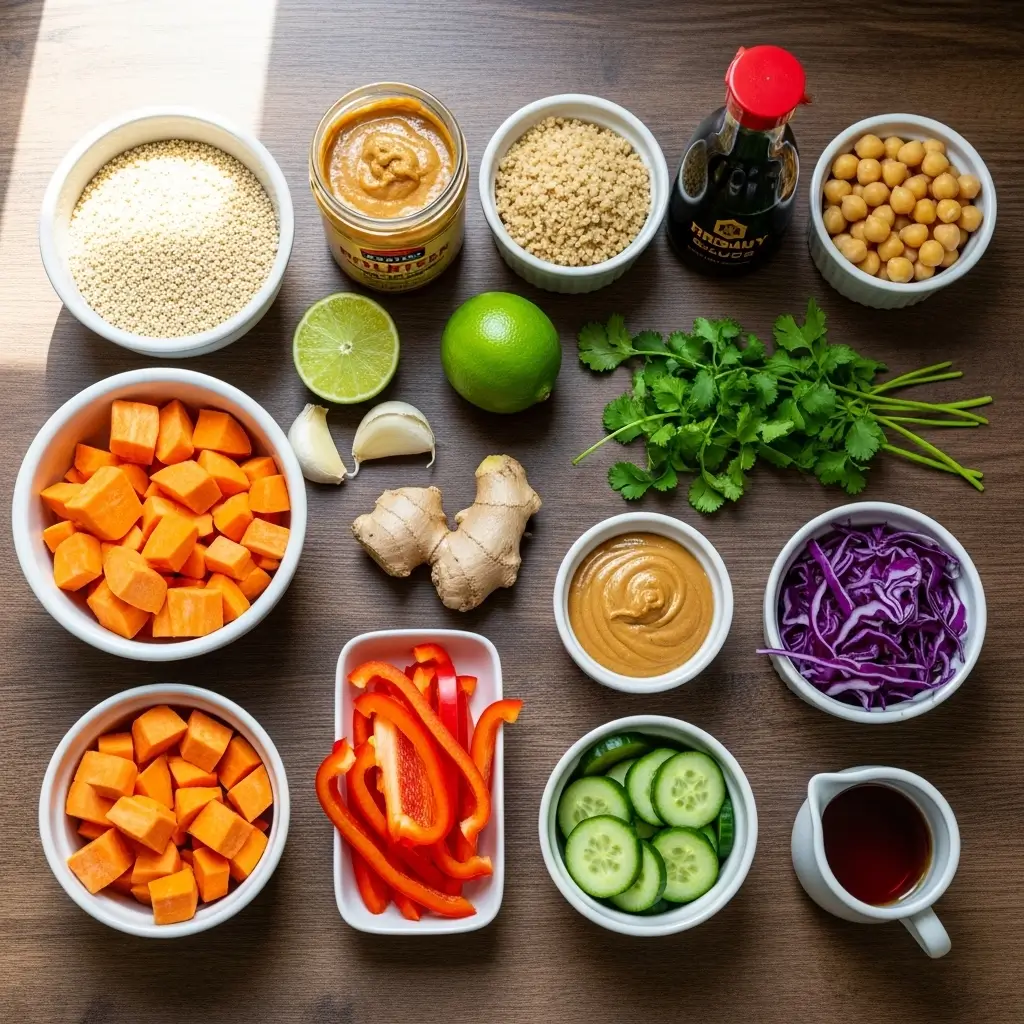
- 2 medium sweet potatoes (cubed, about 4 cups)
- 1 cup uncooked quinoa
- 1 can (15 oz) chickpeas, drained and rinsed
- 4 cups mixed greens (spinach, kale, or your fave blend)
- 1 large red bell pepper, sliced
- 2 cups shredded purple cabbage
- 1 large cucumber, sliced
- ½ cup chopped cilantro
- ½ cup chopped peanuts
For the Thai Peanut Sauce:
- ½ cup creamy peanut butter
- ¼ cup soy sauce (or tamari for gluten-free)
- ¼ cup lime juice (about 2 limes)
- 2 tablespoons maple syrup or honey
- 2 cloves garlic, minced
- 2 teaspoons fresh grated ginger
- 2–4 tablespoons water (to thin as needed)
- Optional: ½ teaspoon red chili flakes for heat
Instructions to Make Thai Peanut Sweet Potato Buddha Bowl
Let’s dive into a step-by-step guide that walks you through exactly how to make your Thai Peanut Sweet Potato Buddha Bowl from scratch. Whether you’re a seasoned meal prepper or just trying to survive the dinner hour without another cereal night, this method is straightforward, flavorful, and kind of fun. Each step includes practical tips and options to help you customize your bowl based on what you have on hand or what your crew actually likes to eat. Plus, we’ve included helpful links to related content if you want to level up your skills or explore similar dishes.
Step 1: Roast the Sweet Potatoes to Golden Perfection
Preheat your oven to 400°F (200°C). While it warms up, cube two medium sweet potatoes into even-sized chunks—aim for about 1-inch pieces so they roast evenly and cook through at the same time. Toss them in a large bowl with 1 tablespoon of olive oil, a pinch of salt, and a few cracks of black pepper. For extra flavor, you can sprinkle in a bit of smoked paprika or cumin. Spread the cubes out in a single layer on a parchment-lined baking sheet. Make sure they’re not too crowded—this helps them crisp up instead of steaming.
Roast for 25–30 minutes, flipping halfway through. You’ll know they’re done when the edges are golden and slightly caramelized, and a fork slides in easily. Want more sweet potato ideas? Try this Maple Glazed Chicken with Sweet Potatoes for another easy weeknight win.
Step 2: Cook the Quinoa Like a Pro
While the potatoes are doing their thing in the oven, turn your attention to the quinoa. Rinse 1 cup of quinoa in a fine mesh strainer under cool water—this helps remove the bitter outer coating called saponin. Add the rinsed quinoa to a saucepan with 2 cups of water and a pinch of salt. Bring to a boil, then reduce heat to low, cover, and simmer for about 15 minutes, or until the water is fully absorbed.
Remove from heat and let it sit, still covered, for 5 minutes. Then fluff it with a fork for that perfect, light texture. Want to mix it up? You can sub quinoa with brown rice or farro. For more grain inspiration, explore our Crockpot Chicken and Rice Soup—another cozy, grain-based favorite.
Step 3: Make the Creamy Thai Peanut Sauce
In a mixing bowl or large measuring cup, whisk together the following:
- ½ cup creamy peanut butter
- ¼ cup soy sauce (or tamari for a gluten-free option)
- ¼ cup fresh lime juice (about two juicy limes)
- 2 tablespoons maple syrup or honey
- 2 cloves garlic, finely minced
- 2 teaspoons fresh grated ginger
Add 2–4 tablespoons of water gradually to thin the sauce to your preferred consistency—some like it thick and scoopable, others prefer a silky drizzle. If you like heat, sprinkle in ½ teaspoon of red chili flakes or a few drops of sriracha. This sauce stores beautifully in the fridge for up to a week and works wonders on noodles, wraps, or even as a veggie dip.
For a noodle-friendly spin, check out our Spicy Coconut Curry Ramen where this peanut sauce would feel right at home.
Step 4: Warm Up the Chickpeas
Sure, you could just toss them in cold—but warming the chickpeas adds depth and makes your bowl feel more like a meal than a fridge-clean-out situation. In a small skillet over medium heat, add the drained and rinsed 15 oz can of chickpeas with a drizzle of olive oil, a pinch of salt, and optional seasonings like garlic powder, cumin, or turmeric. Heat them for about 5–7 minutes until warm and lightly toasted.
Not into chickpeas? You could sub in edamame or black beans—or add protein like grilled chicken or tofu if you’re going for a heartier bowl.
Step 5: Chop and Prep the Fresh Veggies
While the other components are cooking or cooling, get your fresh produce ready. Slice one large red bell pepper, shred about 2 cups of purple cabbage, and slice one large cucumber. These add crunch, color, and balance to the roasted and warm ingredients. If you’re prepping ahead, store these veggies separately to keep them crisp.
Add in a generous handful of mixed greens—spinach, baby kale, or arugula are all great choices. Not sure which greens to use? Read our guide to anti-inflammatory foods for more healing ingredients to incorporate.
Step 6: Assemble Your Buddha Bowl, Step by Step
Now it’s time to build your masterpiece. Start with a generous handful of mixed greens as your base. Next, scoop on a serving of fluffy quinoa, followed by a hearty portion of roasted sweet potatoes and warm chickpeas. Layer on the sliced bell pepper, cabbage, and cucumber.
Drizzle with your homemade Thai peanut sauce—go ahead, don’t be shy—and finish with a sprinkle of chopped cilantro and crushed peanuts for that perfect hit of freshness and crunch. Feel free to get creative with presentation—this dish is basically a rainbow in a bowl and deserves its close-up.
Step 7: Customize with Optional Add-Ons
At this point, you’ve nailed the basics—but feel free to personalize! Add avocado slices for creamy texture, sprinkle on sesame seeds for extra crunch, or top with a soft-boiled egg for bonus protein. Want it spicier? A few slices of jalapeño or a drizzle of chili oil will do the trick.
Love global flavors? Pair your Buddha bowl with something slurpable like this Creamy White Chicken Lasagna Soup for a fusion-inspired feast.
What to Serve with Thai Peanut Sweet Potato Buddha Bowl
This dish is filling enough on its own, but if you’re feeding a hungrier crowd or just want to level it up, serve it alongside something light and slurpable like this Crock Pot Thai Ginger Chicken Soup or a warming Creamy Southwest Chicken Soup. A cold sparkling limeade or even a fruity white sangria would be a fun drink pairing if you’re feeling fancy. For a fun twist, try wrapping the contents into a tortilla for a quick Thai wrap or serving the leftovers cold the next day as a salad.
Key Tips for Making Thai Peanut Sweet Potato Buddha Bowl
First, batch roast your sweet potatoes—they store beautifully and save you time later in the week. Second, make the peanut sauce ahead of time and keep it in a jar in the fridge; it’s great on everything from grain bowls to chicken skewers. Third, don’t overthink the veggie combos—use what you’ve got! No cabbage? Use carrots. Don’t love kale? Baby spinach is always game. And if you’ve got picky eaters, try keeping the ingredients separate so everyone can DIY their own bowl. That way, it feels more like a build-your-own adventure and less like “eat your veggies or else.”
Storage and Reheating Tips Thai Peanut Sweet Potato Buddha Bowl
Store your components separately for best results. Keep the sweet potatoes, quinoa, chickpeas, and veggies in their own containers in the fridge for up to 4 days. The peanut sauce should go in a sealed jar and will keep about a week—just stir it if it separates. Reheat the quinoa, sweet potatoes, and chickpeas in the microwave or on the stove. The veggies can stay cold for a nice contrast. If you’re taking it to work or prepping lunches, assemble in layers: quinoa, sweet potato, chickpeas first, then top with the raw veggies and drizzle the sauce right before eating.
FAQs
Can I make this ahead for meal prep?
Yes! Just store everything separately and assemble when you’re ready to eat. Keeps everything fresh and crisp.
Can I use almond butter instead of peanut butter?
Totally. It’ll be a little milder in flavor but still delicious.
Is this bowl vegan?
Yes—if you use maple syrup instead of honey and stick to plant-based ingredients.
Can I add protein?
Absolutely. Grilled chicken, tofu, or even shrimp would work great.
Is there a low-carb option?
Swap quinoa for cauliflower rice and cut back a bit on the sweet potatoes.
Final Thoughts
If you’re looking for a dinner that feels good, looks great, and doesn’t taste like “health food,” the Thai Peanut Sweet Potato Buddha Bowl is your new weeknight best friend. It’s hearty, flavorful, and easy enough for a Monday night but impressive enough for guests. Plus, you get a rainbow of veggies, protein, and creamy peanut goodness in every bite. Whether you’re in a dinner rut or just need something that’ll make you actually excited to eat veggies, this bowl brings it all together. For more plant-based comfort food, don’t miss our Cauliflower and Lentil Coconut Curry or Creamy Skillet Tortellini with Sweet Potato and Spinach.
Visit our Pinterest for regular slow cooker recipe updates, or join our Facebook discussions where cooking fans exchange their favorite hearty meal ideas.
Print
Thai Peanut Sweet Potato Buddha Bowl – Flavorful & Healthy
- Total Time: 50 minutes
- Yield: 4 servings 1x
- Diet: Vegan
Description
A vibrant, nourishing Thai Peanut Sweet Potato Buddha Bowl packed with roasted sweet potatoes, quinoa, crisp veggies, chickpeas, and a bold, creamy peanut sauce. Perfect for meal prep, plant-based diets, or a hearty vegan dinner.
Ingredients
- 2 medium sweet potatoes (cubed, about 4 cups)
- 1 cup quinoa (uncooked)
- 1 can (15 oz) chickpeas, drained and rinsed
- 4 cups mixed greens (spinach, kale, or your favorite blend)
- 1 large red bell pepper, sliced
- 2 cups shredded purple cabbage
- 1 large cucumber, sliced
- 1/2 cup chopped cilantro
- 1/2 cup chopped peanuts
- 1/2 cup creamy peanut butter
- 1/4 cup soy sauce (or tamari for gluten-free option)
- 1/4 cup lime juice (about 2 limes)
- 2 tablespoons maple syrup or honey
- 2 cloves garlic, minced
- 2 teaspoons grated fresh ginger
- 2–4 tablespoons water (to thin as needed)
- Optional: 1/2 teaspoon red chili flakes for heat
Instructions
1. Preheat oven to 400°F (200°C).
2. Toss cubed sweet potatoes with 1 tablespoon olive oil, salt, and pepper. Spread on a baking sheet and roast for 25-30 minutes, flipping halfway through.
3. While sweet potatoes roast, cook quinoa according to package instructions.
4. Prepare the Thai peanut sauce: Whisk together all sauce ingredients in a bowl, adding water as needed to reach desired consistency.
5. Warm chickpeas in a small pan with a pinch of salt and desired spices.
6. Assemble bowls: Start with a base of mixed greens, then add roasted sweet potatoes, quinoa, and warm chickpeas.
7. Top with sliced bell pepper, shredded cabbage, and cucumber.
8. Drizzle with Thai peanut sauce.
9. Garnish with chopped cilantro and peanuts.
10. Add any additional toppings as desired.
Notes
To make this fully gluten-free, use tamari instead of soy sauce. For extra crunch, add sliced radishes or shredded carrots. This recipe is excellent for meal prep—store components separately and assemble when ready to eat.
- Prep Time: 20 minutes
- Cook Time: 30 minutes
- Category: Main
- Method: Roasting
- Cuisine: Thai-Inspired
Nutrition
- Serving Size: 1 bowl
- Calories: 610
- Sugar: 14g
- Sodium: 740mg
- Fat: 28g
- Saturated Fat: 4g
- Unsaturated Fat: 21g
- Trans Fat: 0g
- Carbohydrates: 75g
- Fiber: 11g
- Protein: 18g
- Cholesterol: 0mg