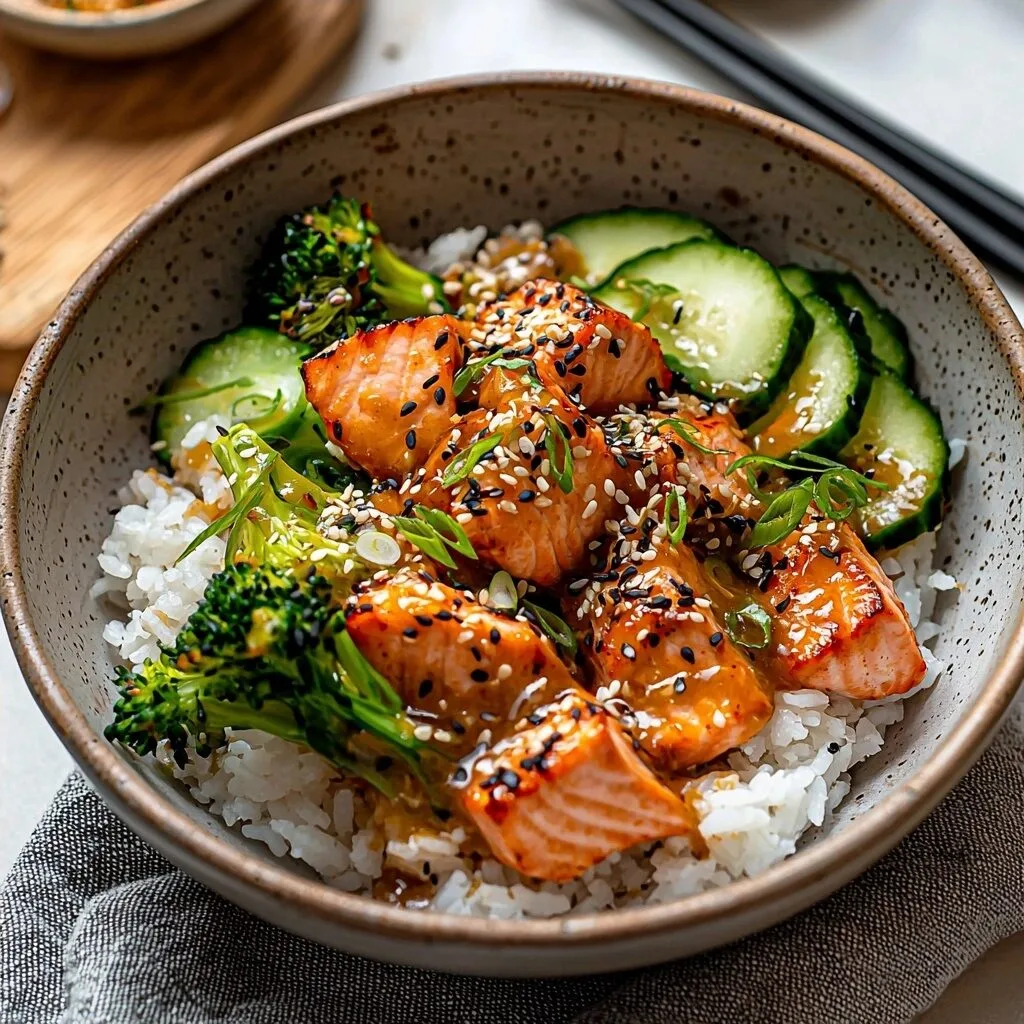
Sesame Salmon Rice Bowl with Ginger Sauce
Sesame Salmon Rice Bowl with Ginger Sauce is one of those meals that makes you feel like a pro in the kitchen, even on a hectic Tuesday evening. Growing up on the farm, I learned that the best meals are often the simplest ones, and this dish hits that mark perfectly with its vibrant colors and balanced, savory notes. Whether you are meal prepping for a busy week or looking for a comforting dinner that feels a little fancy, these bowls are exactly what your kitchen needs.
Bringing together flaky, glazed salmon and crisp-tender broccoli over a bed of fluffy sushi rice is a surefire way to satisfy everyone at the table. The magic really happens when you drizzle that creamy ginger sauce over everything, tying the earthy flavors of the fish and the bright snap of the vegetables together. It is approachable, nourishing, and honestly, just a joy to put together after a long day of juggling family life.
What is Sesame Salmon Rice Bowl with Ginger Sauce?
This dish is a modern take on the classic Japanese-inspired rice bowl, designed to be accessible for home cooks of all levels. It features protein-rich salmon cubes marinated in a savory blend of soy sauce, honey, and sesame oil, which caramelize beautifully in the skillet. Paired with broccoli and served over vinegared sushi rice, it creates a complete, balanced meal that packs a punch of flavor without requiring hours of prep.
The standout element here is the ginger sauce. By using cashew or peanut butter as a base, we create a rich, velvety texture that pairs perfectly with the zest of fresh ginger and the tang of rice vinegar. It is a refreshing departure from standard teriyaki, offering a depth of flavor that makes this recipe stand out as a weeknight favorite.
Reasons to Try Sesame Salmon Rice Bowl with Ginger Sauce
If you are looking for a recipe that bridges the gap between nutrition and pure comfort, this is it. It is incredibly budget-friendly compared to ordering takeout, and you get complete control over the ingredients, ensuring you are using high-quality oils and lower-sodium soy sauce. Plus, it is naturally dairy-free and gluten-free (if using tamari), making it a great option to keep in your back pocket for guests with dietary needs.
This recipe is also a dream for busy families who need a reliable meal prep solution. The ginger sauce holds up perfectly in the fridge for days, and the components store beautifully. You can easily prep the sauce and the rice in advance, leaving you with just a quick sear of the salmon and broccoli when dinner time rolls around. It is simple, satisfying, and honestly, it keeps the kitchen mess to a minimum.
Ingredients Needed to Make Sesame Salmon Rice Bowl with Ginger Sauce
- 1.25 lbs. salmon (skin on or off, cut into 1-inch cubes)
- 1/4 cup lower-sodium soy sauce or tamari
- 1 tablespoon chili-garlic sauce
- 1 tablespoon honey
- 2 teaspoons toasted sesame oil
- 2 tablespoons extra-virgin olive oil
- 6 cups broccoli florets
- 1 cup Japanese short-grain sushi rice
- 2 cups water
- 1/2 teaspoon salt
- 1 tablespoon rice vinegar
- 1 teaspoon granulated sugar
- 1/3 cup creamy cashew or peanut butter
- 1-inch knob fresh ginger (finely grated)
- 1 tablespoon rice vinegar (for the sauce)
- 3/4 teaspoon soy sauce or tamari (for the sauce)
- 1/4 cup filtered water
- Optional garnishes: sliced green onion and toasted sesame seeds
Instructions to Make Sesame Salmon Rice Bowl with Ginger Sauce – Step by Step
Step 1: Start by giving your salmon a good pat with a paper towel to remove any moisture, then carefully slice it into uniform 1-inch cubes. In a shallow bowl, whisk together the soy sauce, chili-garlic sauce, honey, and toasted sesame oil until well combined. Toss the salmon cubes into this mixture, ensuring every piece is coated, and let it marinate at room temperature for about 30 minutes to absorb those savory notes.
Step 2: While the salmon rests, get your rice going. Rinse the sushi rice in a fine-mesh strainer under cold water for about a minute until the water runs clear, which helps remove excess starch for a fluffier result. Combine the rice, water, and salt in a saucepan, bring to a boil, then reduce to low and simmer, covered, for 15 to 20 minutes. Once tender, stir in the rice vinegar and sugar, then cover and let it steam off the heat until you are ready to assemble.
Step 3: Prepare the creamy ginger sauce by whisking the cashew or peanut butter with the grated ginger, rice vinegar, and soy sauce in a medium bowl. Gradually add the filtered water, stirring constantly until you reach a smooth, creamy consistency. If it looks too thick, just add a tiny splash more water until it reaches your desired drizzle-able texture.
Step 4: For the broccoli, heat your olive oil in a large skillet over medium-high. Add the florets, tossing them so they are coated in oil, and cook uncovered for about a minute. Pop a lid on to help them steam and become tender, lifting the lid to stir every couple of minutes so they char evenly without burning, taking about 8 minutes total. Season with a pinch of salt and pepper before setting them aside.
Step 5: Finally, cook your salmon in a nonstick skillet over medium heat. Arrange the cubes in a single layer and let them cook undisturbed for about 3 minutes so they form a nice sear. Flip and cook for another 2 to 3 minutes, allowing the residual marinade to reduce into a sticky, glossy glaze that coats each piece perfectly. Assemble your bowls by dividing the rice, salmon, and broccoli, then finish with a generous drizzle of ginger sauce and a sprinkle of green onions and sesame seeds.
Chef’s Tips for a Perfect Result
- Use cold water for rinsing your sushi rice: This simple step removes excess starch and ensures your rice comes out perfectly tender rather than gummy.
- Don’t overcrowd the skillet: When cooking the salmon, keep it in a single layer to ensure each piece sears rather than steams, which creates that delicious sticky glaze.
- Grating the ginger is key: Use a microplane for the ginger to get a fine, paste-like consistency that incorporates seamlessly into your sauce.
- Keep the salmon marinade: Don’t discard the extra marinade, as it will reduce in the skillet to provide the deep, concentrated flavor for the fish.
Variations and Substitutions
- Vegan Option: Swap the salmon for extra-firm tofu cubes pressed well and pan-fried, and use maple syrup instead of honey in the marinade.
- Gluten-Free Alternative: Always ensure you use tamari rather than standard soy sauce, and double-check your labels on any chili-garlic sauce to ensure it is certified gluten-free.
- Low-Carb Version: Replace the sushi rice with cauliflower rice, which provides a similar light texture without the extra carbohydrates.
- Budget Swap: You can use frozen, thawed broccoli florets instead of fresh if you are in a pinch; just make sure to pat them very dry before adding them to the hot oil.
How to Serve and Pair
These bowls are best served warm, straight out of the skillet for the most vibrant texture. I love setting out a small bowl of extra ginger sauce on the table so everyone can add as much as they like. For an easy weeknight pairing, serve these with a simple side of cucumber salad dressed with a little rice vinegar, which cuts through the richness of the salmon perfectly.
Storage and Reheating
Refrigerator: Store any leftovers in airtight containers for up to 3 days. It is best to keep the ginger sauce in a separate small jar to prevent the other components from getting soggy.
Freezer: I do not recommend freezing this finished dish, as the texture of the salmon and the cooked broccoli will degrade significantly upon thawing.
Reheating: Reheat the bowls in the microwave using 30-second increments, stirring in between to avoid hot spots. If using the stovetop, toss the components into a skillet with a tiny splash of water and cover for a minute to steam and refresh the ingredients.
Nutritional Values
- Calories: 585kcal
- Protein: 44g
- Carbohydrates: 37g
- Fat: 29g
- Fiber: 4g
- Approximate values.
Frequently Asked Questions (FAQ)
Can I use peanut butter if I don’t have cashew butter?
Yes, creamy peanut butter is an excellent substitute for cashew butter and actually adds a lovely, slightly more toasted flavor to the ginger sauce.
How do I know when the salmon is fully cooked?
The salmon is done when it turns opaque, flakes easily with a fork, and the internal temperature reaches 145 degrees Fahrenheit.
My sauce is too thick, how can I fix it?
Simply whisk in an additional tablespoon of warm water at a time until the sauce reaches your preferred creamy consistency.
Can I prep this meal ahead of time?
Absolutely, you can make the sauce and the rice up to 3 days ahead, and even cube the salmon in advance to speed up your dinner prep.
What is the best way to customize these bowls?
You can customize these by swapping broccoli for snap peas, bok choy, or sliced bell peppers for a different crunch and flavor profile.
Conclusion
This Sesame Salmon Rice Bowl with Ginger Sauce is a fantastic way to bring restaurant-quality flavors into your own kitchen with minimal effort. It is the perfect balance of savory, sweet, and tangy, making it a reliable favorite for any night of the week. Give this recipe a try tonight and enjoy the wonderful, caramelized glaze that makes these salmon bowls truly irresistible!
Print
Sesame Salmon Rice Bowl with Ginger Sauce
- Total Time: 30
- Yield: 4 servings 1x
- Diet: Pescatarian
Description
This vibrant and nourishing sesame salmon rice bowl features perfectly seared salmon cubes glazed in a savory honey-soy sauce, served over fluffy sushi rice with crisp-tender broccoli. The standout ginger sauce, made creamy with cashew butter and brightened with fresh ginger and rice vinegar, pulls the dish together for a comforting, restaurant-quality meal you can easily make on a weeknight.
Ingredients
1.25 lbs salmon, cut into 1-inch cubes
1/4 cup lower-sodium soy sauce or tamari
1 tablespoon chili-garlic sauce
2 tablespoons honey
1 tablespoon sesame oil
2 cups cooked sushi rice
2 cups broccoli florets
3 tablespoons cashew or peanut butter
1 tablespoon freshly grated ginger
1 tablespoon rice vinegar
1 tablespoon warm water to thin sauce
Sesame seeds for garnish
Instructions
In a bowl, whisk together soy sauce, chili-garlic sauce, honey, and sesame oil.
Add salmon cubes to the marinade and let sit for 10 minutes.
Prepare the ginger sauce by whisking cashew butter, grated ginger, rice vinegar, and warm water until smooth.
Heat a large skillet over medium-high heat and sear the marinated salmon until cooked through and caramelized, about 4-5 minutes.
Remove salmon from the pan and lightly steam or sauté the broccoli florets until crisp-tender.
Divide the cooked sushi rice into bowls.
Top each bowl with salmon and broccoli.
Drizzle generously with the prepared ginger sauce and garnish with sesame seeds.
Notes
Store the ginger sauce in an airtight container in the refrigerator for up to 5 days. For a gluten-free version, ensure you use tamari instead of soy sauce. The sauce can be thinned with a little extra warm water if it thickens in the fridge.
- Prep Time: 15
- Cook Time: 15
- Category: Dinner
- Method: Stir-frying
- Cuisine: Japanese-inspired
Nutrition
- Serving Size: 1 bowl
- Calories: 480
- Sugar: 8g
- Sodium: 650mg
- Fat: 18g
- Saturated Fat: 3g
- Carbohydrates: 45g
- Fiber: 3g
- Protein: 34g
- Cholesterol: 85mg