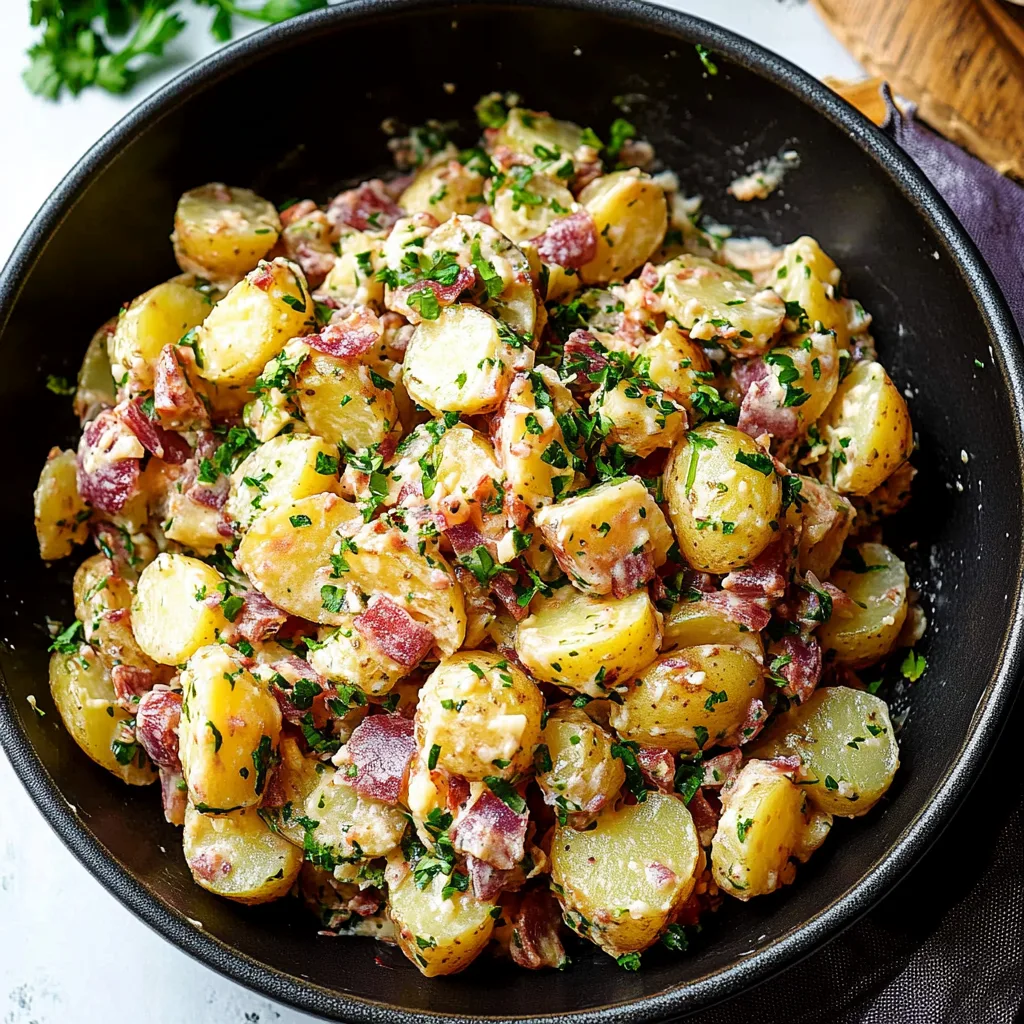
Old Fashioned German Potato Salad is a timeless side dish that brings warmth, tang, and a touch of rustic charm to any meal. Whether you’re hosting a barbecue, packing a picnic, or serving it alongside roasted meats, this salad stands out for its bold flavors and comforting texture. Made with tender red potatoes, a rich mustard-vinegar dressing, and crispy bacon, it’s a dish that feels like a big hug from the kitchen. In this post, I’ll walk you through every step of this traditional recipe, share secrets to perfect it, and even offer variations for dietary needs. Let’s dig in!
What is Old Fashioned German Potato Salad?
Often referred to as “Eiersalat” in German cuisine, this potato salad is a hearty, warm (not cold!) side that originated from farm kitchens across Central Europe. Unlike the mayo-based versions popular in the U.S., the traditional German style leans into vinegar, mustard, and caramelized onions for a tangy, slightly sweet, and smoky depth. The original recipe typically uses pork-based ingredients, but we’re modernizing it with a halal-friendly twist that keeps the flavor intact. The key to authenticity lies in small details: the coarse mustard, the starchy red potatoes, and the careful balance between vinegar and sugar to tame the acidity.
What makes this dish unique is the texture interplay — tender, waxy potatoes soaked in a grainy, slightly wrinkled dressing, topped with crispy bacon bits that add crunch without overwhelming the dish. Contrary to common myths, this isn’t a summer picnic salad. It’s served warm or at room temperature to let the flavors marry fully. If you’ve only ever had cold potato salad, this one will redefine your expectations!
Reasons to Try Old Fashioned German Potato Salad
Let’s be honest: recipes that involve boiling potatoes and simmering dressings aren’t usually top-of-the-list cooking projects. But this salad is different. First, it’s incredibly versatile — pairs equally well with grilled sausages, roasted chicken, or even vegan stews. Second, the simplicity of the ingredient list means you probably have most of it in pantry or fridge already: vinegar, mustard, onions, herbs. Third, it’s a conversation-starter at gatherings. I’ve hosted potlucks where this salad vanished faster than the main course, simply because of its unique, nostalgic taste.
Beginners (and seasoned cooks alike!) will love how forgiving this recipe is. No need for precise temperature control or gourmet equipment. A cast-iron skillet and a pot are all you need. Plus, the salad holds up well when made ahead, making it perfect for busy families or stress-free entertaining. Even my kids, who normally only enjoy things smothered in cheese, devour this dish when I tell them it’s “lead actor in a Netflix food movie.”
Ingredients Needed to Make Old Fashioned German Potato Salad
- 2 pounds small red potatoes, halved (keep the skin on for texture and nutrients)
- 1 tablespoon salt (for boiling potatoes)
- 12 ounces plant-based “bacon” (halal-friendly alternative to pork)
- ½ large yellow onion, minced (yellow adds more sweetness)
- 3 cloves garlic, minced
- ½ cup low sodium vegetable broth (sub for chicken broth if needed)
- ½ cup apple cider vinegar (key for that tangy kick)
- 1½ tablespoons whole grain mustard (or stoneground for texture)
- 1 tablespoon sugar (balances the vinegar; you can reduce to ½ tablespoon if desired)
- ½ teaspoon black pepper (freshly ground, never pre-packaged)
- ¼ teaspoon each: paprika (smoked for a bacon-like depth), salt (to adjust dressing)
- 3 tablespoons chopped fresh herbs (try parsley, dill, and chives together)
Instructions to Make Old Fashioned German Potato Salad – Step by Step
Step 1: Cook the Potatoes Like a Pro
Start by scrubbing those potatoes — really give them a good pinch to get rid of dirt. Place halved potatoes in a pot, cover with water (1½ inches above), and add the 1 tablespoon salt. I find that salting the water up front creates a briny base for the potatoes to absorb. Bring to a boil, then reduce to a simmer and let cook 8–10 minutes until just tender. Not overdone — we’re aiming for “bite-resistant” rather than “mushy.” Drain the potatoes but don’t rinse! Leaving the starchy surface helps them soak up the dressing later.
Step 2: Let the Bacon Do the Work
While the potatoes cook, focus on the bacon. I prefer thick-cut plant-based bacon here — it holds its texture better and offers every luscious smokiness. Cook them in a cast-iron skillet (the closer to the heat, the better) over medium heat for 4–5 minutes, until crisp and golden. Flip frequently to avoid burning, and don’t skip the caramelized edges — that’s the flavor! Once done, transfer the bacon to a paper towel–lined plate to drain, but don’t throw the fat away yet. This is where the magic happens.
Step 3: Craft the Dressing with Purpose
Add the onions to the same skillet using the bacon fat (or olive oil if needed). They don’t need to caramelize — just soften for 4–5 minutes to mellow their sharp edge. Toss in the garlic and sauté for 30 seconds; you’ll smell it sizzling — that’s your cue to stop so it doesn’t burn. Now, pour in the broth, vinegar, mustard, sugar, pepper, and paprika. Let this bubble gently for 5–7 minutes until the liquid has halved. You want a sauce that coats the back of a spoon but doesn’t drown the potatoes. It should taste vibrant and just slightly sweet!
Step 4: Combine Like You Mean It
Add the still-hot potatoes to the skillet with the dressing. Toss gently with a spatula for 2–3 minutes until the potatoes are glistening and the dressing is absorbed into their crevices. This is make-or-break: warm potatoes grip the dressing much better than cold ones. Stir in the crispy bacon and fresh herbs, then give the whole salad a final taste for salt. If it’s too dry (you forgot one quadratic equation), toss in a splash of broth or olive oil — it’s a science experiment out there!
Chef’s Tips for a Perfect Result
- Test for Doneness: Pierce a potato with a toothpick. If it goes in smoothly without resistance, they’re ready. If it’s still tough, cook 2 more minutes.
- Use Cast Iron: The heavy, even heat of a cast-iron skillet ensures the bacon develops those crispy edges and carmelizes the onions better than nonstick.
- Adjust the Vinegar: If your seasoning is too sharp (vinegar dominates), add a teaspoon of brown sugar to balance it out. If it’s too sweet, a splash of extra vinegar does the trick.
- Let it Rest: Let the salad sit for 10 minutes after tossing. This gives the flavors time to meld and the dressing to set into the potatoes.
Variations and Substitutions
- Gluten-Free Alternative: Replace whole grain mustard with stoneground mustard and ensure broth is labeled gluten-free. No need for adjustments when using potatoes and herbs.
- Low-Carb Version: Steam or air-fry quartered cauliflower instead of potatoes. Reduce sugar to ½ tablespoon and skip the paprika.
- Vegan Option: Use plant-based bacon and substitute broth. Add 1 teaspoon nutritional yeast for a tangy umami edge.
- Budget Swap: Use regular white vinegar (not apple cider) and coarse Dijon mustard for an affordable swap. The taste might dial down slightly, but the structure holds up.
How to Serve and Pair
Serve this salad warm, preferably in a clean, heatproof bowl to keep the crusting intact. For presentation, heap the potatoes like a mountain and drizzle a little extra dressing on top. Garnish with fresh herbs (or a drag of smoked paprika) for a cozy finish. Pair it with grilled pork chops (if not halal) or vegan “german sausage” for a wild contrast in texture. At home, I like to serve it alongside braised kale for a colorful, nutrient-packed contrast. At events, it’s perfect in visitors’ plates or as a warm side at barbecues with pull-apart sandwiches. Leftovers? Cold? Absolutely not! If you must, warm them gently in a skillet to revive the bacon crispiness.
Storage and Reheating
Refrigerator: Store in an airtight container for up to 4 days. The dressing might thicken slightly, but a quick stir brings it back to life.
Freezing: Not recommended due to the vinegar dressing’s liquid texture, but it can survive for 2–3 months in a freezer-safe bag. Thaw in the fridge overnight.Room Temperature: Keep the salad in a sealed container for up to 2 hours. Avoid serving in hot environments as the bacon becomes soggy.Reheating: Warm in a skillet over medium-low heat, tossing occasionally. Add a splash of broth if it dries out. Microwaves are okay for single-serving portion (30 seconds is best), but remember: the bacon won’t stay crisp that way.
Nutritional Values
- Calories: 280 per serving
- Protein: 8g
- Carbohydrates: 35g
- Fat: 12g
- Fiber: 3g
*Approximate values.
Frequently Asked Questions
Can I Substitute the Vinegar in This Salad?
Yes, but avoid using any vinegar with a strong fermented scent (coconut or rice vinegar, for example). White vinegar or malt vinegar are the best replacements for achieving that classic, sharp tang. Stick to ½ cup for flavor balance.1
How Do I Know When the Dressing Is Done?
The dressing is ready when it thickens to a murky texture (like tomato sauce) and smells strongly of mustard and vinegar. It should coat the back of your spoon or cling to the back of a fork.2
My Salad Turned Out Too Dry, What Should I Do?
Don’t panic! Add 2–3 tablespoons of warm broth or olive oil and toss to combine. The salad will draw in the moisture in about 5 minutes of sitting. If it’s still too dry, it’s a sign the potatoes were underdone — get a better pot and a bigger stove.3
Can I Prepare This in Advance for a Party?
Absolutely! Prepare the salad and dress the potatoes at least 1 hour before serving. Let it sit in a sealed container to allow the flavors to develop. To serve, gently reheat in a skillet with the bacon stirred in at the last moment to keep it crisp.4
What’s the Best Way to Serve if I Want It to Stand Out?
Serve it in individual heated ramekins with a small ranch coupon (herb garnish) on top. Pair it with grilled eggplant to keep the meal light but satisfying. For a touch of class, garnish with a single shake of smoked paprika before plating.5
Conclusion
Old Fashioned German Potato Salad isn’t just a recipe — it’s a warm, textured love letter to the art of making food that lingers on your plate and in your memories. With its tangy mustard dressing, crispy bacon, and tender potatoes, it’s a dish that brings comfort in every bite. Whether you’re a beginner fighting kitchen chaos (or chickens as I do) or an experienced cook needing a nostalgic comfort, give this salad a try. You’ll discover the kind of flavor that makes me come back week after week: rich, bold, and uniquely unforgettable.
Print
Old Fashioned German Potato Salad
- Total Time: 45
- Yield: 8 servings 1x
- Diet: Vegetarian option available
Description
A hearty, warm German-style potato salad with tender red potatoes, tangy mustard-vinegar dressing, and smoky crispy bits (pork-free version). Perfect for barbecues or family meals with rustic charm and bold flavor.
Ingredients
2 pounds small red potatoes, halved
3 tablespoons apple cider vinegar
2 tablespoons grainy mustard
1 tablespoon sugar
4 cups fat-free or non-dairy sour cream
10 baby carrots, halved
1 small yellow onion, finely chopped
1 teaspoon smoked paprika
1/2 teaspoon celery seed
Salt and pepper to taste
2 cups crispy halal-friendly turkey bacon pieces or roasted chickpeas
Instructions
Combine potatoes with 2 tablespoons vinegar in a pot, cover with water, and bring to boil. Simmer 10-12 minutes until fork-tender but still firm
Caramelize onion in pan over medium heat until golden (8-10 minutes)
Mix mustard, sugar, remaining vinegar, sour cream, paprika, celery seed, salt, and pepper in a bowl until smooth
Mash 2-3 tablespoons dressing with potatoes to lightly coat (add 2-3 Tbsp additional vinegar if desired)
Fold in remaining dressing, carrots, caramelized onions, and crispy turkey bacon or chickpeas
Adjust seasoning and refrigerate for rich flavor development (minimum 30 minutes before serving)
Notes
Use must-hassle red potatoes with skins on for best texture
Dressing can be made 1 day in advance
Traditionally served warm or at room temperature, not hot
For vegan version: omit sour cream and use roasted chickpeas as crunchy topping
- Prep Time: 15
- Cook Time: 30
- Category: Dinner
- Method: Boiling, Simmering, Slow Cooking
- Cuisine: German
Nutrition
- Serving Size: 1 cup
- Calories: 340
- Sugar: 5g
- Sodium: 700mg
- Fat: 18g
- Saturated Fat: 5g
- Carbohydrates: 42g
- Fiber: 3g
- Protein: 6g
- Cholesterol: 20mg