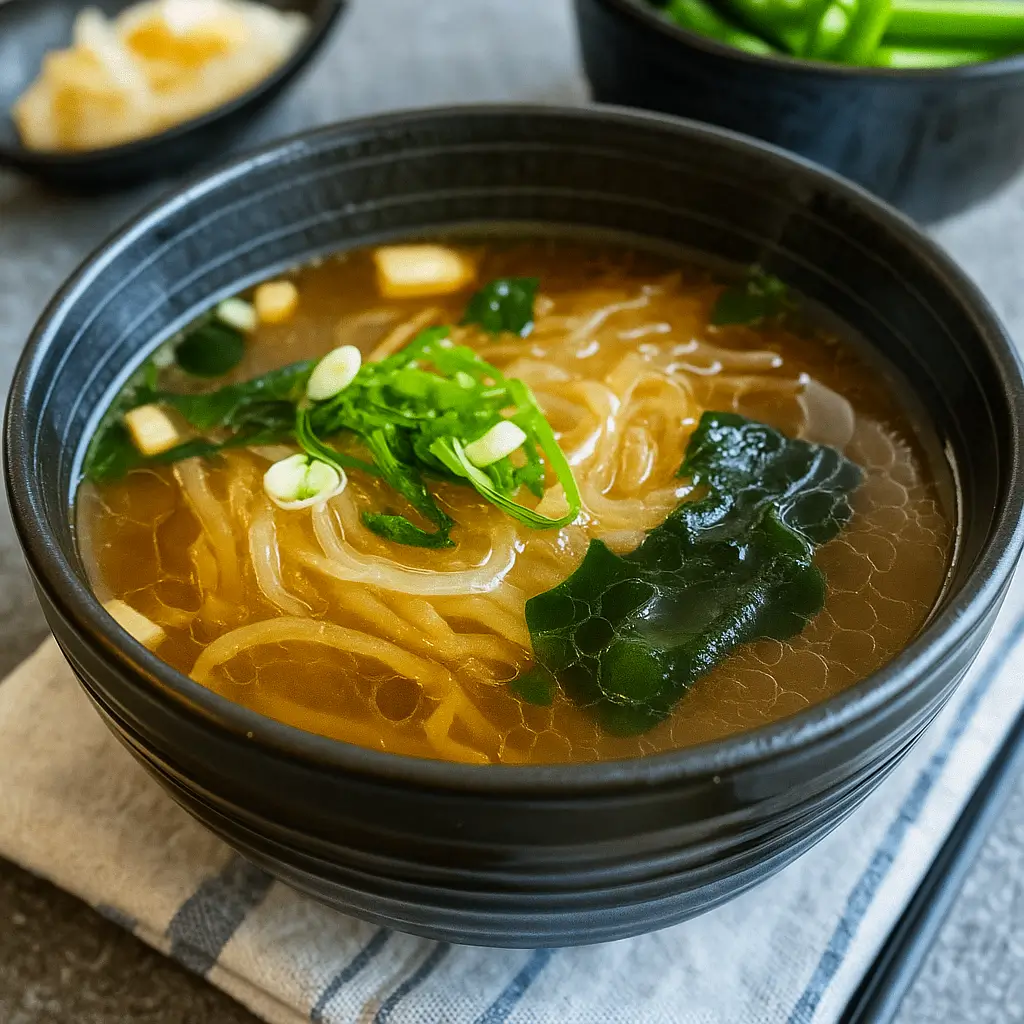
Japanese Glass Noodle Soup is the kind of cozy bowl you crave when you want something warm, satisfying, and still light enough to not put you in a food coma. Packed with umami-rich broth, tender glass noodles, and crisp-tender veggies, this soup is a weeknight lifesaver.
Whether you’re cooking for picky eaters, trying to sneak in more veggies, or just need a soothing meal after a long day, this recipe checks all the boxes. Best of all? It’s quick—ready in about 30 minutes from start to slurp. So if you’ve been hunting for a dish that’s wholesome, soul-hugging, and deceptively easy, Japanese Glass Noodle Soup might just become your new go-to.
Table of Contents
What is Japanese Glass Noodle Soup?
Japanese Glass Noodle Soup is a delicate yet flavorful noodle soup made with translucent glass noodles (often called harusame in Japan), steeped in a savory broth seasoned with soy sauce, mirin, and a hint of ginger. These noodles are typically made from mung bean or potato starch, giving them a silky texture and the magical ability to soak up every bit of the soup’s flavor.
This dish is a staple in many Japanese households—not overly fancy, but full of warmth and soul. It’s also incredibly flexible: you can swap out the veggies, play with the broth, or even add protein like tofu or shredded chicken. The key is in the balance: salty, slightly sweet, tangy, and aromatic. It’s like a comforting hug in a bowl.
Reasons to Try Japanese Glass Noodle Soup
Let’s face it—life gets hectic. When you’ve got emails to answer, laundry to fold, and maybe a kid (or three) asking “What’s for dinner?” for the fifth time, you need recipes that work with you, not against you. That’s where Japanese Glass Noodle Soup shines. First, it’s ready in under 30 minutes—quicker than a drive-thru run. Second, it’s nourishing but not heavy. You’ll feel full without feeling weighed down.
Third, it’s endlessly customizable: use whatever veggies you’ve got lurking in the crisper drawer. Finally, this is one of those magical meals that tastes fancy but is secretly so simple to throw together. Bonus? It’s a great meatless option, but you can easily toss in shredded rotisserie chicken or shrimp if you want. A win-win for flavor, flexibility, and time.
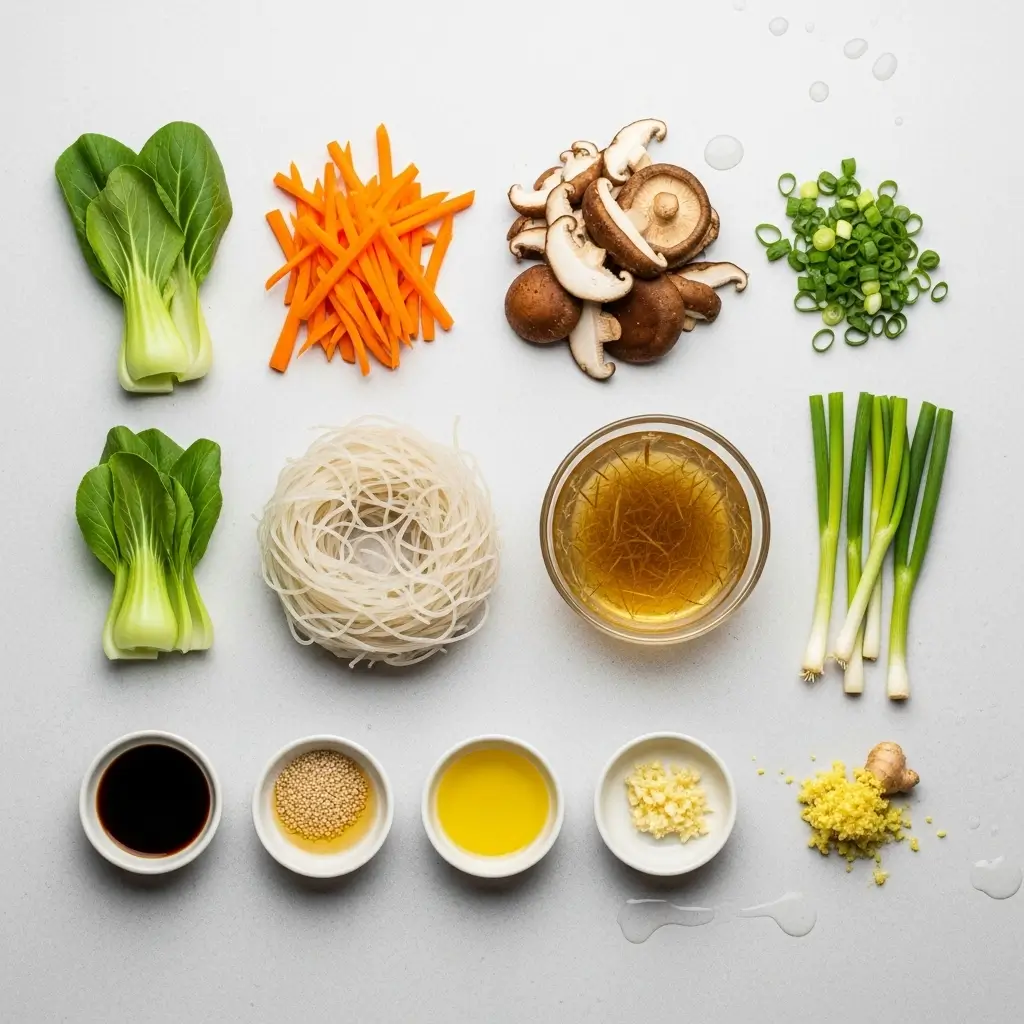
Ingredients Needed to Make Japanese Glass Noodle Soup
For the Soup Base:
- 4 cups vegetable or chicken broth
- 2 tablespoons soy sauce
- 1 tablespoon mirin
- 1 tablespoon rice vinegar
- 1 teaspoon sesame oil
- 1–2 teaspoons grated ginger
- 1 garlic clove, minced
For the Vegetables and Noodles:
- 100g glass noodles (harusame)
- 1 small carrot, julienned
- 1/2 cup shiitake mushrooms, sliced
- 1/2 cup bok choy or spinach, chopped
- 1/4 cup scallions, chopped
- 1/4 cup baby corn (optional)
Optional Garnishes:
- Fresh cilantro or parsley
- Sesame seeds
- Sliced chili (if you like heat)
Instructions to Make Japanese Glass Noodle Soup (Step-by-Step)
Making Japanese Glass Noodle Soup is a breeze when you break it down step by step. Whether you’re new to cooking or just short on time, this guide walks you through each part of the process in detail—so you can whip up a flavorful, cozy bowl without the guesswork. Along the way, I’ve included helpful tips and related recipes to make the most out of your cooking time.
Step 1: Prepare the Broth – Build the Flavor First
In a medium-sized pot, pour in 4 cups of vegetable or chicken broth. This is your soup’s foundation, so go for a quality broth—homemade if you have the time, or a trusted low-sodium store-bought version. Turn the heat to medium and bring it to a gentle simmer.
Once the broth starts to bubble, stir in the flavor-enhancers: 2 tablespoons soy sauce for saltiness and depth, 1 tablespoon mirin to add a hint of sweetness, and 1 tablespoon rice vinegar for a light tang. Add 1 teaspoon sesame oil for that nutty aroma, plus 1–2 teaspoons grated fresh ginger and 1 minced garlic clove. Let everything simmer together for about 5 minutes. This step-by-step infusion allows the aromatics to bloom, layering the broth with umami goodness.
For extra tips on using ginger and garlic effectively in soup bases, check out our cozy chicken poblano soup for more flavor-building tricks.
Step 2: Soften the Glass Noodles – Get That Perfect Texture
While the broth simmers, it’s time to get those noodles ready. Place 100g of glass noodles (also called harusame) into a large bowl. Pour hot water over the noodles until they’re fully submerged. Let them soak for about 5–7 minutes, or until they become soft and pliable.
Why not just boil them directly in the broth? Good question. Soaking glass noodles separately helps keep them from overcooking or clouding your beautiful broth. Once they’re softened, drain and set aside.
Want a deeper dive into noodle prep and substitutes? You might love this guide on chicken ramen stir fry where we cover different noodle types and how to work with them.
Step 3: Prep the Vegetables – Fresh, Fast, and Flavorful
Now’s the time to get your veggies in line. Wash and peel one small carrot, then julienne it into thin strips for quicker cooking and a nice bite. Slice 1/2 cup of shiitake mushrooms (or swap for cremini if needed), chop 1/2 cup of bok choy (or spinach), and slice 1/4 cup scallions. Optional: toss in 1/4 cup baby corn for a fun texture contrast.
Prepping ahead? Our vegetable orzo soup offers even more veggie prep ideas if you’re trying to minimize chopping on a busy night.
Step 4: Cook the Vegetables – Layer in the Freshness
With your broth still gently simmering, add in the carrots, mushrooms, and baby corn (if using). Let them cook for 3–4 minutes. You want them to soften slightly while keeping a little bit of crunch—no one’s here for mushy carrots.
Next, stir in the bok choy or spinach. These greens wilt quickly, so give them just 1–2 minutes in the hot broth. The color will brighten, and they’ll add both nutrients and that signature freshness.
Step 5: Add the Noodles – Let Them Soak Up the Flavor
Gently stir the soaked glass noodles into the pot. Let them heat through in the broth for 2–3 minutes. This step by step blend allows the noodles to absorb the rich flavor of your soup base while staying tender and slippery.
If you’re doubling the batch or making ahead, consider checking out our anti-inflammatory cauliflower chicken soup for storage tips—especially if you want to portion and freeze similar soups.
Step 6: Garnish and Serve – The Final Touch
Ladle your Japanese Glass Noodle Soup into bowls, making sure each portion has a good mix of noodles, broth, and veggies. Now for the fun part—garnishes! Sprinkle on chopped scallions, a few sesame seeds, or fresh cilantro or parsley. If you like a little heat, a few slices of red chili or a dash of chili oil will do the trick.
Want to jazz things up further? Pair it with this comforting creamy white chicken lasagna soup for a cozy soup night that everyone will rave about.
What to Serve with Japanese Glass Noodle Soup
While this dish can totally stand on its own, pairing it with something simple makes it feel like a full meal. A small bowl of rice, maybe topped with a soft-boiled egg or pickled veggies, complements it perfectly. You could also serve it alongside steamed dumplings or a crisp cucumber salad for contrast. And if you’re craving something heartier, try it with creamy white chicken lasagna soup as a fun “soup duo” dinner. Don’t forget a cozy cup of green tea or even a splash of sake if you’re feeling fancy!
Key Tips for Making Japanese Glass Noodle Soup
Keep it simple, but don’t skip the flavor boosters. That combo of ginger, garlic, soy sauce, and mirin? It’s small but mighty. Always soak the glass noodles instead of boiling them directly—this keeps them from turning into mush. Use a good-quality broth—it makes a huge difference. Add the bok choy or spinach at the end to keep it from getting overcooked and dull. Want to bulk it up? Toss in tofu cubes, leftover shredded chicken, or a soft-boiled egg for protein. And don’t be afraid to get creative with veggies—snap peas, bell peppers, or zucchini would all work great.
Storage and Reheating Tips for Japanese Glass Noodle Soup
Got leftovers? Lucky you. Store any extra soup in an airtight container in the fridge for up to 3 days. Just keep the noodles separate if possible, since they love to soak up all the broth and can get a little soggy over time. When reheating, add a splash of broth or water and warm it gently over the stove or in the microwave. If you’re making it ahead, prep the broth and veggies, and soak the noodles right before serving for the best texture.
FAQs
Can I make this gluten-free?
Yes! Just be sure to use tamari or a gluten-free soy sauce.
Are glass noodles the same as rice noodles?
Nope. Glass noodles are made from mung bean or potato starch and turn clear when cooked, unlike rice noodles which are made from rice flour.
Can I use other vegetables?
Absolutely. Use what you have—zucchini, cabbage, snow peas, or bell peppers all work well.
How spicy is this recipe?
Totally up to you! Add sliced chili at the end if you want to kick it up a notch.
Can I freeze Japanese Glass Noodle Soup?
You can freeze the broth and veggies, but not the noodles—they get mushy. Freeze in portions and add fresh noodles when reheating.
Final Thoughts
Japanese Glass Noodle Soup is a simple, soul-warming dish that brings comfort without complication. It’s perfect for busy weeknights, cozy weekends, or anytime you need a quick dinner that doesn’t feel rushed. Plus, it’s a great way to use up leftover veggies and still feel like you’ve made something special. Whether you’re new to Asian-inspired cooking or just want to mix up your usual soup rotation, this one deserves a spot in your dinner lineup. Want more soup ideas? You’ll love our Chinese Shrimp Noodle Soup or Cauliflower Lentil Coconut Curry. Now go forth and slurp!
Visit our Pinterest for regular slow cooker recipe updates, or join our Facebook discussions where cooking fans exchange their favorite hearty meal ideas.
Print
Japanese Glass Noodle Soup – Light, Flavorful Comfort
- Total Time: 30 minutes
- Yield: 4 servings 1x
- Diet: Vegan
Description
A light and nourishing Japanese Glass Noodle Soup made with a savory soy-ginger broth, tender vegetables, and soft harusame noodles — perfect for a quick and healthy meal.
Ingredients
For the Soup Base:
- 4 cups vegetable or chicken broth
- 2 tablespoons soy sauce
- 1 tablespoon mirin
- 1 tablespoon rice vinegar
- 1 teaspoon sesame oil
- 1–2 teaspoons grated ginger
- 1 garlic clove, minced
For the Vegetables and Noodles:
- 100g glass noodles (harusame)
- 1 small carrot, julienned
- 1/2 cup shiitake mushrooms, sliced
- 1/2 cup bok choy or spinach, chopped
- 1/4 cup scallions, chopped
- 1/4 cup baby corn (optional)
Optional Garnishes:
- Fresh cilantro or parsley
- Sesame seeds
- Sliced chili (optional)
Instructions
1. Heat Broth: In a medium pot, bring the vegetable or chicken broth to a simmer over medium heat.
2. Add Flavors: Stir in soy sauce, mirin, rice vinegar, sesame oil, grated ginger, and minced garlic. Let it simmer for 5 minutes to blend the flavors.
3. Soak Glass Noodles: In a separate bowl, soak the glass noodles in hot water for about 5-7 minutes until soft. Drain and set aside.
4. Prepare Vegetables: While the noodles soak, prepare the vegetables: julienne the carrot, slice the mushrooms, chop the bok choy, and slice the scallions.
5. Add Vegetables to Broth: Add the carrots, mushrooms, and baby corn (if using) to the simmering broth. Cook for 3-4 minutes until tender.
6. Add Bok Choy: Stir in the bok choy or spinach and cook for another 1-2 minutes until wilted.
7. Add Noodles: Add the soaked glass noodles to the broth and stir to combine. Let it simmer for an additional 2-3 minutes to heat through.
8. Garnish and Serve: Ladle the soup into bowls, garnish with chopped scallions, fresh cilantro, sesame seeds, and sliced chili if desired. Serve hot and enjoy!
Notes
For a spicier kick, add a dash of chili oil or extra sliced chili. Use tamari for a gluten-free version. Harusame noodles are delicate — avoid overcooking once added to the broth.
- Prep Time: 10 minutes
- Cook Time: 20 minutes
- Category: Soup
- Method: Stovetop
- Cuisine: Japanese
Nutrition
- Serving Size: 1.5 cups
- Calories: 175
- Sugar: 3g
- Sodium: 620mg
- Fat: 3g
- Saturated Fat: 0.5g
- Unsaturated Fat: 2.5g
- Trans Fat: 0g
- Carbohydrates: 30g
- Fiber: 3g
- Protein: 4g
- Cholesterol: 0mg