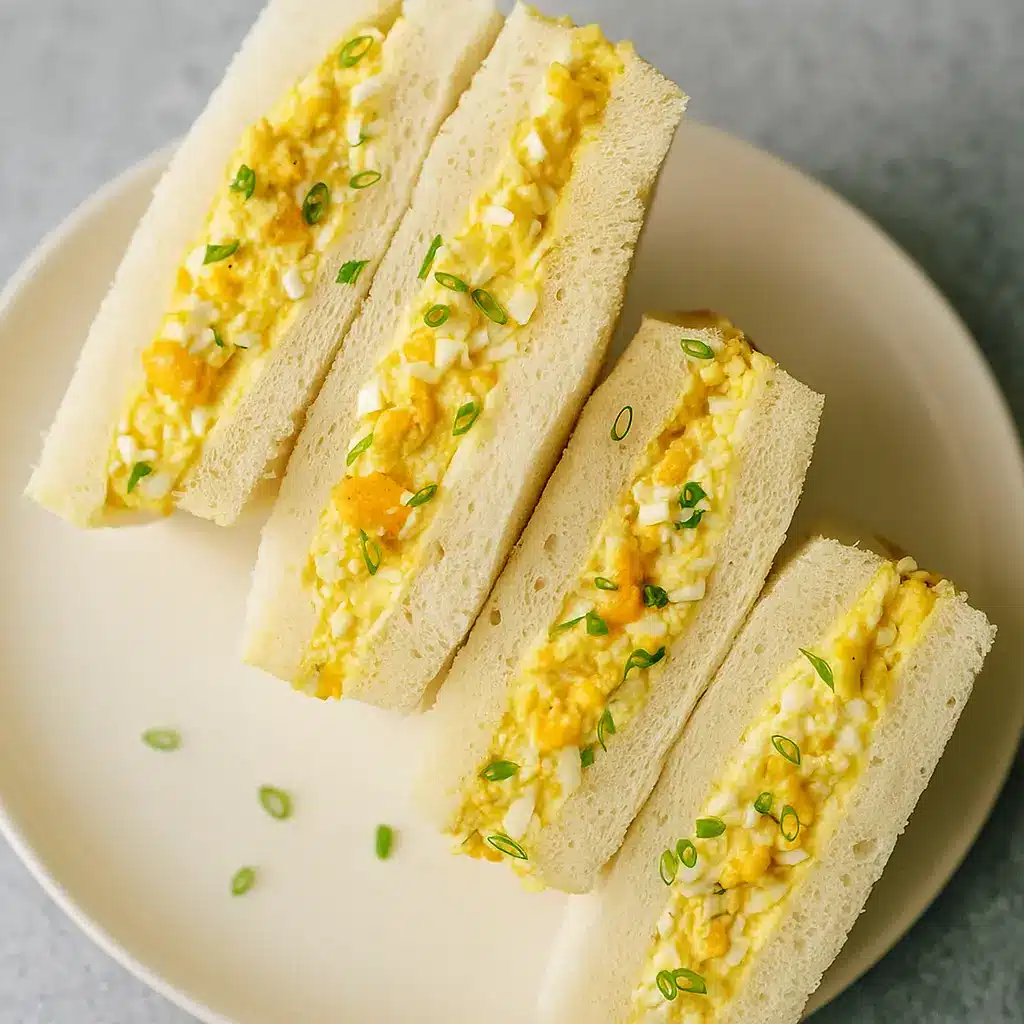
There’s just something about a Japanese Egg Sandwich (Tamago Sando) that feels like a little kitchen magic. Perfectly soft milk bread hugging a rich, creamy egg salad—simple, yes, but also the kind of recipe that makes you wonder why every sandwich can’t taste this good. And as a mom of three who’s constantly juggling lunchboxes, picky eaters, and my own cravings, let me tell you—this sandwich delivers.
Whether you’re looking for a quick bite between Zoom calls, a light lunch that won’t weigh you down, or a lunchbox treat that actually comes back eaten (hallelujah), this recipe is about to become your new favorite.
Table of Contents
Why You’ll Love This Japanese Egg Sandwich (Tamago Sando)
- It’s quick: from pot to plate in under 30 minutes.
- It’s creamy, pillowy, and comforting in every bite.
- It makes you feel fancy without requiring a culinary degree.
- Kids devour it (a rare win for all ages).
What Does Japanese Egg Sandwich (Tamago Sando) Taste Like?
Think of the best egg salad you’ve ever had—now imagine it softer, creamier, and tucked into bread so fluffy it practically melts on your tongue. That’s tamago sando. It’s not heavy like an American deli sandwich but instead feels light, balanced, and almost luxurious. The Japanese mayonnaise adds a subtle tang that keeps the richness in check.
It’s the kind of sandwich that makes you close your eyes after the first bite, nod slowly, and whisper: oh wow.
Ingredients for Japanese Egg Sandwich (Tamago Sando)
The beauty of a Japanese Egg Sandwich (Tamago Sando) is how it takes the most basic ingredients—eggs, bread, butter, and mayo—and transforms them into something that feels gourmet. Let’s break down exactly what you’ll need and why each ingredient matters (because in a recipe this simple, quality really shines).
- 6 large eggs – Go for fresh, organic eggs if possible. The yolks are richer in color and taste, which makes your filling creamier and more flavorful. Soft-boiling them creates that velvety, custard-like texture the Japanese are known for, while hard-boiling makes for a sturdier sandwich filling.
- ¼ teaspoon sugar – Just a pinch, but it balances out the savory notes and gives the egg salad that subtle sweetness that makes it addictive.
- ¼ teaspoon salt – Essential for bringing out the natural flavors of the eggs.
- ¼ teaspoon black pepper – A touch of warmth and depth—don’t skip this, even if it seems small.
- 1–2 teaspoons milk or plant milk (optional) – This is a trick for when you’re using hard-boiled eggs. The milk helps loosen the egg salad so it’s creamy instead of dry.
- 4 tablespoons Japanese mayonnaise – Kewpie mayo is the star here. It’s silkier, slightly tangier, and has a depth that regular mayo just can’t match. If you’re in a pinch, you can use American mayo with a splash of rice vinegar to mimic the flavor.
- 4 slices Japanese milk bread (Shokupan) – This isn’t your average sandwich bread. It’s soft, airy, and almost cake-like, which makes every bite melt-in-your-mouth. If you can’t find it, brioche bread is a decent backup.
- 2 tablespoons unsalted butter, softened – Spreading butter on the bread before the filling creates a barrier that keeps the sandwich from getting soggy. Plus, it adds another layer of richness.
- Chives (optional garnish) – Fresh, finely chopped chives give a gentle onion flavor and brighten the look of the sandwich.
If you love recipes that are simple yet comforting, you might also enjoy my Creamy Chicken Enchilada Soup—it uses everyday ingredients in a way that feels special, just like this sandwich.

Instructions: How to Make Japanese Egg Sandwich (Tamago Sando)
Making a Japanese Egg Sandwich (Tamago Sando) is surprisingly simple, but there are a few little details that really make the difference between a “just okay” sandwich and one that feels café-quality. Follow these steps, and you’ll end up with a creamy, fluffy sandwich that tastes like it came straight out of a Tokyo bakery.
Step 1: Boil the eggs just right
- Fill a medium-sized pot with enough water to fully cover the eggs.
- Bring the water to a rolling boil, then carefully lower the eggs in with a ladle (no one likes a cracked egg situation).
- For a softer, creamier filling: boil the eggs for 7 minutes, then let them sit in the hot water for 1 extra minute before moving them to an ice bath.
- For a firmer filling: boil the eggs for 10 minutes before the ice bath.
Pro Tip: The ice bath isn’t optional—it stops the cooking immediately and makes peeling much easier. Peel while the eggs are still slightly warm for best results.
Step 2: Prepare the egg salad
- Place the peeled eggs in a large mixing bowl.
- Use a fork to mash the eggs until they’re broken down into small, chunky bits (about pea-sized). You don’t want them too fine—texture is everything here.
- Add sugar, salt, and black pepper, then continue mashing to combine.
- Stir in the Japanese mayonnaise (and a splash of milk if you used hard-boiled eggs).
- Taste and adjust. A touch more mayo or seasoning can take the filling from good to irresistible.
Step 3: Butter the bread
- Spread a thin layer of softened butter over each slice of Japanese milk bread.
- This step keeps the bread from absorbing too much moisture from the filling. Plus, the buttery layer adds another dimension of flavor.
Step 4: Assemble your Tamago Sando
- Spread the egg salad generously over one slice of buttered bread.
- Place the second slice on top, buttered side down, pressing gently to hold everything together.
- For authenticity, trim off the crusts. This not only makes it look like the sandwiches sold in Japanese konbini (convenience stores) but also gives that cloud-like texture in every bite.
Step 5: Slice and serve
- Use a sharp knife to cut the sandwich cleanly in half. You’ll see the creamy yellow filling peek out perfectly between the fluffy bread layers.
- Garnish with chives if you’d like a little freshness.
- Serve right away—or wrap tightly in plastic wrap if packing for later.
Step 6: Store for later (optional)
If you’re making a batch ahead, wrap each sandwich individually in plastic wrap and refrigerate for up to 2 days. They hold up beautifully, which makes them great for meal prep or lunchboxes.
If you enjoy recipes that combine comfort and convenience, you might also love my Slow Cooker Turkey Chili—like this sandwich, it’s easy to prepare ahead and tastes even better the next day.
Tips and Tricks for Perfect Japanese Egg Sandwich (Tamago Sando)
- Don’t skip the mayo. Japanese mayo is richer and smoother than regular—worth keeping in your fridge.
- Cut off the crusts. It’s not just aesthetic; it makes every bite soft and pillowy.
- Soft-boiled vs. hard-boiled. Soft-boiled gives a creamier filling, hard-boiled is sturdier for packing.
- Brioche hack. Can’t find Japanese milk bread? Brioche is your next best friend.
- Make ahead. Wrap tightly in plastic and refrigerate for up to 2 days.
Storage for Japanese Egg Sandwich (Tamago Sando)
To keep leftovers fresh:
- Wrap each sandwich individually in plastic wrap.
- Store in the fridge for up to 48 hours.
- For lunchboxes, pack with an ice pack to keep it cool and safe.
FAQs
Can I make this dairy-free?
Yes! Use plant milk (like oat or almond) and dairy-free butter.
What if I don’t have Japanese mayo?
Regular mayo works, but add a small splash of rice vinegar or lemon juice for tang.
Can I freeze these sandwiches?
Not recommended. The egg salad loses its creamy texture after thawing.
Conclusion
The Japanese Egg Sandwich (Tamago Sando) is proof that sometimes the simplest recipes are the most soul-satisfying. With just a handful of ingredients, you get a creamy, pillowy, downright delightful sandwich that feels both special and easy. Whether you’re making it for yourself, a lunchbox, or a light dinner with soup, it’s a recipe you’ll keep coming back to.
If you try it, I’d love to hear how it turned out—leave a comment or tag me on Instagram so I can cheer you on from my kitchen.
Visit our Pinterest for regular slow cooker recipe updates, or join our Facebook discussions where cooking fans exchange their favorite hearty meal ideas.
Print
Japanese Egg Sandwich (Tamago Sando): The Best Sandwich You’ll Ever Make
- Total Time: 25 minutes
- Yield: 4 servings 1x
- Diet: Vegetarian
Description
Japanese egg sandwich, or tamago sando, features creamy egg salad packed between fluffy Japanese milk bread. It’s simple, light, and perfect for breakfast, lunch, or a quick snack.
Ingredients
Egg Salad:
- 6 large eggs
- 1/4 teaspoon sugar
- 1/4 teaspoon salt
- 1/4 teaspoon ground black pepper
- 1 to 2 teaspoons milk or plant milk (optional)
- 4 tablespoons Japanese mayonnaise
Sandwich:
- 4 slices Japanese milk bread
- 2 tablespoons unsalted butter, softened
- Chives, sliced (optional garnish)
Instructions
1. Prepare an ice bath in a large bowl.
2. Bring a medium pot of water to a boil. Carefully lower the eggs into the water and boil for 7 minutes for soft-boiled or 10 minutes for hard-boiled. Let sit for 1 minute, then transfer to the ice bath for 2 minutes. Peel the eggs while still lukewarm.
3. Mash the peeled eggs in a bowl with a fork until pieces are small. Mix in sugar, salt, and black pepper.
4. Add Japanese mayonnaise (and milk if using hard-boiled eggs). Stir until creamy. Adjust seasoning if needed.
5. Spread 1/2 tablespoon softened butter onto each slice of bread.
6. Spread egg salad evenly on one slice, then top with the other slice, buttered side down. Gently press and trim off crusts.
7. Repeat with the remaining bread and egg salad. Garnish with chives if desired.
8. Cut sandwiches in half and serve immediately.
Notes
If using soft-boiled eggs, you can skip the milk. For hard-boiled eggs, add 1–2 teaspoons of milk for creaminess.
Wrap sandwiches tightly in plastic wrap to store in the fridge for up to 2 days.
Best served chilled or at room temperature.
- Prep Time: 10 minutes
- Cook Time: 15 minutes
- Category: Sandwich
- Method: Boiling, Assembling
- Cuisine: Japanese
Nutrition
- Serving Size: 1 sandwich
- Calories: 215
- Sugar: 2.2g
- Sodium: 418mg
- Fat: 15.4g
- Saturated Fat: 4.9g
- Unsaturated Fat: 9g
- Trans Fat: 0g
- Carbohydrates: 9g
- Fiber: 0.3g
- Protein: 10.3g
- Cholesterol: 290mg