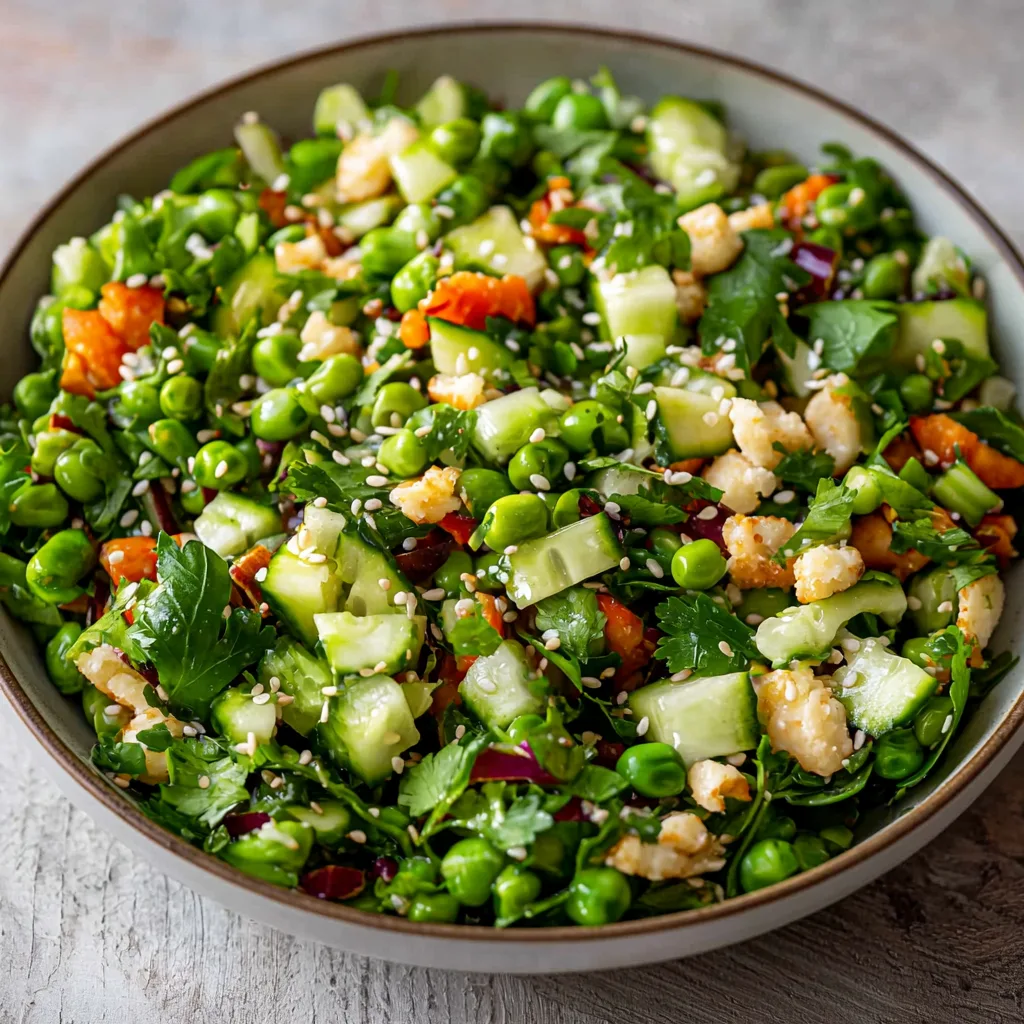
High Protein Salad with Asian Dressing isn’t just a recipe—it’s a game-changer for anyone who wants to eat healthfully without spending hours in the kitchen. This vibrant, nutrient-packed salad is loaded with fresh vegetables, protein-rich edamame, and quinoa, all swirled together in a tangy, umami-rich dressing. Perfect for meal prep, it keeps well in jars or containers and can be customized to suit your cravings, whether you prefer it as a light lunch or a hearty main dish.
What makes this salad stand out from the crowd? The Asian dressing brings a bold, savory-sweet flavor that transforms ordinary greens into something extraordinary. The toasted sesame oil, rice vinegar, and tamari create a depth of flavor that’s hard to resist, while the crunch of cucumber and celery adds satisfying texture. Best of all, it’s incredibly easy to assemble, requires no cooking, and fits seamlessly into a vegan or vegetarian diet.
What is High Protein Salad with Asian Dressing?
This recipe is a fusion of high-protein ingredients like edamame, quinoa, and green peas with the bold, aromatic flavors of Asian cuisine. The dressing—crafted with tamari, rice vinegar, maple syrup, and sesame oil—marries sweet, sour, and umami notes to create a dynamic base for the salad. The mix of vegetables, grains, and legumes delivers a balanced meal that’s both hearty and refreshing, making it a top choice for health-conscious eaters.
The origins of Asian dressings can be traced back to traditional East Asian culinary practices, where fermented ingredients like soy sauce and rice vinegar were used to enhance umami and preserve flavor. This recipe simplifies those techniques for home cooks, using simple pantry staples to create a vibrant, no-cook dish. What makes it unique is the combination of high-protein ingredients with crunchy, refreshing textures for a meal that feels indulgent but is built on nutrition.
Reasons to Try High Protein Salad with Asian Dressing
Whether you’re a beginner in the kitchen or a seasoned meal prepper, this salad is a win. It’s incredibly easy to make, requiring just 15 minutes of work and absolutely no cooking. The ingredients are affordable and accessible, and the dish can be prepped in advance to save time during busy weeks. Every bite is packed with plant-based protein, fiber, and antioxidants, making it a guilt-free option for families or solo meals.
This Salad with Asian Dressing is perfect for anyone who wants to enjoy wholesome, flavorful food without the hassle. It’s ideal for vegans and vegetarians but easily adapted for omnivores with the addition of grilled chicken or tofu. The recipe’s versatility means you can mix and match vegetables or grains with what’s in your fridge, turning it into a truly personal dish. Plus, the bold Asian flavors make it exciting enough to serve at a dinner party or enjoy during a relaxed weeknight.
Ingredients Needed to Make High Protein Salad with Asian Dressing
Here’s what you’ll need to create this vibrant, high-protein salad:
- ¼ cup tamari or soy sauce (low sodium recommended)
- ¼ cup plus 1 tablespoon rice vinegar
- 1 tablespoon plus 1 teaspoon maple syrup
- 1 tablespoon toasted sesame oil
- 2 cups chopped cucumber (1 large)
- 2 cups chopped celery (6 ribs)
- 2 cups thawed sweet green peas (frozen, preferred)
- 2 cups thawed shelled edamame (frozen, preferred)
- 2 cups cooked quinoa (⅔ cup uncooked)
- 2 cups chopped baby spinach
- ½ cup chopped cilantro
- ½ cup chopped scallions
- 2 tablespoons plus 2 teaspoons toasted sesame seeds
- Optional: Fresh lime juice for serving
Pro tips: Use frozen edamame and peas for convenience, and toast your sesame seeds briefly for a nuttier flavor. For a heartier salad, double the quinoa quantity or add chopped roasted sweet potatoes.
Instructions to Make High Protein Salad with Asian Dressing – Step by Step
Step 1: Prep your ingredients. Start by chopping the cucumber and celery into bite-sized pieces. If you’re using frozen edamame and peas, thaw them under warm running water. Drain and pat them dry to avoid a soggy salad. Cook the quinoa separately as directed on the package, then let it cool slightly for easier handling.
Step 2: Make the Asian dressing. In a medium bowl, whisk together the tamari, rice vinegar, maple syrup, and toasted sesame oil. Taste and adjust the balance of sweet and sour by adding more rice vinegar or maple syrup as needed. The dressing should be bold but not overpowering. Set it aside while you prepare the salad base.
Step 3: Layer or toss the salad. For meal prep, use 16-ounce mason jars and layer your ingredients. Start with the cucumber and celery at the bottom (for natural pickling), then add the peas, edamame, quinoa, spinach, cilantro, scallions, and sesame seeds. Pour ¼ of the dressing into each jar. Seal and refrigerate for up to 4 days. To serve, shake the jar, add lime juice for brightness, and enjoy.
Step 4: Alternatively, for a single-family recipe, transfer all the chopped vegetables, grains, and greens to a large bowl. Add the dressing and toss gently to ensure even coating. Avoid over-tossing to preserve the crunch. Taste and adjust the seasonings, then serve immediately with a sprinkle of extra sesame seeds or a drizzle of lime juice.
Chef’s Tips for a Perfect Result
- Toast your sesame seeds in a dry skillet for 1–2 minutes until fragrant. This enhances their nutty flavor without requiring oil.
- Chop the vegetables just before assembling to prevent wilting. Celery and cucumber lose their crunch if prepped too early.
- Add a splash of lime juice when serving to brighten the flavors. Use a microplane grater for a zesty zest-to-juice ratio.
- For a heartier texture, stir in ½ cup of roasted chickpeas or crispy tofu chunks after tossing the salad.
- Experiment with the dressing: try adding grated ginger or chili flakes for a spicy kick that pairs beautifully with Asian flavors.
Variations and Substitutions
Vegan Option: Ensure the tamari is labeled “no enzymatic wheat” for strict vegan diets. Replace maple syrup with agave if preferred.
Gluten-Free Alternative: Use 100% tamari instead of regular soy sauce (which often contains wheat). Verify other ingredients (e.g., quinoa) are certified gluten-free.
Low-Carb Twist: Substitute quinoa with cooked cauliflower rice and reduce the pea quantity to keep the carb count lower.
Budget Swap: Swap edamame for cooked chickpeas or black beans. They add similar texture and protein but are often cheaper.
Spicy Version: Add ½ teaspoon of sriracha or minced jalapeño to the dressing for a fiery twist.
How to Serve and Pair
Serve this salad as a standalone meal, a side for grilled tofu or chicken, or even a filling for homemade grain bowls. For a complete feast, pair it with steamed jasmine rice and a small bowl of miso soup. Garnish with toasted nori flakes or thinly sliced avocado for added richness.
Want to elevate the presentation? Divide the salad into clear glass bowls or serving platters to showcase the vibrant colors. Add edible flowers or a few sesame seed clusters for a decorative touch. This dish works equally well for casual lunches, potlucks, or even packed lunches for on-the-go meals.
Storage and Reheating
Refrigerator: Store leftovers in an airtight container or mason jars for up to 4 days. The dressing will mellow over time, so adjust the lime juice or rice vinegar before serving.
Freezer: Freezing is not recommended, as the moisture from vegetables may create a mushy texture. Stick to refrigeration for optimal quality.
Room Temperature: Keep the salad in a sealed container for 2–3 hours max. Ideal for picnics or small gatherings.
Reheating: This salad is best served cold or at room temperature. If you prefer warm servings, transfer 1 cup of the mixture to a nonstick skillet and heat over low heat for 3–4 minutes until warmed through (avoid overcooking to prevent sogginess). Add a splash of water to refresh the texture if desired.
Nutritional Values
Per serving (16-ounce jar):
- Calories: 386
- Protein: 21g
- Carbohydrates: 48g
- Fat: 14g
- Fiber: 14g
Approximate values.
Frequently Asked Questions
Can I substitute the quinoa with another grain?
Yes! You can use brown rice, couscous, or even cooked buckwheat. Adjust the quantity to match the volume of quinoa for consistent texture.
How do I tell when the dressing is perfectly balanced?
The dressing should taste tangy, slightly sweet, and nutty. Taste after mixing and add more rice vinegar or maple syrup individually until it suits your preference.
Why does my salad feel dry after refrigeration?
The dressing tends to separate in the fridge. Before serving, give the jar a good shake or stir to redistribute the dressing. Add a splash of water or rice vinegar to refresh it.
Can I make it ahead for the workweek?
Absolutely! Assemble the salad in mason jars up to 4 days in advance. Keep the lime juice addition for the final step to preserve freshness.
What’s the best way to customize the taste?
Add toasted nuts, crispy shallots, or pickled ginger for extra layers of flavor. Experiment with herbs like Thai basil or mint for a fresh twist.
Conclusion
High Protein Salad with Asian Dressing is a vibrant, satisfying dish that proves healthy eating can be both flavorful and effortless. With its bold dressing and mix of crunchy vegetables and protein-rich ingredients, this recipe invites you to enjoy every bite. Whether you’re prepping for the week or craving a quick lunch, the signature blend of sweet, sour, and umami will leave you coming back for more.
High Protein Salad with Asian Dressing
- Total Time: 15
- Yield: 4 servings 1x
- Diet: Vegetarian / Vegan
Description
A vibrant, no-cook salad packed with plant-based protein from quinoa, edamame, and almonds. The tangy Asian dressing blends tamari, rice vinegar, and maple syrup for bold umami-sweet flavor, making this meal prep-friendly dish a nutritious and customizable option for vegetarians and vegans.
Ingredients
2 cups cooked quinoa
1 cup shelled edamame
1 cup shredded purple cabbage
1/2 cup diced cucumber
1/2 cup sliced celery
1/2 cup diced red bell pepper
3 green onions, thinly sliced
1/3 cup toasted almond slivers
Asian dressing ingredients:
2 tbsp tamari (or soy sauce)
1 tbsp rice vinegar
1 tbsp maple syrup
1 tsp toasted sesame oil
1 clove garlic, minced
1/2 tsp fresh ginger, grated
Pinch of chili flakes (optional)
Instructions
1. Rinse and cook quinoa according to package instructions, then let cool.
2. Combine cooked quinoa, edamame, cabbage, cucumber, celery, bell pepper, and green onions in a large bowl.
3. In a separate bowl, whisk together tamari, rice vinegar, maple syrup, sesame oil, garlic, ginger, and chili flakes.
4. Pour dressing over salad and toss gently to coat.
5. Top with toasted almond slivers and store in airtight meal prep containers.
Notes
Stores refrigerated for 3-4 days.
Substitute edamame with tofu or chickpeas for a halal option.
Optional add-ins: grilled chicken for omnivores, sesame seeds for extra crunch, or chopped kale for greens.
Adjust vegetables based on season or fridge inventory.
- Prep Time: 15
- Category: Dinner
- Method: Assembling
- Cuisine: Asian / American Fusion
Nutrition
- Serving Size: 1 container
- Calories: 200
- Sugar: 2g
- Sodium: 500mg
- Fat: 11g
- Saturated Fat: 1g
- Carbohydrates: 18g
- Fiber: 6g
- Protein: 12g
- Cholesterol: 0mg