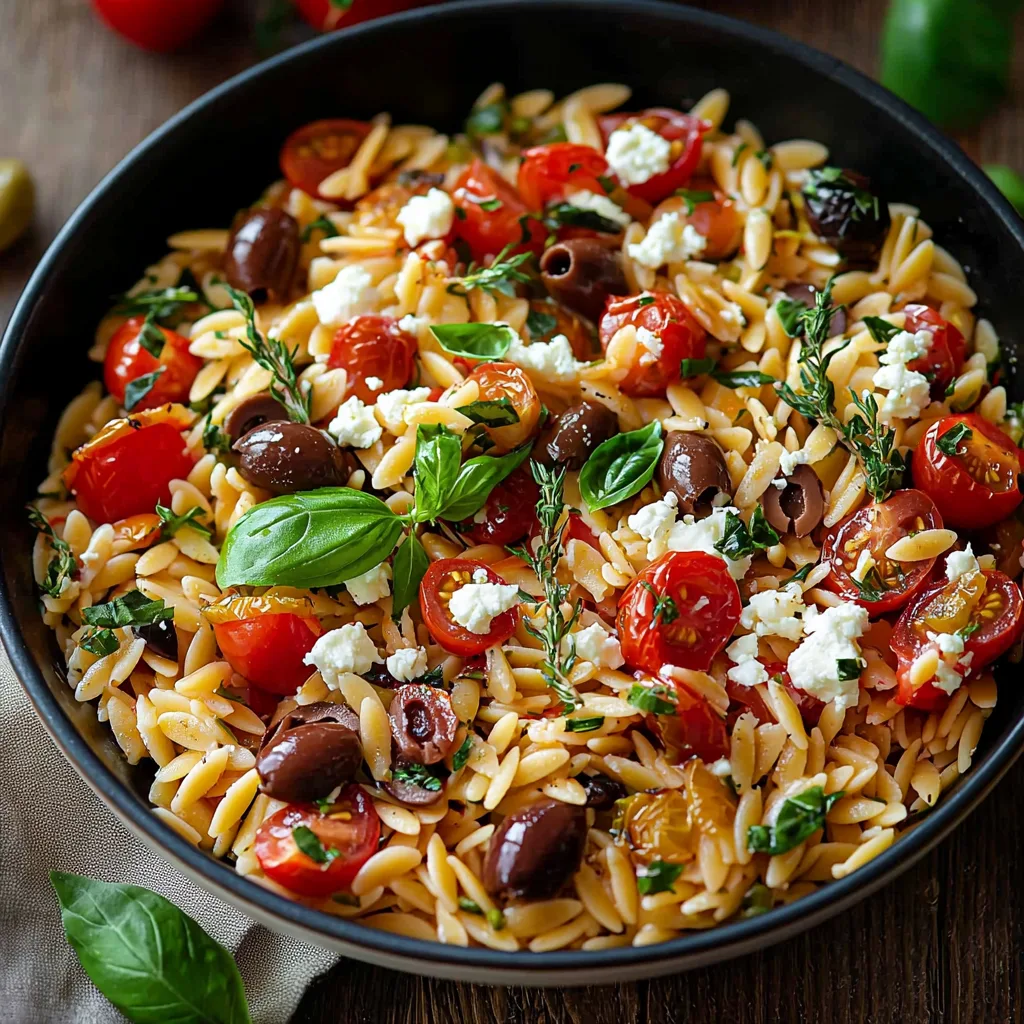
Greek Orzo with Tomatoes, Olives, Basil, and Feta is a vibrant, creamy dish that brings the flavors of the Mediterranean to your kitchen in under half an hour. This simple yet indulgent recipe is perfect for busy weeknights or family gatherings, offering a fresh, herbaceous base loaded with briny olives, juicy tomatoes, and tangy feta. As a home cook who grew up on a farm and now spends her days juggling three kids, I’ve learned to love recipes that use minimal ingredients but maximum flavor—a lesson I picked up from my grandmother, who swore by rotating fresh herbs and pantries stocked with olive oil and tomatoes. This orzo dish, with its humble setup and showstopping finish, is one of those recipes that always makes my table feel like a seaside taverna.
Greek Orzo with Tomatoes, Olives, Basil, and Feta works like a surprise party for the palate—crumby feta introduces a salty punch, while sweet basil storms the scene, and tomatoes add just the right amount of tang. My kids eat it with their hands, and my husband uses it as a canvas for grilled chicken. It’s one of those recipes you can dress up or down, a true crowd-pleaser that the whole family will fight over.
So, roll up those sleeves and gather that orzo. Let’s make a dish that’s simple on the surface but layered with stubbornly honest flavor. And don’t worry—this person who once burned a pot of rice at 14 can guide you through it. By the time the timer goes off, your kitchen will smell like a dream, and your plate will look like a postcard from Santorini.
What is Greek Orzo with Tomatoes, Olives, Basil, and Feta?
Orzo is a small, rice-shaped pasta made from durum wheat, popular in Mediterranean and Middle Eastern cuisines. Resembling couscous more than traditional pasta, it absorbs flavors beautifully, making it ideal for dishes like this one. Originating from Greece and Italy, orzo is often used to make salads, stews, and side dishes. In this recipe, it’s the star of a Mediterranean celebration—kissed with sun-dried tomatoes for depth, briny olives for contrast, and a fresh basil bouquet that wilts just enough to perfume the mix.
What sets this recipe apart is the harmony of ingredients. The orzo’s starchy texture pairs with juicy cherry tomatoes and creamy feta, while the olive oil keeps it luxuriously glossy. The dish isn’t about bold spice farce or aggressive cheeses—it’s about balancing opposites: fattiness and tang, sweetness and salt, crunch and creaminess. I compare it to the perfect summer salad that you can eat with a spoon and a smile.
Reasons to Try Greek Orzo with Tomatoes, Olives, Basil, and Feta
First and foremost, this dish is a 30-minute marvel. It asks for no hunting and pecking through your pantry but rewards you with a sensory-rich meal that’s ready in time for a kid to finish a bowl of cereal. No special skills or equipment are needed—just a dutch oven and hands to stir. Even the pickiest eaters soften up when they taste the feta’s salt-and-lemon tang.
Secondly, this recipe is beginner-friendly. The ingredients are staples you probably already have: olive oil, tomatoes, olives, and pasta shelves in most kitchens. You don’t need to invest in fancy tools—my first batch was cooked in a dented pan, and it turned out sublime. Plus, it’s a great way to clean out leftover herbs, zucchini, or cherry tomatoes from the vegetable drawer.
Lastly, it’s incredibly versatile. Use it as a side for grilled salmon, a standalone vegetarian main, or a vegetarian substitute for meatloaf. The feta-to-tomato ratio lets you tweak flavors for your taste—more feta, less basil, or even a splash of Dijon mustard for heat. It’s like a culinary blank check I’m already spending for you.
Ingredients Needed to Make Greek Orzo with Tomatoes, Olives, Basil, and Feta
1.5 cups orzo (uncooked)
3 cups chicken stock or vegetable stock (or water for a vegan version)
8 oz cherry tomatoes (red and yellow, halved) (use a mix for color and flavor balance)
⅓ cup sun-dried tomatoes in olive oil (chopped) (for depth and tang)
⅓ cup kalamata olives, sliced (choose plump for best flavor)
¼ cup green olives, sliced (adds brininess and texture)
6 oz feta cheese, crumbled (reserve ¼ cup for garnish—the rest gets stirred in)
3 tablespoons lemon juice or lime juice, freshly squeezed (brightens the whole dish)
3 tablespoons extra virgin olive oil (for richness and that satisfying gloss)
¼ teaspoon smoked paprika (whispers of smokiness without overpowering)
¼ teaspoon Italian seasoning (to tie all the flavors together, not to overwhelm)
¼ cup fresh basil, chopped (the fresher, the better; avoid pre-cut for texture)
Salt and pepper (to taste, because homemade always needs a little more despite the feta]
Instructions to Make Greek Orzo with Tomatoes, Olives, Basil, and Feta – Step by Step
Step 1: Study the orzo. If it’s dry and just chilling in the pantry, commit to giving it a quick toast. Yes, seriously—this makes a difference. In my first batch, I skipped this and felt like something was missing. To toast, sauté the raw orzo in warm olive oil for 2 minutes. This step draws out a nutty aroma that covers its blandness and gives the pasta a slightly crisper texture. But here’s the hack: if you’re in a rush or worried about burning it, just proceed to boiling. It still turns out good, just slightly softer.
Step 2: Set up your orzo’s bath. In a large, high-sided skillet, mix the dry orzo with the chicken stock or water. Cover the pan and bring it to a rolling boil. Once it starts bubbling, turn the heat down to medium-low and let it simmer. This is the waiting game—stick with it, because orzo doesn’t shout when it’s done. At 5 minutes, pop the lid off and stir. You’ll want it to be tender with just a bit of resistance in the center—a “al dente” for pasta that’s not pasta. Taste a grain; it should feel soft but not goopy. If it’s too hard, you might need to add a splash more liquid to prevent it from drying out. This is where your best culinary instincts take over—they come from experience, not magic.
Step 3: Invite the tomatoes in first. Once the orzo is cooked, it’s time to introduce the cherry and sun-dried tomatoes. Add the halved and sun-dried tomatoes to the pan, and let them simmer for 3 minutes. The sun-dried ones will rehydrate slightly while the fresher ones plump up. This is when the kitchen starts smelling like a Mediterranean mimosa—it’s little things like that which make cooking a joy.
Step 4: Add the olives and master the balance. Now, it’s time for the olives. Drizzle a little salt and toss them in first—the kalamatas are the anchors, giving character and a slight bitterness. The green olives add a higher tone of brininess. Throw them in and give a gentle stir. The idea is to layer the flavors instead of tossing them all in at once, so the orzo absorbs the deeper notes while keeping the acidity and saltiness distinct. This is where people often go wrong—they stir too quickly and all the flavor gets lost in the sauces—for a lesson in restraint. Let the olives cook with the orzo for 4 minutes. You want them to soften just enough to distribute their flavors, not to fall into little mush.
Step 5: Crumble in the feta (and resist adding more). Now, you introduce the feta into the equation. Add the crumbled feta (keep a ¼ cup aside for later) and stir slowly. The heat will start melting it a bit, which is ideal for a creamy texture. But here’s a surprise—I once added it all at once and ended up with a soupy vat of orzo and cheese. Always reserve some for the garnish; the crumbled addition provides creaminess, the garnish adds that lovely, toothy crunch you really want the final dish for sensory texture.
Step 6: Add the oils and seasonings. Now it’s time to stir in the lemon juice, extra virgin olive oil, smoked paprika, and Italian seasoning. Be careful not to go overboard with the olive oil—this is a little dish but doesn’t need a whole bottle. Three tablespoons light it up but don’t drown it under a wave of richness. The lemon juice should cut through the creaminess, and the paprika is like a whisper of heat—a suggestion that anchors the dish without overpowering the olives and tomatoes. Stir for 2-3 minutes until it all melds together, leaving the mixture shiny and harmonious.
Step 7: Let it rest and finish with herbs. Once the flavors are well combined, cover the pan and let it sit for 2 minutes. Think of it as your final tune-up before delivery. The time allows some of the feta to melt slightly without going rogue (a thing I’ve also done while distracted with a toddler), and gives the herbs time to bloom from the residual heat. Then, finish the dish with the fresh basil. The best way to do this is to toss them in last—chop the basil right before adding so the leaves don’t lose their green fire. Stir it in gently until the basil is just wilted, not fully cooked.
Step 8: Garnish and serve with finesse. Finally, top each serving with the reserved feta cheese and a few more basil leaves. The final touch is what will make your guests go “ooh, that’s where the magic is.” Serve it cold, warm, or even room temperature—it’s flexible enough for invalid food laws and flexible enough for any occasion. I usually like to let mine sit for a few minutes before serving, so the feta can form little attractive fronds. It elevates the dish aesthetically, and even plain, it’s beautiful as long as the ingredients are fresh and balanced.
Chef’s Tips for a Perfect Result
- Toast the orzo first: As mentioned, toasting the orzo in a bit of olive oil for 2 minutes enhances its nutty flavor and adds a slight crunch. If you skip this, the orzo will absorb the liquid faster and become softer—use water or broth if you prefer it that way, but adding oil beforehand makes your dish tastier and easier to cook with flavor.
- Use room-temperature feta: This helps it distribute more evenly and prevents clumping. If your cheese is cold from the fridge, set it out for 10–20 minutes before adding it to the orzo. Otherwise, it might clump up hot, unless you hit it with a masher and go for something more like a feta sauce.
- Don’t skimp on the lemon juice: Starting with three tablespoons is a safe bet, but feel free to adjust as you taste. Acid is crucial to balancing the richness of the olives and feta, and if you find it too heavy, a splash of lime or vinegar can brighten it up in a flash. Never underestimate the power of a strategically applied zester of lemon peel for an extra aromatic kick.
- Reserve flavor quickly with basil: Adding chopped basil at the very end gives it that fresh bite. If you add it too early, it loses its color and pungent bite. The best results come when the basil is just wilted, so it remains vibrant and green.
- Don’t overheat the feta: The feta melts easily when exposed to heat for too long. If your pan seems a bit too hot for the orzo-feta combo, reduce the flame to the lowest possible setting and stir gently. You want a slightly creamy texture, not a soup.
Variations and Substitutions
Vegan Option: Replace feta with crumbled vegan cheese for a dairy-free version. You can also add nutritional yeast for a nutty, umami-rich flavor that mimics feta. The vegan cheese tends to have a stronger flavor and better texture if you choose a firm, salted option, but the overall experience is satisfying without actual meltability.
Gluten-Free Alternative: Use gluten-free orzo made from rice or corn. Most gluten-free pastas require a little extra water for cooking—follow the package instructions carefully to prevent overcooking. If you can’t find gluten-free orzo, you can use gluten-free quinoa as a base and combine it with the same ingredients. The texture will be a bit different, but the flavor remains Greek-chorizo delightful.
Low-Carb Version: Swap orzo with cauliflower rice or zucchini noodles. These options will radically change the texture and cooking time. Infant zucchini noodles, for instance, steam in 3 minutes, whereas cauliflower rice takes about 8. When using these swaps, ensure you keep the olive oil and lemon juice high to account for the lack of starchy anchoring agent the orzo brings.
Budget Swap: Use regular green and kalamata olives instead of the more expensive sun-dried tomatoes. They still give a briny depth, which is crucial to the dish’s overall character. You can also use cherry tomatoes you grow in your backyard—an added bonus is saving a few bucks and getting fresh produce at its peak flavor.
How to Serve and Pair
Presentation is key here. This dish is bursting with color, and it deserves a vessel that can showcase it. I serve it on white plates to make the colors pop. Use a small crowd of fresh basil leaves to garnish—it looks like a bouquet planted on the orzo. For the structure, I like to serve it in a wide, shallow bowl or on a platter for larger gatherings. You can layer it with more feta on top for an extra savory kick that’s wallet-friendly too.
When it comes to pairings, consider these ideas: a grilled cheeseburger or chicken. The tang from the feta pairs beautifully with the richness of the cheese on the burger, and the olives add a layer of smoky complexity. If you’re a vegetarian, pair it with grilled tofu or a Greek salad for more crunch and greens. For drinks, it pairs just as well with a daring red wine (something $20: Cabernet Sauvignon!) or a refreshing white wine (Sauvignon Blanc or Pinot Grigio). The brightness from the red will cut through the creaminess and balance out the saltiness and richness in this dish. The white, on the other hand, plays off the lemon juice and fresh herbs for a lighter tone, but still harmonious with the bold flavors.
This recipe is especially handy for picnics, potlucks, and late summer weeknights when the kids are back in school and the weather is still warm but cool enough for them to run around. It might even be a surprising success at a holiday table—try it alongside a green bean casserole for a more modern twist on traditional holiday options.
Storage and Reheating
Refrigerator: This dish stores well in an airtight container, keeping its flavor and texture for 3-4 days. I recommend letting it cool completely in the pan first before transferring to a glass container or Tupperware. The orzo tends to become a bit gummy when reheated if it’s still hot when sealed, so plan accordingly. Also, the feta can dry out a bit in the container, so if you notice cracks in the cheese, add a slap of olive oil or lemon juice for moisture restoration.
Freezer: While not the most ideal for storing Greek Orzo, it can be frozen for up to 1 month. Place the cooked dish in a ziplock or overflow meal container, pour a thin layer of olive oil on top to protect the surface, and freeze. Thaw in the fridge overnight and then proceed to reheat slowly. Be warned that the orzo can become a little doughy, but if it was made well the first time, it still tastes good after freezing.
Room Temperature: Experienced chefs can serve the orzo at room temperature, especially for picnics or casual gatherings. Store in a covered container for up to 24 hours. Watch the olives and feta—feta, in particular, can become more moist and lose texture. If you want to serve it warm but can’t wait to serve it immediately, you can pop it in the oven or microwave and reduce the moisture evaporated by covering the dish.
Reheating: For the best texture, reheat in an oven or stovetop rather than the microwave. In the oven, warm it at 350°F for 10–15 minutes until the edges are golden and the top is heated through. If using a microwave, be gentle and stir frequently to prevent hot spots. Add a splash of water or olive oil to prevent it from drying out. The stovetop is your friend here—place the dish back on low heat and add just enough additional olive oil or lemon juice to keep the consistency smooth and not lumpy. This avoids the squeaky textures and unpleasant dry patches that can come from other methods.
Nutritional Values
Calories: 545 per serving
Protein: 20g
Carbohydrates: 59g
Fat: 26g
Fiber: 4g
Approximate values.
Frequently Asked Questions (FAQ)
Can I substitute orzo with another grain?
Yes, orzo can be substituted with quinoa, couscous, or even rice. Adjust the cooking slightly based on the grain’s texture and liquidity needs. Quinoa and couscous rehydrate quickly, while rice may take more liquid and time to soften.
How do I know when the orzo is cooked?
The orzo is done when it’s tender with a bit of texture. It should come away cleanly from the pot and not stick together when stirred. If in doubt, taste a grain to ensure it’s not undercooked.
Why does my orzo taste zesty or bland?
Too much Lemon humor can taste overly zesty, while too little may leave the dish bland and lacking in acidity. Taste and adjust the lemon juice after adding it in and before garnishing. You can add a second splash if needed.
Can I make this dish ahead of time?
Yes, this recipe can be made ahead and refrigerated for 3–4 days. Reheat gently, adding a splash of olive oil to restore moisture and texture. It’s perfect for meal prepping or bringing to gatherings.
How should I customize this recipe for my family?
Customize it by adding grilled vegetables, extra cheese, or a drizzle of pesto. Adjust the type and amount of olives or feta to suit your preferences. For a veggie twist, toss in spinach or roasted zucchini for extra nutrition and flair.
CONCLUSION
Greek Orzo with Tomatoes, Olives, Basil, and Feta is a vibrant Mediterranean dish that delivers bold flavor with minimal effort. Its fresh, herbaceous profile and creamy feta make it a standout for any occasion. Try this recipe to bring a taste of the sea to your kitchen and discover why olive oil and feta are soautiful together. The balance of sweet, salty, and tangy flavors makes it a true crowd-pleaser.
Greek Orzo with Tomatoes, Olives, Basil, and Feta
- Total Time: 30
- Yield: 4 to 6 servings (4 cups total, 1/2 to 1 cup per serving) 1x
- Diet: Vegetarian
Description
A vibrant Mediterranean orzo salad loaded with juicy tomatoes, briny olives, fresh basil, and tangy feta, tossed in olive oil for a creamy, herbaceous dish ready in 30 minutes. Perfect as a side or light main course.
Ingredients
8 oz (225 g) orzo pasta
2 1/2 cups halved cherry tomatoes
1 cup pitted Kalamata olives
1/2 cup chopped fresh basil
1 cup crumbled feta cheese
3 tablespoons extra virgin olive oil
2 cloves minced garlic
1/2 teaspoon salt, or to taste
Instructions
Bring 4 quarts salted water to a boil. Cook orzo according to package instructions (8–9 minutes), drain, and let cool completely.
In a large bowl, warm olive oil over medium heat. Sauté garlic until fragrant, then add halved tomatoes and cook until softened (5–7 minutes).
Add cooked, cooled orzo, olives, basil, and crumbled feta to the pan. Toss until evenly combined. Season with salt. Let rest for 5–10 minutes to allow flavors to meld.
Notes
Serve warm or chilled, depending on preference. Store in the refrigerator for up to 3 days.
For added texture, toss with chopped cucumber.
Replace feta with crumbled halloumi for a smoky variation.
- Prep Time: 15
- Cook Time: 15
- Category: Dinner
- Method: Stovetop
- Cuisine: Greek
Nutrition
- Serving Size: 1 cup (150 g)
- Calories: 340
- Sugar: 3g
- Sodium: 700mg
- Fat: 16g
- Saturated Fat: 4g
- Carbohydrates: 42g
- Fiber: 2g
- Protein: 10g
- Cholesterol: 30mg