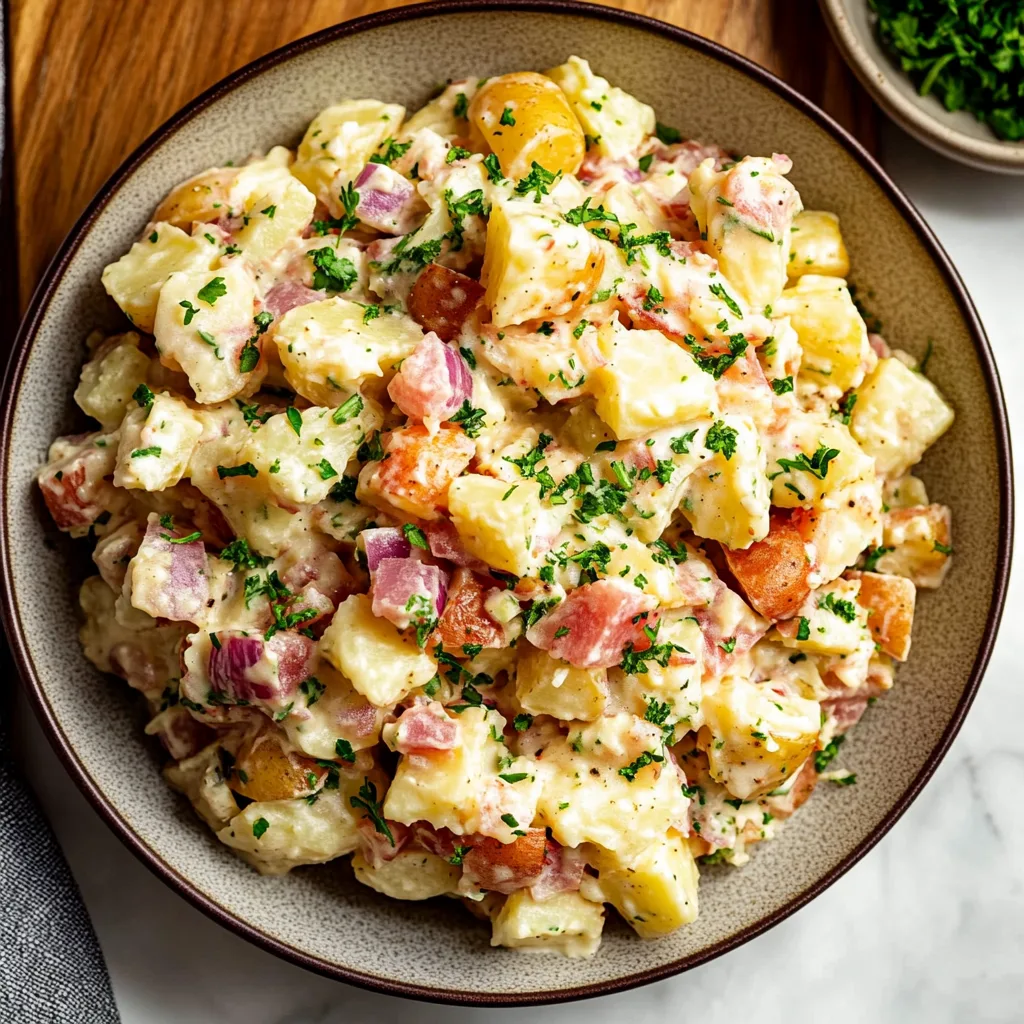
German Potato Salad—my favorite summer-side staple—is the kind of dish that feels rich without being heavy. It balances tangy, slightly sweet flavors with crispy bacon and tender potatoes, making it a crowd-pleaser at backyard cookouts or family dinners. What makes this version shine? No mayo in sight, just bold vinegar dressing and crispy bacon that clings to every bite. If you haven’t had it, you’re in for a treat. If you’re already a fan, I’ll show you exactly how to nail it at home every time.
What is German Potato Salad?
German Potato Salad, or Kartoffelsalat, is a hearty, unpretentious dish rooted in German culinary tradition. Unlike its creamy American counterparts, authentic versions lean into tangy vinegar dressings and bold spices. It often includes bacon, onions, and mustard, creating a savory-sweet profile. While recipes vary by region—Bavarian and Berliner versions differ slightly—this iteration sticks to the classic sweet dressing. The key is balance: the vinegar cuts through the richness, while sugar tempers its bite. No two Germans will agree on the “right” way, but this recipe honors the core elements: potatoes, bacon, and that iconic tang.
Reasons to Try German Potato Salad
This dish is a kitchen hero. It’s ready in under an hour, perfect for busy weeknights or lazy summer days. No fancy tools required—just a skillet and your hands. Even better, it scales beautifully. Make a big batch for a family dinner or pack smaller portions for a picnic. The best part? You’re using simple, affordable ingredients that likely live in your pantry. Plus, this version’s vegan-friendly (see our substitution tips below), making it a great choice for inclusive meals. If you love bold flavors and easy-to-assemble sides, this one will become a fast favorite. I’ve made it for potlucks and even surprised my toddler who usually hates vegetables—now he asks for a “German salad” every week.
Ingredients Needed to Make German Potato Salad
- 2 pounds red potatoes, left whole or cut in half
- 1/4 cup chicken or vegetable broth
- 3 tablespoons white vinegar or cider vinegar
- 1/2 tablespoon white sugar (see customization note)
- 1 teaspoon Dijon mustard or German mustard
- 12 ounces bacon, diced for crispy texture
- 1 medium red onion, chopped (about 1 cup)
- 3 cloves garlic, minced
- 2-3 tablespoons chopped Italian parsley
- Salt and pepper to taste
- Chives for garnish, optional
Tip: Use fresh red onions for sharp, clean flavor, but yellow onions work too. If avoiding pork, see the “Vegan Option” in our variations below.
Instructions to Make German Potato Salad – Step by Step
Step 1: Cook the potatoes. Place whole or halved red potatoes in a large pot. Pour in just enough water to cover them by an inch. Add a generous pinch of salt. Bring to a boil over medium heat and simmer for 15–20 minutes until the potatoes are easily pierced with a fork. Drain and let cool slightly until you can handle them without burning your fingers. Peeling is optional; the skins add texture and nutrients. If you do peel them, it’s easiest when they’re warm.
Step 2: Prep the dressing. While the potatoes cook, whisk together broth, vinegar, sugar, and mustard in a medium bowl. Adjust the sweetness to your taste—start with 1/2 tablespoon sugar and taste. The dressing should be bright, tangy, and just sweet enough to balance the vinegar’s sharpness. If you prefer a less sweet twist, reduce the sugar. Set aside until ready to use.
Step 3: Cook the bacon. Heat a large skillet over medium-high heat. Add the chopped bacon, letting the fat render as it cooks. Stir occasionally and fry until crisp, about 6–8 minutes. Transfer the bacon to a paper towel-lined plate to drain, leaving the fat in the pan. This golden fat will flavor the onions and garlic, so don’t toss it yet.
Step 4: Caramelize the onions. Reduce the heat to medium and add chopped onions to the bacon fat. Cook slowly for 5 minutes, stirring occasionally, until they soften and take on a light golden hue. This step is crucial—it mellows the onions’ sharpness. Add minced garlic and cook for 30 seconds until fragrant, but don’t let it burn.
Step 5: Deglaze the pan. Pour in the vinegar dressing, stirring to scrape up any browned bits from the pan—a flavor boost for your salad. Let it sizzle and boil for 2 minutes, allowing the liquid to reduce by half. Remove from heat and let the skillet cool slightly.
Step 6: Combine everything. Add the warm potatoes, crispy bacon, and chopped parsley to the skillet. Toss gently to coat the potatoes in the dressing and fat. Adjust salt and pepper to taste. For the warmest serving, transfer directly to a serving dish. For longer storage, use an airtight container once cooled slightly. Top with fresh chives for brightness.
Chef’s Tips for a Perfect Result
- Use warm potatoes: Tossing warm potatoes with room-temperature dressing allows the flavors to meld better. Cold potatoes can make the salad feel greasy.
- Don’t skimp on bacon fat: The rendered fat is your best flavor friend. Save any leftovers in the fridge for up to 6 months.
- Balance the dressing: Taste before adding sugar. Adjust sweetness gradually for your household’s preferences.
- Experiment with texture: For a crunchier salad, leave the potatoes slightly firmer. For softer bites, steam them 3–5 minutes longer.
- Double your recipe: This dish tastes even better the next day as the flavors develop. Store extras properly (see storage section below).
Variations and Substitutions
Vegan Option: Swap pork bacon for smoky vegan alternatives found in most grocery stores. Use vegetable broth and check that your mustard is gluten-free.
Gluten-Free Alternative: Ensure your vinegar and mustard are gluten-free (most are, but brands may vary). Use a gluten-free broth if not already doing so.
Low-Carb Version: Cook the onions, garlic, and dressing with olive oil instead of bacon fat. Use green vegetables like kale or radicchio as a base instead of potatoes.
Budget Swap: Substitute sweet white onions for red onions to save a few cents. They caramelize beautifully and cost about 50% less in store.
How to Serve and Pair
Serve this salad at its peak freshness—right after cooking. Pair it with grilled pork chops, sausages, or even as a standalone vegetarian main with added beans (see variations). For a complete German meal, add rye bread or a simple green salad. Presentation tips: Use a warm serving dish to keep it from cooling too fast. Garnish with parsley, a sprinkle of paprika, or lemon wedges on the table for customization.
Storage and Reheating
Refrigerator: Store in an airtight container for up to 3 days. The potato texture softens slightly over time, so consume within this window for best results.
Freezer: Not recommended. The potatoes absorb moisture in the dressing and become mushy after freezing.
Room Temperature: Keeps for 2 hours in a covered dish. Never leave in the “danger zone” (40–140°F) longer than this to avoid food safety risks.
Reheating: Gently warm in a skillet over low heat to re-crisp the potatoes and bacon. Avoid the microwave, which softens the texture and makes the salad greasy. If adding moisture, spoon in 1–2 teaspoons broth or vinegar to revive the dressing.
Nutritional Values
- Calories: 420 per serving
- Protein: 18g
- Carbohydrates: 45g
- Fat: 22g
- Fiber: 4g
Approximate values.
Frequently Asked Questions
Can I use baby potatoes instead of red potatoes?
Yes—and you should if you can find them. Their small size ensures even cooking and a slightly buttery flavor that pairs beautifully with vinegar.
How do I know when the dressing is done?
It’s done when the vinegar mixture has reduced by half and the onions are tender. You’ll notice the texture thickening slightly and leaving a syrupy sheen on your spatula.
Why are my potatoes coming out soggy?
Undercooked potatoes absorb too much moisture. Make sure they’re fully boiled before adding to the dressing and toss immediately so they can absorb the fat instead of water.
Can I make this in advance?
Absolutely! Cook the potatoes, bacon, and onions ahead of time. Reheat everything together in a skillet the next day with a splash of vinegar if needed.
What’s the best way to serve leftovers?
Reheat gently in a cast-iron skillet for best results. You can also repurpose it as a pizza topping or wrap inside rye tortillas with sausages.
Conclusion
German Potato Salad is hearty, flavorful, and forgiving—perfect for cooks of all skill levels. With its tangy dressing, crispy bacon, and tender potatoes, it’s a crowd-pleaser that feels both rustic and refined. Grab a warm serving with a forkful of sausage and savor the smoky-sweet balance that makes this dish unforgettable. Your kitchen, like mine, will never be the same.
Print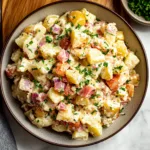
German Potato Salad
- Total Time: 55
- Yield: 6 servings 1x
- Diet: Vegetarian
Description
A tangy, slightly sweet potato salad with bold vinegar dressing and crispy vegetarian bacon. This hearty, no-mayo side feels rich but is easy to make, perfect for summer gatherings or family meals.
Ingredients
2 pounds red potatoes, left whole or cut in half
3 tablespoons white vinegar or cider vinegar
1/2 tablespoon white sugar
dash of Dijon or German mustard
12 ounces plant-based bacon substitute, diced
1 medium red onion, chopped (1 cup)
3 cloves garlic, minced
2–3 tablespoons chopped Italian parsley
Salt to taste
Chives for garnish, optional
1/4 cup vegetable broth
Instructions
Cook potatoes: Place in a pot, add water to cover by 1 inch, and salt generously. Boil for 25-30 minutes until tender but firm. Drain.
Sauté aromatics: In a large skillet, cook diced plant-based bacon over medium heat until crisp (8-10 minutes). Add onions and garlic; cook 2 minutes.
Make dressing: Stir in vinegar, sugar, mustard, and 1/4 cup vegetable broth. Simmer 5 minutes until slightly thickened.
Combine everything: Mix hot potatoes into the skillet with dressing and bacon mixture. Sprinkle with parsley. Season to taste.
Notes
Substitute red onion with yellow if needed. For halal/non-pork: use plant-based bacon or crispy tofu instead of regular bacon. Store in airtight container, up to 3 days. For sweeter versions, add extra vinegar or a pinch of honey.
- Prep Time: 15
- Cook Time: 40
- Category: Dinner
- Method: Boiling
- Cuisine: German
Nutrition
- Serving Size: 1/6 of recipe
- Calories: 220
- Sugar: 14g
- Sodium: 580mg
- Fat: 9g
- Saturated Fat: 1g
- Carbohydrates: 20g
- Fiber: 3g
- Protein: 7g
- Cholesterol: 0mg