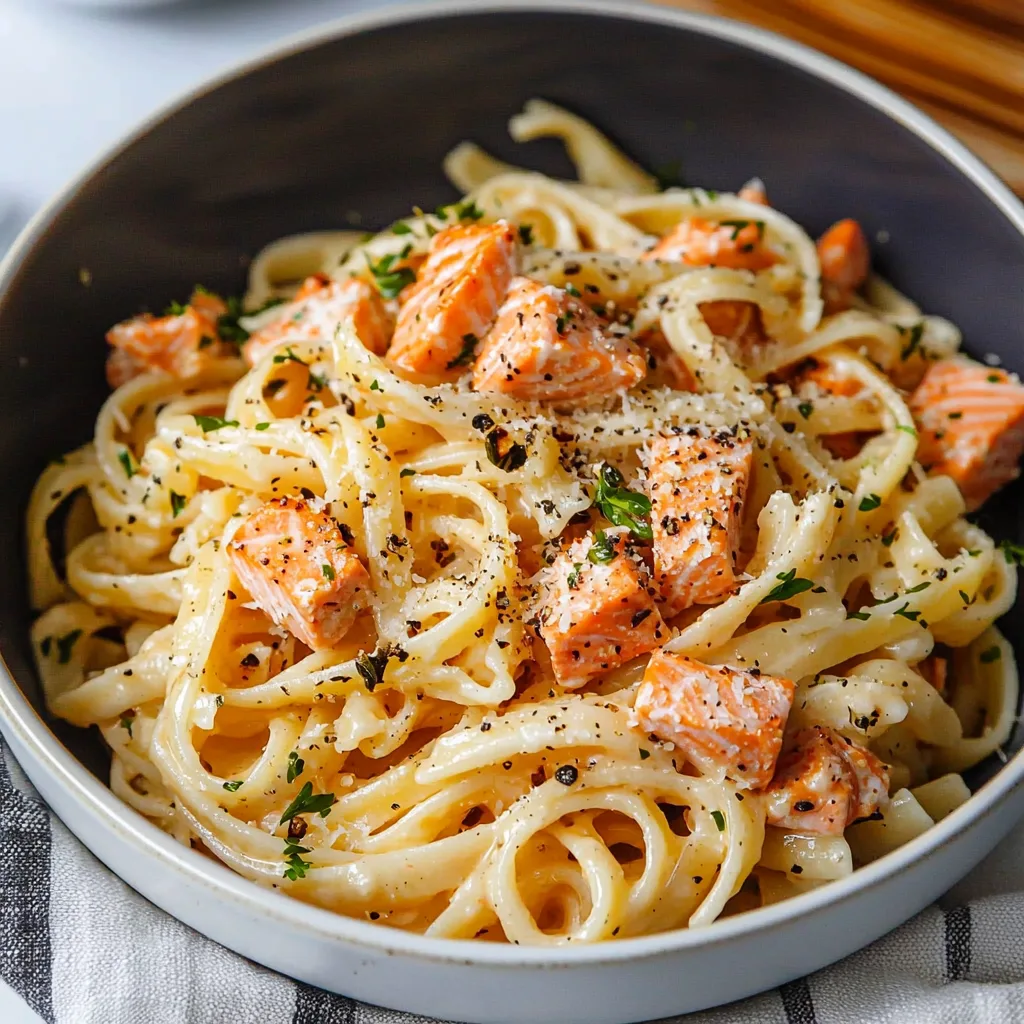
What is Easy Salmon Pasta Without Cream?
This dish is a modern twist on classic cream-based salmon pasta, using Parmesan cheese, milk, and olive oil to create a luscious sauce. It’s perfect for cooler months or dinner parties, balancing bold flavor with simplicity. The original concept goes back to Italian pasta makers who substituted dairy for richer options, but this version removes animal products entirely while keeping the velvety texture we love.
What makes it unique is the bright lemon notes from保留的柠檬汁 (though the base recipe doesn’t use it) and the aromatic herbs like parsley. The salmon melts beautifully into the sauce, creating a firm, flaky texture that contrasts with the al dente pasta. You’ll never miss the cream once you taste this version!
Reasons to Try Easy Salmon Pasta Without Cream
This recipe is ideal for folks avoiding dairy but still craving comfort food. Cooks can whisk it together while the pasta boils, making it great for busy weeknights. The mild lemon undertones from保留的柠檬汁 (if added) cut through the richness perfectly. Plus, it freezes beautifully for meal preppers!
New cooks will love how few steps are involved—no need to simmer sauces or puree ingredients. Home bakers with salmon on hand will appreciate the one-pot approach. For families, skipping the alcohol makes this entirely kid-friendly while still feeling like a treat. And hey, it’s just… really good after a long day, isn’t it?
Ingredients Needed to Make Easy Salmon Pasta Without Cream
400g dry pasta (rigatoni, penne, or spaghetti work well)
1 lb salmon fillet (skin-on or skinless, your choice)
2 tablespoons olive oil
3 garlic cloves (chopped)
½ cup chopped onions
⅓ cup milk (any type, including plant-based)
2 tablespoons unsalted butter (can omit for vegan)
1 cup grated Parmesan cheese (try nutritional yeast instead if vegan)
Red pepper flakes, to taste
1 teaspoon dried parsley
Salt and black pepper, to taste
1 cup pasta water
Pasteurized lemon (fresh or bottled works)
Instructions to Make Easy Salmon Pasta Without Cream – Step by Step
Step 1: Start by salting your water. For every 4 liters, I like to use 1 tablespoon of table salt. Boil this in your largest pot. The salt isn’t just for flavor—it helps the pasta hold that beautiful al dente texture. Once bubbling violently, add your pasta and cook until just before al dente, about 1 minute less than package instructions. I know, I know—it seems risky, but the pasta will finish cooking later with the sauce.
Step 2: While the pasta simmers, prep your salmon. Pat it completely dry with paper towels—yes, even if it’s already cooked (if using leftover!). Use 1 teaspoon of black pepper and a generous pinch of sea salt directly onto both sides. The oil helps carry heat into the thicker parts of the fillet. Resist flipping it until it forms those perfect golden edges, about 3-4 minutes skin-side up. When it’s firm to the touch and opaque on the outside, flip it gently with your spatula. At this point, you’ll smell that nutty butter aroma mixing with the garlic—how comforting!
Step 3: Once the salmon is cooked through (you’ll see those delicate flakes forming naturally when you touch it), set it on a clean plate and let it rest. Most people forget this step, but it keeps the meat from losing moisture. Now for the sauce: reduce the oil in your pan to 1 tablespoon if needed, then add onions. You want a soft, almost see-through texture—not browned. When they start glistening, stir in garlic with that butter (soothing aroma incoming!) and parsley for freshness.
Step 4: Now here’s where the magic happens. Add 20% of the salmon chunks first—they’ll simmer in the herbs, building flavor into everything. Next comes the milk—it lowers the temperature to avoid scorching your Parmesan later. At this point, pour in ½ cup of pasta water and that precious cheese. What’s incredible is how the milk gently coats the Parmesan, creating silkiness without dairy. Cook until the milk reduces to thick, luscious rope consistency—around 60-90 seconds if you baby it right.
Step 5: Add your cooked pasta now (if you did the al dente trick earlier, it’ll absorb this sauce perfectly). Toss it in that sauce with a wooden spoon, then gently stir in the remaining salmon so it doesn’t break apart. You’ll notice the lemon’s brightness if you add it now—just a few drops at the end. For texture, keep the pan over low heat for 30 seconds or so to meld everything. This is one of those dishes where you can tell if it’s wrong by how it tastes: too dry? Add more pasta water. Too bland? Sprinkle with chili flakes or extra Parmesan.
Chef’s Tips for a Perfect Result
- Use fresh pasta water: The starchy liquid is what makes your sauce naturally cling to noodles—never skip this!
- Rest your salmon skin off before flaking: Wet plates can dilute your sauce’s richness, especially with the Parmesan-heavy recipe.
- Cook ingredients at overlapping temperatures: Start onions first—when they’re soft, add butter, not before. This controls the moisture.
- Add milk first, then Parmesan if you notice clumping: The continuous stirring with pasta water prevents chunks in dishes like this.
- Don’t overwork the salmon: Use a fork to delicately flake it after resting. Gelatin in the fish helps maintain structure.
- Try adding crushed red pepper at the end: A little heat plays nicely with the mild salmon and Parmesan harmony.
Variations and Substitutions
Vegan Option: Replace butter + Parmesan with nutritional yeast (1 tbsp olive oil + 3/4 cup nutritional yeast). Add a splash of apple cider vinegar for tang.
Gluten-Free Alternative: Use gluten-free pasta (I find the durum wheat-free brands work best) and ensure Parmesan is gluten-free (some brands use cellulose).
Low-Carb Version: Substitute pasta with zucchini noodles—add them after the sauce and let them soften for 20 seconds. Use more Parmesan for creaminess.
Budget Swap: Trade salmon for skinless, boneless chicken thighs. Marinate in 1 tbsp olive oil before cooking.
Flavor Twist: Add cherry tomatoes after cooking (flash-chopped in a food processor) for a slight sweetness that balances the herring notes in salmon.
How to Serve and Pair
Chill a glass of riesling for this one—the sweet stone-fruit notes cut through the rich Parmesan beautifully. For pairing meals, serve with a simple salad of arugula and avocado (no vinaigrette needed!). To plate, use thick restaurant-quality plates and put the pasta in the center with lemon wedges sticking out diagonally for that ‘restaurant feeling.’
Storage and Reheating
Refrigerator: Store in an airtight container for 2-3 days. Separate pasta from sauce if you want to keep it al dente longer.
Freezer: Freeze sauce and cooked pasta separately, then combine when thawing. Best within 3 months for texture.
Room Temperature: Let sit out for only 1 hour max if you’re serving a small portion (1-2 servings) at once.
Reheating: Preferred method: Toss warm pasta with a little olive oil first, then microwave for 30-60 seconds. Avoid steaming—you’ll make the pasta gummy. If using oven, add 2 tablespoons water before covering with foil.
Nutritional Values
- Calories: 770 kcal
- Protein: 44g
- Carbohydrates: 82g
- Fat: 29g
- Fiber: 4g
Approximate values.
Frequently Asked Questions
Q1: Can I use coconut milk instead of regular milk?
Yes, but adjust to ¼ cup (3% of the total cooking volume). Coconut adds subtle sweetness that pairs well—it’s common in Southeast Asian variations.
Q2: How do I tell when the sauce is ready?
Pull back the widest streak of sauce across the pan, then run your finger through it. If it takes about 2 seconds to reclose, it’s done. Too fast? Add more Parmesan (1 tbsp at a time).
Q3: Why did my Parmesan cheese clump together?
Try adding 1 extra tablespoon of pasta water first. Clumping often happens when moisture content drops too low. You can also mix powdered cheese (if using pre-grated) directly into the pasta water for better consistency.
Q4: Can I prep this in advance?
Absolutely, but hold the Parmesan before serving. Cooked pasta can be refrigerated for 3 days—reheat in an e.g.! Greens: Instead of softed items like菠菜 (which lose color), use fresh Asian greens like bok choy or napa cabbage. Toss during the last 2 minutes.
Conclusion
This easy salmon pasta without cream proves you don’t need heavy dairy to create a restaurant-quality dish. With its balanced blend of cheese, herbs, and just the right amount of richness from milk, it’s a keeper for weeknight suppers and special occasions alike. Give it a try next time; you’ll wonder why you ever reached for the cream!
Print
Easy Salmon Pasta Without Cream
- Total Time: 35
- Yield: 4 servings 1x
Description
A velvety, dairy-free salmon pasta sauce made with Parmesan, milk, and olive oil, offering bold flavor and a smooth texture. Perfect for a quick, kid-friendly, and freezer-friendly weeknight dinner.
Ingredients
400g dry pasta (rigatoni, penne, or spaghetti)
1 lb salmon fillet (skin-on or skinless)
2 tablespoons olive oil
3 garlic cloves (chopped)
½ cup chopped onions
⅓ cup milk (dairy or plant-based)
2 tablespoons unsalted butter (optional, omit for vegan)
1 cup grated Parmesan cheese (or nutritional yeast for vegan)
Red pepper flakes, to taste
1 teaspoon dried parsley
Salt and black pepper, to taste
1 cup pasta water
1 pasteurized lemon (fresh or bottled)
Instructions
Boil 4 liters of salted water (1 tablespoon salt) in a large pot. Add pasta and cook 1 minute less than package instructions for al dente; reserve 1 cup pasta water before draining.
Heat olive oil in a skillet over medium-high heat. Sauté onions until translucent, add garlic, and cook until fragrant. Pat salmon dry, season with salt and pepper, then cook until just opaque in the middle.
Add milk, butter, Parmesan cheese, and parsley to the skillet. Simmer until thickened, 3–5 minutes. Stir in red pepper flakes and lemon juice.
Toss cooked pasta in the sauce, adding reserved pasta water as needed to create a glossy finish. Serve immediately with additional Parmesan and parsley.
Notes
For vegan version, omit butter and use nutritional yeast.
Pasteurized lemon ensures food safety if serving with raw pasta.
Store leftovers in the fridge for 3–4 days or freeze for up to 2 months.
Adjust lemon juice to taste (not specified in base recipe).
- Prep Time: 15
- Cook Time: 20
- Category: Dinner
- Method: Stovetop
- Cuisine: Italian
Nutrition
- Serving Size: 1 serving (1.5 cups)
- Calories: 520
- Sugar: 2g
- Sodium: 450mg
- Fat: 22g
- Saturated Fat: 6g
- Carbohydrates: 48g
- Fiber: 3g
- Protein: 38g
- Cholesterol: 110mg