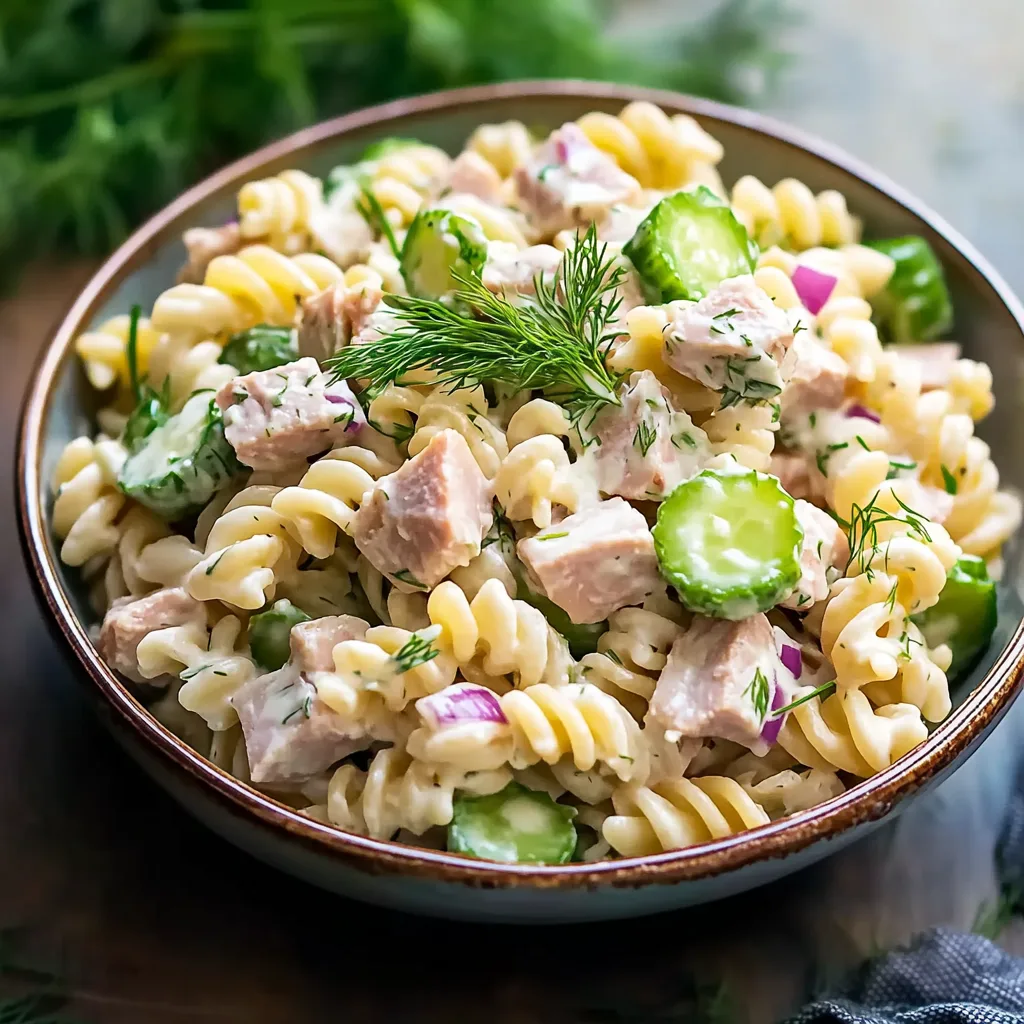
What is Dill Tuna Pasta Salad?
Dill Tuna Pasta Salad is a cold, protein-packed dish that blends tender pasta, flaky tuna, and fresh vegetables in a zesty dressing. Its origins trace back to American picnic traditions, but it’s evolved into a versatile staple for potlucks, lunches, and easy weeknight meals. What makes it unique is the bright, herbaceous dill dressing that balances the richness of tuna and mayo. It’s a dish that feels indulgent but is impressively simple to make.
Reasons to Try Dill Tuna Pasta Salad
Whether you’re a beginner or a seasoned cook, this salad checks all the boxes: it’s quick to prepare, requires minimal effort, and stores well for leftovers. The creamy texture and fresh flavors make it a crowd-pleaser, perfect for busy parents, picnics, or meal prepping. Plus, it’s a great way to introduce kids to eating fish in a fun, colorful format. With just 30 minutes of fridge time, you’re not just making a meal—you’re crafting a guaranteed hit.
Ingredients Needed to Make Dill Tuna Pasta Salad
- 8 oz shell pasta (Barilla is ideal for firm texture)
- 9 oz tuna (drained and flaked, skip canned oil unless adding crunch)
- 3 celery ribs (diced 1/4-inch; leave some crunch for texture)
- 1/4 cup red onion (minced; balance sharpness with dressing)
- 1.5 cups peas (fresh or frozen, no thawing needed)
- 1/2 cup mayonnaise (Hellmann’s for bold flavor, or use vegan mayo)
- 1/2 cup Greek yogurt (adds tang and lightens richness)
- 1 teaspoon Dijon mustard (sharpens creaminess)
- Fresh dill (chopped for aromatic freshness, not dried)
- Salt and pepper (to taste, adjust after first ingredients blend)
Instructions to Make Dill Tuna Pasta Salad – Step by Step
Step 1: Start with the pasta foundation. Boil 4 quarts of water, add a generous pinch of salt, and cook the shell pasta for 8-10 minutes until al dente. Undercooking is better here—once cooled, the pasta will soften slightly during chilling. Drain it well, then let it sit uncovered to avoid clumping. If your kids complain it’s “cold,” remind them cold pasta means less work for flavor to build.
Step 2: While it cools, prep the veggies and tuna. Dice the celery into neat 1/4-inch cubes for nice bites. Mince the red onion finely to avoid harsh chunks. Flaking the tuna by hand ensures tender, even distribution. Pro tip: Use a fork to break off large chunks—it’s less messy than your fingers. If using frozen peas, remember they’ll slush up slightly during chilling, adding moisture without needing extra water.
Step 3: Whisk the dressing. Combine mayonnaise, Greek yogurt, and Dijon mustard in a bowl. This tangy trio does more than dress the salad—it acts as an emulsifier for a smooth, stable texture. Taste it first: you want bold dill and mustard without overpowering dill’s minty licorice notes. Add chopped dill now, then salt and pepper. If it’s too thick later, thin it with a splash of milk (vegan-friendly if using plant-based mayo).
Step 4: Combine all ingredients with care. In a large mixing bowl, add the cooled pasta, celery, red onion, peas, and flaked tuna. Pour half the dressing over the top—too much at once, and the pasta will soak it up. Toss gently with a wide spatula to avoid smushing peas and tuna. Pause to adjust seasoning, then refrigerate for 30 minutes. This resting period lets components marry: acidic dressing firms delicate peas, and dill softens lettuce’s assertiveness. Before serving, stir in the remaining dressing to ensure every bite stays bright and juicy.
Chef’s Tips for a Perfect Result
- Use room-temperature mayonnaise: It blends 30% smoother into yogurt, avoiding a greasy texture.
- Let peas defrost under running water: This removes excess ice that dilutes all flavors when frozen peas slowly melt.
- Underdress initially: Pasta absorbs up to 1 cup of liquid by rest. Add the second dressing incrementally before serving.
- Finish with a squeeze of lemon: Brightens overt bacony tuna (skip if using pork-free brands).
Variations and Substitutions
- Vegan Option: Substitute vegan mayo and skip tuna—add chickpeas for protein. Use nutritional yeast to mimic umami.
- Gluten-Free Alternative: Opt for gluten-free shells and confirm yogurt and peas are labeled gluten-free.
- Low-Carb Version: Replace pasta with zucchini noodles. Reduce peas to 1/2 cup and add more cucumber.
- Budget Swap: Use dry yellow mustard instead of Dijon and reduce Greek yogurt by 1/4 cup to save costs.
How to Serve and Pair
Serve this salad in a clear glass bowl to showcase its vibrant colors. Pair with crusty sourdough for crunch, or grilled sardines for added protein. For summer events, garnish with lemon wheels and edible flowers. It’s equally at home on packed lunches as it is on dinner tables—a perfect bridge between simple and elegant.
Storage and Reheating
Refrigerator: Store in an airtight container for up to 3 days. Stir in extra peas if dressing becomes too loose.
Freezer: Freeze in meal-sized portions for 2-3 months. Thaw overnight in fridge and stir in fresh dill before serving.
Room Temperature: Serve within 2 hours. Avoid leaving in direct sunlight to prevent sogginess.
Reheating: Up to 2 times total, best warmed in a 350°F oven for 10 minutes with a splash of water. Never microwave as it dries out peas and pasta.
Nutritional Values
- Calories: 212 per serving
- Protein: 18g
- Carbohydrates: 15g
- Fat: 12g
- Fiber: 3g
Approximate values.
Frequently Asked Questions
Can I substitute chickpeas for tuna in this recipe?
Yes—use 1 1/2 cups mashed chickpeas for plant-based nutrition. Add black pepper and capers to mimic seafood brininess.
How do I tell when the pasta is cooked enough?
Test a piece: it should be tender but still have a slight firm center. Overcooked pasta turns gummy in the fridge. Always err on the firmer side.
My dressing is too runny—what did I do wrong?
Use more Greek yogurt (1/4 cup extra) to balance. Add chopped herbs slowly—too much can break emulsification and create slick water pockets.
Can I make this salad a day in advance?
Absolutely. Prepare it fully 4-6 hours ahead. Skip final dressing addition for perfect consistency. Store in fridge with a damp paper towel to avoid surface drying.
What’s the best way to customize this for a crowd?
Add cherry tomatoes for color, shredded carrots for crunch, or crumbled feta for tang. A sprinkle of chopped walnuts offers nutty contrast to tuna’s richness.
Conclusion
Dill Tuna Pasta Salad is a creamy, herb-infused masterpiece that combines simplicity with flavor. Whether you’re preparing it for a noon crunch or impressing guests with minimal effort, this dish proves that good food doesn’t need complexity. Taste it once—then you’ll remember how a single dish can be both effortless and unforgettable.
Print
Delicious Dill Tuna Pasta Salad Recipe for Beginners
- Total Time: 45
- Yield: 4-6 servings 1x
Description
A cold, protein-packed pasta salad with flaky tuna, fresh herbs, and a zesty dill dressing. Perfect for quick meals, picnics, or meal prepping. Combines crisp veggies, creaminess, and tangy flavor for a crowd-pleasing dish.
Ingredients
8 oz shell pasta
9 oz tuna (drained and flaked)
3 celery ribs (diced 1/4-inch)
1/4 cup red onion (minced)
1.5 cups peas (fresh or frozen)
1/2 cup mayonnaise
1/2 cup Greek yogurt
1 tsp Dijon mustard
1/4 cup chopped fresh dill
Salt and pepper to taste
Instructions
Boil 4 quarts of salted water. Cook shell pasta for 8-10 minutes until al dente. Drain and let cool.
Dice celery, mince red onion, and flake tuna by hand. Add frozen peas if using.
In a bowl, whisk mayonnaise, Greek yogurt, and Dijon mustard. Stir in chopped dill.
Combine cooked pasta, tuna, celery, red onion, and peas in a large bowl. Pour dressing over and mix until coated.
Chill in refrigerator for 30 minutes before serving.
Notes
Use Barilla pasta for best firmness.
Substitute vegan mayo for a dairy-free option.
Store leftovers in an airtight container for up to 3 days.
Frozen peas help thicken the salad when chilled.
- Prep Time: 15
- Cook Time: 10
- Category: Dinner
- Method: Salad (Cold)
- Cuisine: American
Nutrition
- Serving Size: 1 serving
- Calories: 230
- Sugar: 1g
- Sodium: 310mg
- Fat: 10g
- Saturated Fat: 1.5g
- Carbohydrates: 20g
- Fiber: 2g
- Protein: 22g
- Cholesterol: 85mg