
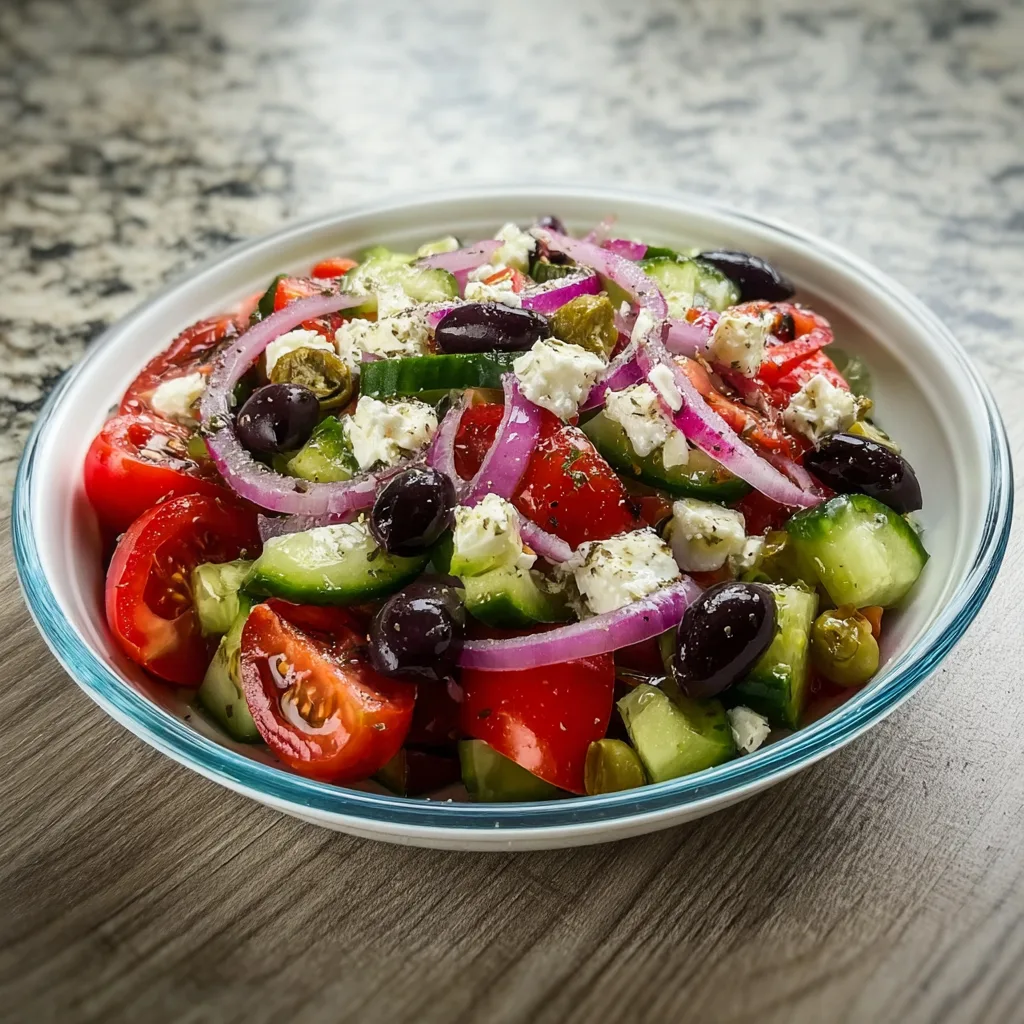
Classic Greek Salad is more than just a dish; it’s a vibrant celebration of fresh, simple ingredients that transport you straight to the sunny shores of the Mediterranean. When I first started experimenting in the kitchen, this is one of those recipes that instantly felt like a success. It’s often called Horiatiki, which means “village salad” in Greek, and it truly embodies that rustic, homemade charm. This salad is a beautiful medley of crisp vegetables, briny olives, tangy feta, and a zesty dressing that just sings with flavor.
The beauty of a classic Greek salad lies in its straightforwardness. It doesn’t rely on complicated techniques or hard-to-find items. Instead, it highlights the quality of its components. Imagine the crunch of fresh cucumber, the burst of juicy tomatoes, the sharp bite of red onion, and the salty creaminess of feta all coming together. It’s the kind of meal that feels both light and satisfying, perfect for a warm day or as a refreshing side to any main course.
What is Classic Greek Salad?
At its heart, a classic Greek salad is an unadulterated expression of Mediterranean simplicity and freshness. Unlike many other salads, authentic Greek salad traditionally does not include lettuce. Its star players are robust, ripe vegetables and quality cheese that stand up well to a flavorful dressing. This dish is a staple across Greece, particularly in the summer months when produce is at its peak, showcasing the region’s abundant sun-kissed bounty.
The defining characteristics of a traditional Greek salad are the generous chunks of feta cheese, often made from sheep’s milk, which brings a wonderfully salty and creamy texture. Kalamata olives, with their distinctive fruity and rich flavor, add another layer of authentic Mediterranean taste. Crisp cucumber, juicy tomatoes, sharp red onion, and sometimes green bell pepper provide a refreshing crunch. A simple dressing of extra-virgin olive oil and red wine vinegar, seasoned with oregano, ties everything together beautifully. It’s a testament to how incredible food can be when you focus on the pure, unadulterated taste of great ingredients.
Reasons to Try Classic Greek Salad
You absolutely must give this Classic Greek Salad a try, especially if you’re just dipping your toes into cooking or want a go-to recipe that always impresses. It’s incredibly forgiving, meaning even if your chopping isn’t perfectly uniform or you’re a little heavy-handed with the oregano, it will still turn out wonderfully delicious. The vibrant colors alone make any meal feel special, and the refreshing taste is always a crowd-pleaser, whether you’re serving it for a casual weeknight dinner or a more festive gathering.
Beyond its delightful taste and stunning appearance, this Greek salad is wonderfully versatile. It’s a fantastic way to get a good dose of healthy fats from the olive oil and a variety of vitamins from the fresh vegetables. Plus, it’s super quick to assemble, making it an ideal option for busy evenings when you want something healthy on the table without spending hours in the kitchen. It’s perfect for anyone looking to add a healthy, flavorful, and colorful dish to their repertoire without feeling overwhelmed.
Ingredients Needed to Make Classic Greek Salad
Gather these fresh goodies for a truly authentic taste of Greece:
- For the Dressing:
- ¼ cup extra-virgin olive oil (use a good quality one for the best flavor!)
- 3 tablespoons red wine vinegar
- 1 clove garlic, minced (or finely grated)
- ½ teaspoon dried oregano, plus extra for sprinkling
- ¼ teaspoon Dijon mustard (it’s a little secret for dressing emulsification)
- ¼ teaspoon sea salt
- Freshly ground black pepper (to your liking)
- For the Salad:
- 1 large English cucumber, cut lengthwise, seeded, and sliced into ¼-inch thick half-moons
- 1 green bell pepper, cored, seeded, and chopped into roughly 1-inch pieces
- 2 cups cherry tomatoes, halved (a mix of colors is lovely if you can find them!)
- 5 ounces feta cheese, cut into ½-inch cubes (feta stored in brine is your best friend here! Remember to drain it well)
- ⅓ cup thinly sliced red onion (soak in cold water for 10 mins if you prefer a milder bite)
- ⅓ cup pitted Kalamata olives (these are classic for a reason!)
- ⅓ cup fresh mint leaves, roughly chopped (optional, but adds an amazing aromatic lift)
Instructions to Make Classic Greek Salad – Step by Step
Step 1: Prepare the Lively Dressing
Let’s start by whipping up that bright, zesty dressing that will bring all the flavors together. Grab a small bowl – one that’s easy to whisk in. Pour in your good quality extra-virgin olive oil, followed by the red wine vinegar. Add the minced garlic, the dried oregano, and that tiny bit of Dijon mustard. The mustard might seem odd, but it helps the oil and vinegar blend together more smoothly, and it adds a little something extra without being overpowering. Sprinkle in the sea salt and then add a few generous grinds of black pepper. Now, take your whisk and go to town! Whisk everything together until the dressing looks well combined and has just started to emulsify slightly, meaning it’s starting to thicken up a bit. Set this aside; it’s ready to work its magic.
Step 2: Get the Salad Components Ready
Now for the fun part: prepping our beautiful, fresh salad ingredients. Take your English cucumber, slice it lengthwise down the middle, scoop out the seeds with a spoon (this stops the salad from getting watery), and then slice each half into thick, satisfying ¼-inch pieces. Next, core and seed your green bell pepper, then chop it into bite-sized, roughly 1-inch pieces. Halve your cherry tomatoes; this makes them easier to eat and releases some of their lovely juice, which we want! If your red onion is a bit too sharp for your liking, a quick 10-minute soak in cold water can really mellow it out. Slice it thinly so it distributes nicely throughout the salad. Finally, cut your feta cheese into nice ½-inch cubes; aim for pieces that are substantial enough to taste but don’t overwhelm the other ingredients. Make sure to drain the feta well if it’s in brine.
Step 3: Assemble the Masterpiece on a Platter
For a classic Greek salad, presentation is almost as important as taste. Get out a large, shallow platter – this is where your beautiful salad will live. Start by arranging the prepared sliced cucumber, the chopped green bell pepper, and the halved cherry tomatoes across the platter. Don’t worry about making it perfect; just aim for an even distribution of colors and textures. Next, scatter the cubed feta cheese and the thinly sliced red onion all over the vegetables. Finally, tuck in the pitted Kalamata olives amongst the other ingredients. They add those delightful pops of salty, fruity flavor.
Step 4: Dress, Toss Gently, and Garnish
It’s time to bring it all together. Take that wonderful dressing you made earlier and drizzle it evenly over the entire salad. Now, here’s a crucial tip: toss very gently. You want to lightly coat everything without crushing the delicate feta or breaking apart the tomatoes. You can use your hands, salad tongs, or even two large spoons. Once everything is lightly coated, give it a final sprinkle of dried oregano over the top. If you’re using fresh mint, tear or roughly chop the leaves and scatter them over the salad. This adds a wonderful fresh aroma and a hint of coolness. Give it a final taste and add a little more salt or pepper if you think it needs it. Serve this beauty immediately while everything is crisp and vibrant!
Chef’s Tips for a Perfect Result
- Quality Olive Oil is Key: Since the dressing is so simple, the flavor of your extra-virgin olive oil really shines through. Use one you genuinely enjoy the taste of.
- Feta in Brine is Non-Negotiable (for authenticity): Feta packed in brine is creamier, tangier, and more flavorful than brick-style feta. Drain it well before cubing to prevent a soggy salad.
- Don’t Over-Toss: The beauty of Greek salad is in its textures. Gentle tossing ensures the vegetables stay crisp and the feta remains in distinct, delicious cubes.
- Let the Onion Soothe: If you’re sensitive to raw onion’s sharpness, soak the sliced red onion in ice water for about 10 minutes before adding it to the salad.
- Fresh Herbs Make a Difference: While dried oregano is traditional in the dressing, a sprinkle of fresh mint or parsley just before serving adds a burst of wonderful freshness.
- Seed Your Cucumber: This step might seem tedious, but removing the watery seeds from the cucumber prevents your salad from becoming diluted and mushy.
Variations and Substitutions
While the classic recipe is perfection, feel free to make it your own!
- Add Some Greens: If you really want to bulk up your salad or prefer a leafier base, add a bed of crisp romaine lettuce or peppery arugula beneath the traditional ingredients. This makes it a more substantial meal.
- Bell Pepper Swap: Don’t have a green bell pepper? A yellow or even orange bell pepper works beautifully and adds a touch more sweetness.
- Tomato Alternatives: If cherry tomatoes aren’t available or you’re short on time, one large, ripe tomato (like a Roma or Beefsteak) chopped into chunks will also work. Just ensure it’s fresh and flavorful.
- Vary the Olives: While Kalamata olives are classic, other brine-cured black olives can be used if they are your preference.
- Herbal Touches: Feel free to add chopped fresh parsley along with or instead of fresh mint for another layer of herbaceous flavor.
How to Serve and Pair
This Classic Greek Salad is wonderfully versatile. Serve it as a bright, refreshing appetizer spread across a large platter, allowing everyone to pick their favorite bites. It’s also a fantastic side dish that pairs beautifully with grilled meats like chicken or lamb skewers, or even alongside some crusty bread for soaking up any leftover dressing. For a light lunch or dinner, you can add some grilled halloumi cheese or a scoop of hummus and pita bread to make it a complete meal. Its vibrant colors also make it a beautiful addition to any picnic basket or potluck table.
Storage and Reheating
Refrigerator:
Due to the fresh vegetables and dressing, Greek salad is best enjoyed fresh. However, you can store leftovers in an airtight container in the refrigerator for up to 1 day. The vegetables will likely soften slightly. It’s best to store any leftover dressing separately to keep the salad from getting too soggy before you store it.
Freezer:
Freezing is not recommended for this salad. The textures of the fresh vegetables and feta cheese will be ruined upon thawing, resulting in a mushy and unappetizing dish.
Room Temperature:
This salad is designed to be served immediately after dressing. It should not be left out at room temperature for more than 2 hours, as per food safety guidelines, especially once the vegetables have been cut and dressed.
Reheating:
Greek salad is a cold dish and does not require reheating. If you find it’s too cold straight from the fridge, let it sit on the counter for about 10-15 minutes before serving to take the chill off.
Nutritional Values
- Calories: 250-300 per serving
- Protein: 5-7g per serving
- Carbohydrates: 10-15g per serving
- Fat: 20-25g per serving
- Fiber: 3-5g per serving
Approximate values.
Frequently Asked Questions (FAQ) — MANDATORY
Can I substitute the feta cheese in a Greek salad?
Yes, you can substitute feta with goat cheese for a creamier, milder flavor, or use a firm, salty cheese like halloumi (grill it first for best results) if you prefer something more robust.
How do I know when my Greek salad is ready to serve?
Your Greek salad is ready the moment it’s assembled, dressed, and gently tossed. The key is serving it immediately for the freshest crunch and vibrant flavors.
My Greek salad tastes too vinegary, what went wrong?
Likely, the ratio of vinegar to olive oil was too high, or the vinegar used was particularly strong. For balance, slightly increase the olive oil or add a tiny pinch of sugar to the dressing.
Can I prepare the components of a Greek salad ahead of time?
Yes, you can chop all the vegetables and make the dressing a day in advance. Store them separately in airtight containers in the refrigerator and assemble just before serving to maintain crispness.
What’s the best way to customize a Greek salad for a party?
For a party, serve the salad components separately on a large grazing board so guests can build their own, or assemble individual mini salads in small bowls for easy serving and a beautiful presentation.
CONCLUSION
This Classic Greek Salad is a testament to how simple, fresh ingredients can create something truly spectacular. It’s a refreshing, vibrant, and utterly delicious dish that’s perfect for any occasion. Give it a try and experience the authentic taste of the Mediterranean right in your own kitchen; that perfect balance of salty feta, crisp vegetables, and tangy dressing is simply irresistible.
Print
Classic Greek Salad
- Total Time: 15
- Yield: 4 servings 1x
- Diet: Vegetarian
Description
A vibrant, refreshing salad featuring crisp cucumber, juicy tomatoes, sharp red onion, briny Kalamata olives, and creamy feta cheese. A zesty dressing of olive oil and red wine vinegar, seasoned with oregano, ties it all together for a rustic Mediterranean dish that’s perfect as a main or side.
Ingredients
2 large tomatoes
1 cucumber, chopped
1/4 cup red onion, thinly sliced
1/2 cup Kalamata olives
1/2 cup crumbled feta cheese
2 tablespoons extra virgin olive oil
1 tablespoon red wine vinegar
1 teaspoon dried oregano
Salt to taste
Instructions
Chop tomatoes into large pieces
Cut cucumber into bite-sized chunks
Place red onion slices in a small bowl and cover with cold water for 10 minutes (to mellow the bite, optional)
Combine tomatoes, cucumber, and drained red onion in a large bowl
Add olives and crumbled feta cheese
Whisk together olive oil, vinegar, oregano, and salt to make the dressing
Pour dressing over the salad and gently toss to combine
Serve immediately or chill briefly before serving
Notes
Traditional Greek salad omits lettuce – the vegetables alone provide sufficient structure
Use high-quality sheep’s milk feta if possible for authentic flavor
For best texture, add dressing just before serving
Salad is best consumed the same day but can be stored in an airtight container for 1 day
- Prep Time: 15
- Category: Dinner
- Method: Chopping, Tossing
- Cuisine: Greek
Nutrition
- Serving Size: 1/4 of recipe
- Calories: 180
- Sugar: 4g
- Sodium: 280mg
- Fat: 15g
- Saturated Fat: 5g
- Carbohydrates: 8g
- Fiber: 2g
- Protein: 6g
- Cholesterol: 45mg