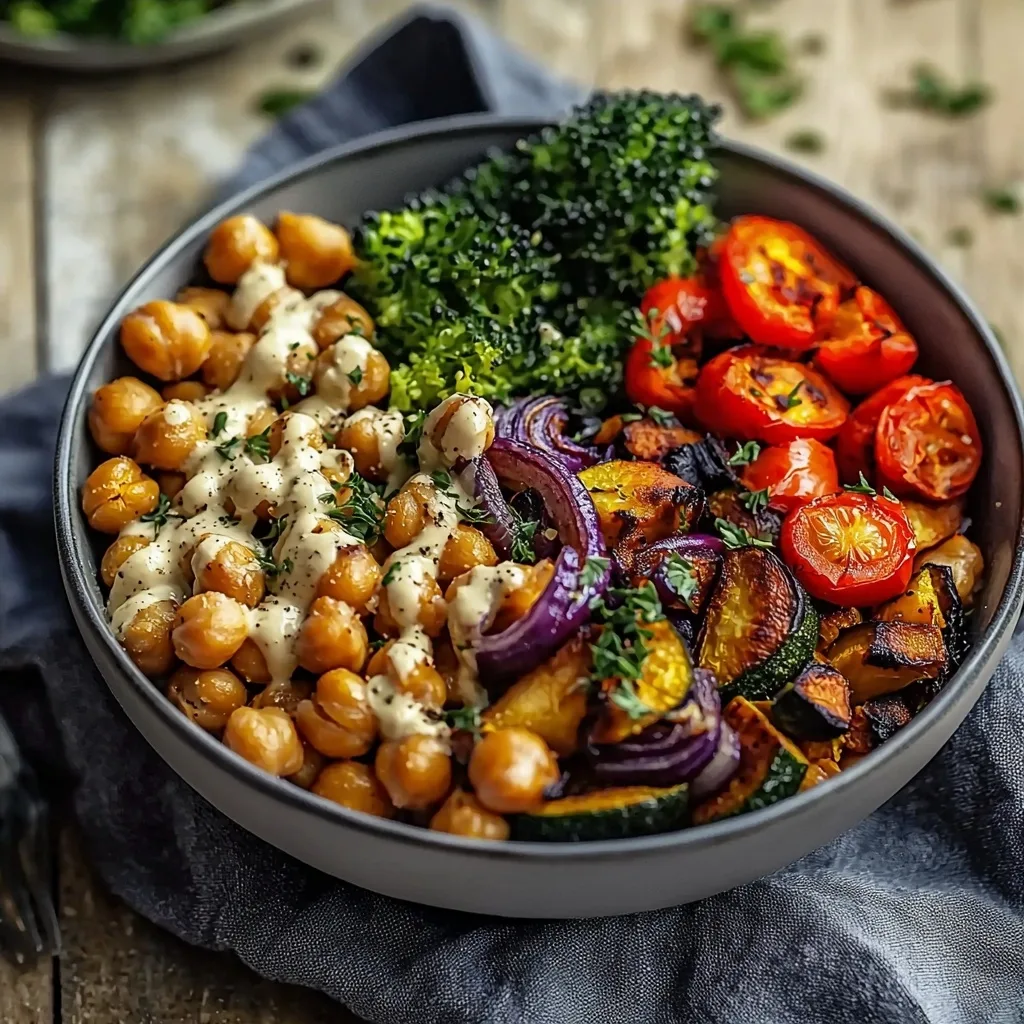
Roasted Veggie and Chickpea Bowls with Maple Dijon Tahini Dressing
There’s something deeply nourishing about gathering around the table on a crisp autumn evening, enjoying a warm bowl filled with roasted vegetables and chickpeas, all tied together with a creamy maple Dijon tahini dressing. For many, this dish isn’t just about flavor—it’s about comfort, mindfulness, and the celebration of simple, wholesome ingredients. It reminds me of a fall dinner shared with friends after a day of hiking—everyone tired, hungry, and grateful for the warmth of good food. The aroma alone, of sweet potatoes caramelizing and Brussels sprouts getting that perfect crisp, is enough to make your stomach rumble for more.
Roasted Veggie and Chickpea Bowls are the kind of meal that gently insists you slow down. Rooted in Mediterranean and Middle Eastern traditions, this recipe mirrors the communal way meals are enjoyed in those regions: colorful, vibrant, and centered around vegetables, legumes, and spice. It’s adaptable, forgiving, and just plain delicious. Whether you’re aiming to incorporate more plant-based meals into your week or just looking for a cozy, satisfying dinner, these bowls deliver every time. What makes them stand out is their versatility. You can play with the vegetables, spice it up, or keep it mild, and still be rewarded with a hearty, feel-good meal.
What is Roasted Veggie and Chickpea Bowls?
Roasted Veggie and Chickpea Bowls are a vibrant, hearty, and customizable meal that celebrates the magic of roasted vegetables and protein-packed chickpeas. At its core, this dish is about transforming simple, humble ingredients through the alchemy of roasting. The high heat caramelizes the natural sugars in vegetables like sweet potatoes, broccoli, and Brussels sprouts, bringing out a depth of sweetness and a delightfully tender, slightly crispy texture. The chickpeas, when roasted, become wonderfully nutty and satisfyingly chewy, adding a fantastic textural contrast.
While there isn’t a single origin point for this specific bowl combination, it draws inspiration from global culinary traditions that emphasize fresh produce, healthy fats, and plant-based proteins. Think of the vibrant mezze platters of the Middle East, the hearty vegetable stews of the Mediterranean, or even the comforting roasted root vegetables of European home cooking. This modern interpretation brings these elements together into a convenient, balanced bowl, often finished with a bright and creamy dressing that ties all the flavors together beautifully. It’s the kind of meal that feels both ancient and utterly contemporary.
Reasons to Try Roasted Veggie and Chickpea Bowls
If you’re looking for a meal that’s as good for you as it is delicious, then these Roasted Veggie and Chickpea Bowls are calling your name. They are incredibly easy to make, which is a lifesaver on busy weeknights. You chop, season, and let the oven do most of the work, freeing you up to relax or tackle your to-do list. The result is a bowl bursting with flavor and texture, making healthy eating feel like a treat rather than a chore. Plus, the combination of fiber from the vegetables and protein from the chickpeas will keep you feeling full and satisfied for hours.
This recipe is perfect for just about everyone. Beginners will love how straightforward the steps are, and how forgiving the roasting process can be. Busy parents will appreciate a nutritious meal that kids often enjoy (especially with a fun dressing!). For those trying to eat more plant-based meals, it’s a fantastic staple that feels incredibly rewarding. If you’re a meal-prep enthusiast, these bowls are gold – components can be made ahead and assembled for grab-and-go lunches or quick dinners throughout the week. It’s a versatile canvas for your creativity in the kitchen.
Ingredients Needed to Make Roasted Veggie and Chickpea Bowls
For the Roasted Vegetables and Chickpeas:
- 2 cups broccoli florets (about 1 small head)
- 2 cups Brussels sprouts, trimmed and halved (about 1 pound)
- 1 medium-large sweet potato, peeled and cut into 1-inch cubes (about 2 cups)
- 1 can (15 ounces) chickpeas, thoroughly drained and rinsed
- 1/2 medium yellow onion, thinly sliced
- 1/2 teaspoon garlic powder
- Salt and freshly ground black pepper, to taste
- 2 tablespoons olive oil
For the Maple Dijon Tahini Dressing:
- 1/2 cup tahini (sesame paste)
- 1/4 cup Dijon mustard
- 2 tablespoons fresh lemon juice
- 2 tablespoons pure maple syrup
- 1/4 cup apple cider vinegar
- 1/2 cup water (plus more, 1 tablespoon at a time, for thinning)
- Salt and freshly ground black pepper, to taste
Instructions to Make Roasted Veggie and Chickpea Bowls – Step by Step
Step 1: Get the Oven Ready and Veggies Prepped
First things first, let’s get that oven fired up. Preheat it to a nice, hot 400°F (200°C). This temperature is key for getting those lovely caramelized edges on our vegetables. While the oven is heating, grab a large, rimmed baking sheet and line it with parchment paper. This makes cleanup so much easier, trust me! Now, take your prepared broccoli florets, halved Brussels sprouts, cubed sweet potato, and thinly sliced onion. Spread them all out in a single layer on the prepared baking sheet. Drizzle everything generously with that good olive oil, sprinkle over the garlic powder, and season with salt and pepper. Give it all a good toss right there on the pan until every piece is nicely coated. We want flavor on everything!
Step 2: Roast the Vegetables to Perfection
Slide that loaded baking sheet into your preheated oven. Let the vegetables roast for about 25 minutes. About halfway through this roasting time, around the 12-13 minute mark, give the pan a good shake or use a spatula to stir everything around. This helps ensure even cooking and that lovely charring on all sides. You’re looking for the vegetables to be tender when pierced with a fork and have those beautiful, slightly browned edges that signal deliciousness. They should smell wonderfully sweet and savory as they cook.
Step 3: Prepare the Crispy Chickpeas
While the vegetables are getting happy in the oven, let’s turn our attention to the chickpeas. Rinse and drain them thoroughly, then pat them really dry with paper towels. This step is crucial for getting them crispy – nobody wants soggy chickpeas! Spread the dried chickpeas out on a separate, small baking sheet. Drizzle them with a little olive oil (just enough to coat them lightly) and sprinkle with a pinch of salt and maybe a bit more garlic powder if you like. Pop them into the oven alongside the vegetables during the last 20 to 25 minutes of their cooking time. Give them a shake halfway through so they get evenly golden and delightfully crisp.
Step 4: Whip Up the Tangy Maple Dijon Tahini Dressing
Now for the crowning glory: the dressing! Grab a medium-sized bowl. Add the tahini, Dijon mustard, fresh lemon juice, pure maple syrup, and apple cider vinegar. This combination is going to give you that perfect balance of creamy, tangy, and slightly sweet. Start whisking it all together. It will likely be quite thick at first, which is totally normal. Gradually add the 1/2 cup of water, whisking continuously. If it’s still too thick for your liking, add a little more water, just one tablespoon at a time, until you reach a smooth, pourable consistency. It should be creamy and luscious, but not watery. Taste it and adjust the seasoning with salt and pepper as needed. Remember, the flavors will meld as it sits.
Step 5: Assemble Your Delicious Bowls
Once everything is roasted and the dressing is ready, it’s time to assemble these beautiful bowls. If you’re using a base like quinoa, brown rice, or couscous, spoon a generous portion into the bottom of your serving bowls. Then, artfully arrange spoonfuls of the roasted vegetables and the crispy chickpeas over the base. Don’t be shy with the roasted goodies! Drizzle a good amount of that glorious Maple Dijon Tahini Dressing all over the top. Give it a good swirl, letting it cascade down into all the nooks and crannies. Your kitchen should smell amazing right about now!
Step 6: Serve and Savor
Serve these Roasted Veggie and Chickpea Bowls immediately while everything is warm and the flavors are at their peak. This is the kind of meal that just feels so satisfying and grounding. Encourage everyone to dig in and enjoy the wonderful textures and tastes. If you have any extra dressing, it’s always a good idea to have it on the side for those who like a little extra sauciness. It’s a simple pleasure, but one that brings so much joy and nourishment to the table. Enjoy every bite!
Chef’s Tips for a Perfect Result
- Ensure your chickpeas are thoroughly dried before roasting; this is the secret to achieving a delightful crispness rather than a chewy texture.
- Don’t overcrowd the baking sheets when roasting vegetables and chickpeas. Giving them ample space allows the hot air to circulate, promoting better caramelization and crisping.
- Taste and adjust the dressing seasoning before serving. Lemon juice and maple syrup can vary in intensity, so finding your perfect balance is key.
- For a quicker weeknight meal, chop your vegetables ahead of time and store them in an airtight container in the refrigerator.
- Roast the vegetables until they are tender-crisp, not mushy. A slight bite adds to the overall texture of the bowl.
- If your tahini is very thick or separated, stir it vigorously before measuring; some brands benefit from a quick whisk to reincorporate the oil.
Variations and Substitutions
Vegan Option
This recipe is naturally vegan as written, thanks to the plant-based ingredients. Ensure your maple syrup is pure and doesn’t contain any hidden animal products, which is rare but always good to double-check.
Gluten-Free Alternative
The recipe is entirely gluten-free, making it a safe and delicious option for those with gluten sensitivities or celiac disease. Serve it on its own or over gluten-free grains like quinoa, brown rice, or millet.
Low-Carb Version
To reduce carbohydrates, omit the sweet potatoes and any grain base. You can increase the amount of other low-carb vegetables like broccoli, Brussels sprouts, cauliflower, zucchini, or bell peppers. Focus on adding more greens or a sprinkle of seeds for healthy fats.
Budget Swap
While chickpeas are very affordable, if you need an even cheaper protein, consider using lentils (cooked separately) or adding more of the hearty root vegetables like potatoes or carrots. Canned beans like cannellini or kidney beans also work well if chickpeas aren’t on hand.
Spice It Up
Add a pinch of red pepper flakes to the vegetables before roasting, or a dash of smoked paprika for a deeper, smoky flavor. A touch of cayenne pepper in the dressing can also add a welcome kick.
How to Serve and Pair
These Roasted Veggie and Chickpea Bowls are wonderfully versatile and can be served in several delightful ways. For a complete meal, consider serving them over a base of fluffy quinoa, nutty brown rice, or light couscous. A swirl of plain Greek yogurt or a dollop of hummus can add an extra layer of creaminess and flavor. They are fantastic as a main course for lunch or dinner, and their vibrant colors make them a beautiful addition to any table. For a casual gathering, set up a “bowl bar” where everyone can customize their own creation with various toppings like fresh herbs, toasted seeds, or a squeeze of lime.
Pair these bowls with a crisp, refreshing beverage like iced green tea, sparkling water with a hint of citrus, or a light, unoaked white wine if you’re enjoying them with adult friends. A simple side salad with a light vinaigrette would also complement the richness of the roasted vegetables and dressing beautifully.
Storage and Reheating
Refrigerator
Leftover Roasted Veggie and Chickpea Bowls can be stored in an airtight container in the refrigerator for up to 3-4 days. It’s best to store the components separately if possible, especially the dressing, to maintain the best texture. If storing assembled bowls, keep them tightly covered to prevent drying out. The roasted vegetables and chickpeas will still be delicious, though they may lose a little bit of their crispness.
Freezer
While not ideal for freezing due to the texture changes in the roasted vegetables, you could theoretically freeze the roasted vegetables and chickpeas. However, the crisp texture of the roasted chickpeas will likely become soft. The dressing also doesn’t freeze well. It’s best to enjoy this dish fresh or refrigerated.
Room Temperature
These bowls are perfectly safe to be left at room temperature for up to 2 hours, making them suitable for packed lunches that don’t require strict temperature control. However, for longer storage, refrigeration is recommended.
Reheating
To reheat, the best method is to use your oven or a toaster oven at around 350°F (175°C). Spread the components on a baking sheet and reheat for 10-15 minutes, or until warmed through. This helps to regain some of the crispness on the vegetables and chickpeas. If short on time, the microwave works too, but cover the bowl to help retain moisture and prevent the vegetables from drying out. You may need to add a splash of water or a drizzle of dressing after reheating if they seem a bit dry. The dressing can also be gently warmed on the stovetop if preferred.
Nutritional Values
- Calories: ~450-550 per serving (without grain base)
- Protein: ~15-20g
- Carbohydrates: ~50-60g
- Fat: ~20-25g
- Fiber: ~12-15g
Approximate values.
Frequently Asked Questions (FAQ)
Can I use different vegetables in my Roasted Veggie and Chickpea Bowls?
Absolutely! This recipe is wonderfully flexible. Feel free to substitute other sturdy vegetables like cauliflower florets, bell pepper strips, zucchini chunks, or even butternut squash cubes. Just ensure they are cut into similar-sized pieces for even roasting.
How do I know when the roasted vegetables and chickpeas are done?
The vegetables should be tender when pierced with a fork and have lightly browned, caramelized edges. The chickpeas are done when they are golden brown and have a slightly firm, crisp exterior. If they’re not quite there, give them a few more minutes in the oven.
My roasted chickpeas aren’t crispy, what did I do wrong?
The key to crispy chickpeas is drying them extremely well after rinsing and ensuring they have enough space on the baking sheet without overcrowding. If they’re packed too tightly or still damp, they will steam instead of roast, leading to a softer texture. Don’t skip the pat-dry step!
Can I prepare components of the Roasted Veggie and Chickpea Bowls ahead of time?
Yes, you can! Roast the vegetables and chickpeas and make the dressing up to 2-3 days in advance. Store them separately in airtight containers in the refrigerator. Reheat the roasted components gently before assembling your bowls for the best texture.
What’s the best way to customize my Roasted Veggie and Chickpea Bowl?
Customize yours by adding a grain base like quinoa or farro, a dollop of hummus or avocado, a sprinkle of toasted nuts or seeds (like pumpkin or sunflower), fresh herbs such as parsley or cilantro, or a drizzle of hot sauce. The possibilities are endless and cater to your personal taste!
CONCLUSION
These Roasted Veggie and Chickpea Bowls are a testament to how simple, wholesome ingredients can create a meal that is both deeply satisfying and incredibly healthy. They are a comforting, flavorful, and versatile dish that’s perfect for beginners and seasoned cooks alike. The irresistible combination of perfectly roasted vegetables, crispy chickpeas, and a tangy-sweet Maple Dijon Tahini Dressing makes this a bowl you’ll want to make again and again.