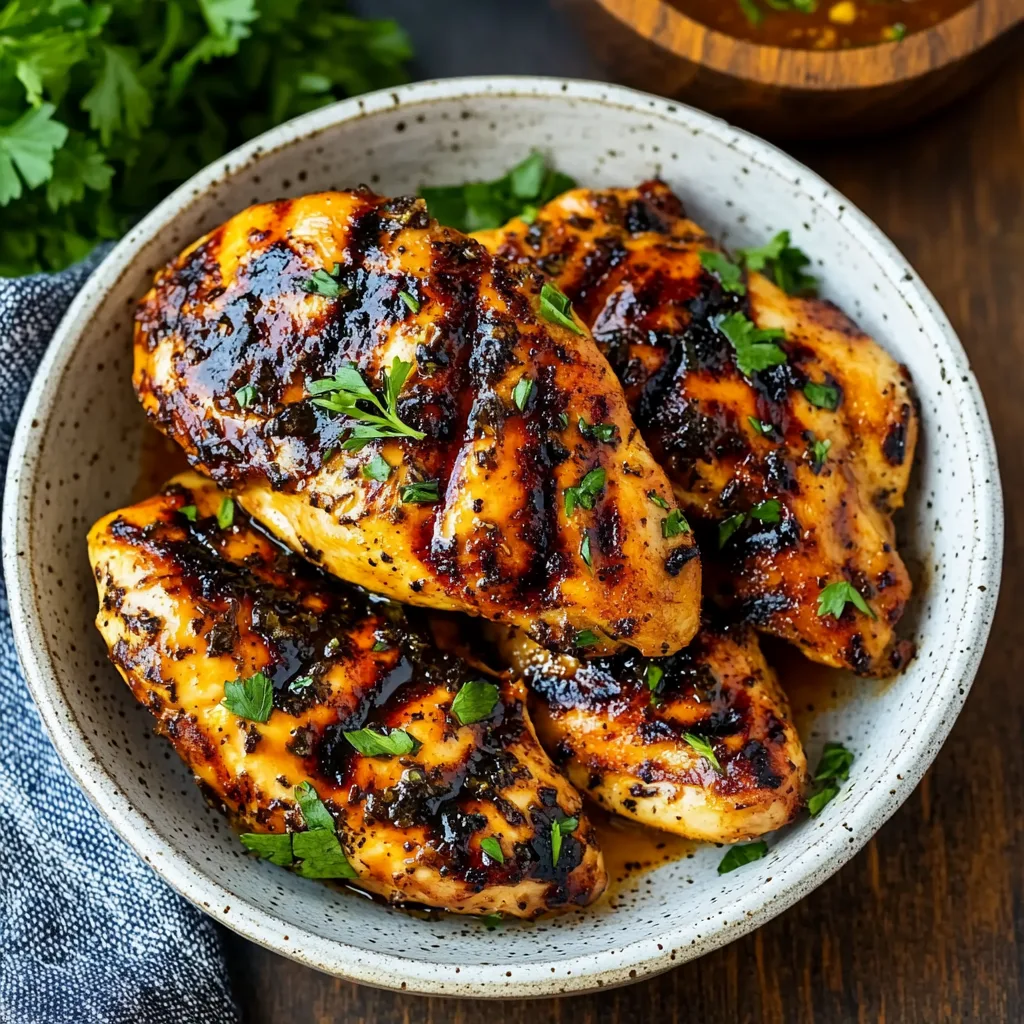
The Best Chicken Marinade is more than just a recipe—it’s your shortcut to restaurant-quality meals in your own kitchen. Whether you’re grilling for a backyard party, baking a weeknight dinner, or experimenting with new flavors, this marinade unlocks the secret to juicy, aromatic chicken that feels effortlessly gourmet. What makes it truly special? The magic lies in its simple, balanced blend of acidic brightness, umami depth, and herby sweetness that caramelize beautifully on the heat. If you’ve ever feared overcooking or under-seasoning your chicken, this recipe will change your perspective forever.
What is The Best Chicken Marinade?
An American favorite adapted from classic farm-to-table traditions, this chicken marinade balances bold and delicate elements. Olive oil coats the chicken in richness, while lemon juice and balsamic vinegar brighten the flavors. Soy sauce and Worcestershire bring umami depth, and brown sugar adds a caramelized finish. The Dijon mustard acts like a binding agent, holding all the flavors together and creating a subtle tang. What sets it apart is its versatility—you can use it exactly as written for a quick weeknight meal, or tweak it to match your spice preferences, grilling time, and cooking method.
Reasons to Try The Best Chicken Marinade
This recipe is a game-changer for three key reasons. First, the marinade only needs 30 minutes or 1 hour to work its magic, making it perfect for rushed weeknights. Second, it’s incredibly forgiving: even if you over-marinate a little, the chicken stays tender, not soggy. Third, the bold flavor works across all cooking methods—grilled, pan-seared, baked, or sautéed. Whether you’re a novice who’s never used a marinade before or a parent dishing up dinners for a picky family, this recipe gives you professional results with minimal effort.
Ingredients Needed to Make The Best Chicken Marinade
- 1/2 cup olive oil
- 1/4 cup fresh lemon juice (about 2 lemons)
- 1 tablespoon minced garlic (use a microplane for max flavor)
- 1/4 cup balsamic vinegar
- 1/4 cup soy sauce (low-sodium preferred)
- 1/4 cup Worcestershire sauce
- 1/3 cup brown sugar
- 2 teaspoons dried Italian seasoning
- 1 tablespoon Dijon mustard
- 2 teaspoons kosher salt
- 1 teaspoon freshly ground black pepper
- 2–3 pounds boneless, skinless chicken breasts
Instructions to Make The Best Chicken Marinade – Step by Step
Step 1: Start by prepping your marinating vessel. If you’re making a large batch, use a big, heat-resistant plastic bag (resealable gallon bags work perfectly with no spills). For smaller quantities, a sturdy glass or ceramic bowl will do. Combine the olive oil, lemon juice, garlic, balsamic, soy sauce, Worcestershire sauce, and balsamic vinegar in your vessel. The acid from the lemon and vinegar will start breaking down the chicken proteins even as you mix, which is why pre-blending is crucial for even flavor absorption.
Step 2: Add the brown sugar, Italian seasoning, Dijon mustard, salt, and pepper to the liquid base. Whisk or shake until everything is fully dissolved. You’ll notice the mixture thickening slightly thanks to the mustard—it’s ready to work its magic. The sugar also acts as a flavor enhancer, creating a subtle sweetness that balances the acidity and salt.
Step 3: Once the marinade is ready, add the chicken to the bag or bowl. Make sure the pieces are fully submerged to ensure even flavor distribution. If using a bag, seal it and shake gently to coat the chicken on all sides. Set it aside in the fridge while the chicken soaks up those delicious flavors. The recommended marinating time is 1 hour minimum, but 4–8 hours gives the best results when you need maximum flavor without softening the chicken too much.
Chef’s Tips for a Perfect Result
- Cook with precision: Use an instant-read thermometer to check that the thickest part of the chicken reaches 165°F. Undercooked chicken may retain raw flavor compounds; overcooked chicken loses moisture quickly.
- Let the chicken rest: Transfer cooked chicken to a wire rack for 5 minutes to preserve juices (never leave it on a hot pan or plate).
- Try room-temperature chicken: Remove marinated chicken from the fridge 30 minutes before cooking to ensure even searing.
- Double the marinade: Divide it into individual portions for freezing (great for batch cooking). Label with dates.
Variations and Substitutions
Gluten-Free Alternative
Swap soy sauce with tamari and Worcestershire sauce with a certified gluten-free brand like Braggs. The umami levels stay rich, but the texture becomes slightly silkier.
Spicy Kick
Add 1 teaspoon crushed red pepper flakes or 1 diced chipotle pepper in adobo sauce. Adjust quantities gradually, especially if kids are eating—it heightens the marinade’s tangy profile dramatically.
Herb Boost
Replace dried Italian seasoning with fresh herbs like rosemary, thyme, or oregano, finely chopped. Fresh herbs add more aromatic sharpness; reduce dried seasonings by 1/2 tsp to balance.
Vegan Version
Replace soy sauce, Worcestershire, and chicken with plant-based alternatives. The sugar and vinegar still caramelize nicely on a high-heat grill, creating meaty flavor profiles.
Budget Swap
Use white vinegar instead of balsamic and reduce sugar to 1/2–1 tsp (add extra lemon juice to maintain brightness). The budget version still works brilliantly on chicken thighs, which have more fat and richness for flavor absorption.
How to Serve and Pair
This marinade shines best when paired with ingredients that complement its boldness. For summer barbecues, serve grilled chicken with a tropical fruit salsa made from mango, pineapple, and fresh cilantro. For family dinners, pair with roasted sweet potatoes and green beans for a balanced plate. When baking, spread the marinated chicken breast directly onto parchment paper and roast in a 400°F oven while you prep sides. For a quick weeknight meal, skip the marinade and use the leftover sauce as an all-purpose basting oil for sautéed vegetables or grain bowls.
Storage and Reheating
Refrigerator: Marinated chicken keeps for 2–3 days in the fridge. The lemon juice prevents bacterial growth, but always refrigerate in an air-tight container or bag. When reheating, warm on medium heat in a non-stick skillet with a splash of water to create steam and keep the chicken moist.
Freezer: Freeze the marinade separately from the chicken. Marinated chicken freezes well for up to 2 months if wrapped tightly in plastic and covered in foil. Thaw in the fridge overnight before cooking, then pat dry to avoid excessive moisture in the pan.
Room Temperature: Never leave chicken marinating for more than 2 hours at room temperature. Bacterial growth happens quickly in acidic environments.
Reheating Cooked Chicken: The best method is to reheat in an oven or air fryer at 350°F until warmed through. Avoid the microwave at all costs—it dries out the texture and kills flavor compounds.
Nutritional Values
- Calories: 128 per serving (1 chicken breast)
- Protein: 14g
- Carbohydrates: 3g
- Fat: 6g
- Fiber: 2g
- Sugar: 2g
Approximate values. Always adjust based on portion size and cooking method.
Frequently Asked Questions
Q1: Can I use Greek yogurt instead of soy sauce for a dairy-based marinade?
Yes! Replace half the soy sauce with plain Greek yogurt for a tangy, tenderizing effect. The yogurt also acts as a natural meat softener, making thin-cut chicken breast more palatable for children.
Q2: How do I know when the chicken is perfectly cooked?
Check for the “springy” center. Gently press the thickest part with a fork; it should bounce back slightly but not feel rock hard. A thermometer should read 165°F at the center when inserted at the side.
Q3: Why does my chicken burn on the grill?
This happens because the sugar in the balsamic and brown sugar caramelizes too quickly at high heat. Pre-cook skin-on chicken on indirect heat first, then sear the edges for color. Use a meat thermometer instead of guessing.
Q4: Can I make the marinade ahead of time?
Absolutely! Store the marinade in a glass jar with an airtight lid in the fridge for up to 3 days. Shake well before using after refrigeration. The olive oil may solidify slightly, but whisking breaks it back down smoothly.
Q5: What wine pairs best with this marinade?
A medium-bodied white like Pinot Grigio or Chardonnay complements the savory-sweet notes. For red lovers, a light Pinot Noir with citrus notes won’t overpower the herbs.
Conclusion
This chicken marinade is your kitchen’s new workhorse—versatile, budget-friendly, and absolutely bursting with flavor. With just a few pantry staples, you can transform plain chicken into a showstopping meal in less than 60 minutes. Try it tonight with fresh rosemary from your garden or your next neighborhood farmers’ market finds. The perfect balance of sweet and savory will leave your family reaching for seconds, even with grilled veggies and mashed potatoes on the side. Trust me, your taste buds won’t forget this one.
Print
The Best Chicken Marinade for Perfectly Flavorful Dishes
- Total Time: 35
- Yield: 4–6 servings 1x
- Diet: Pescetarian
Description
A versatile, restaurant-quality chicken marinade blending tangy, umami, and sweet notes. Coat, marinate, and cook for juicy, flavorful results.
Ingredients
1/2 cup olive oil
1/4 cup fresh lemon juice (about 2 lemons)
1 tablespoon minced garlic
1/4 cup balsamic vinegar
1/4 cup soy sauce (low-sodium preferred)
1/4 cup Worcestershire sauce
1/3 cup brown sugar
2 teaspoons dried Italian seasoning
1 tablespoon Dijon mustard
2 teaspoons kosher salt
1 teaspoon freshly ground black pepper
2–3 pounds boneless, skinless chicken breasts
Instructions
Combine olive oil, lemon juice, garlic, balsamic vinegar, soy sauce, Worcestershire sauce, brown sugar, Italian seasoning, Dijon mustard, salt, and pepper in a resealable bag or bowl.
Add chicken breasts and toss to coat evenly.
Marinate for 30 minutes to 1 hour in the refrigerator.
Cook using your preferred method (grill, bake, or pan-sear) until chicken is fully cooked and reaches 165°F (74°C).
Notes
Use a heat-resistant bag for large batches to avoid spills.
Adjust salt if regular soy sauce is used instead of low-sodium.
Marinate up to 24 hours for deeper flavor, but avoid sogginess.
Works for all cooking methods—adjust heat as needed per appliance.
- Prep Time: 5
- Cook Time: 30
- Category: Dinner
- Method: Marinate and Cook
- Cuisine: American
Nutrition
- Serving Size: 1 chicken breast
- Calories: 300
- Sugar: 10g
- Sodium: 250mg
- Fat: 11g
- Saturated Fat: 2g
- Carbohydrates: 10g
- Fiber: 1g
- Protein: 30g
- Cholesterol: 85mg