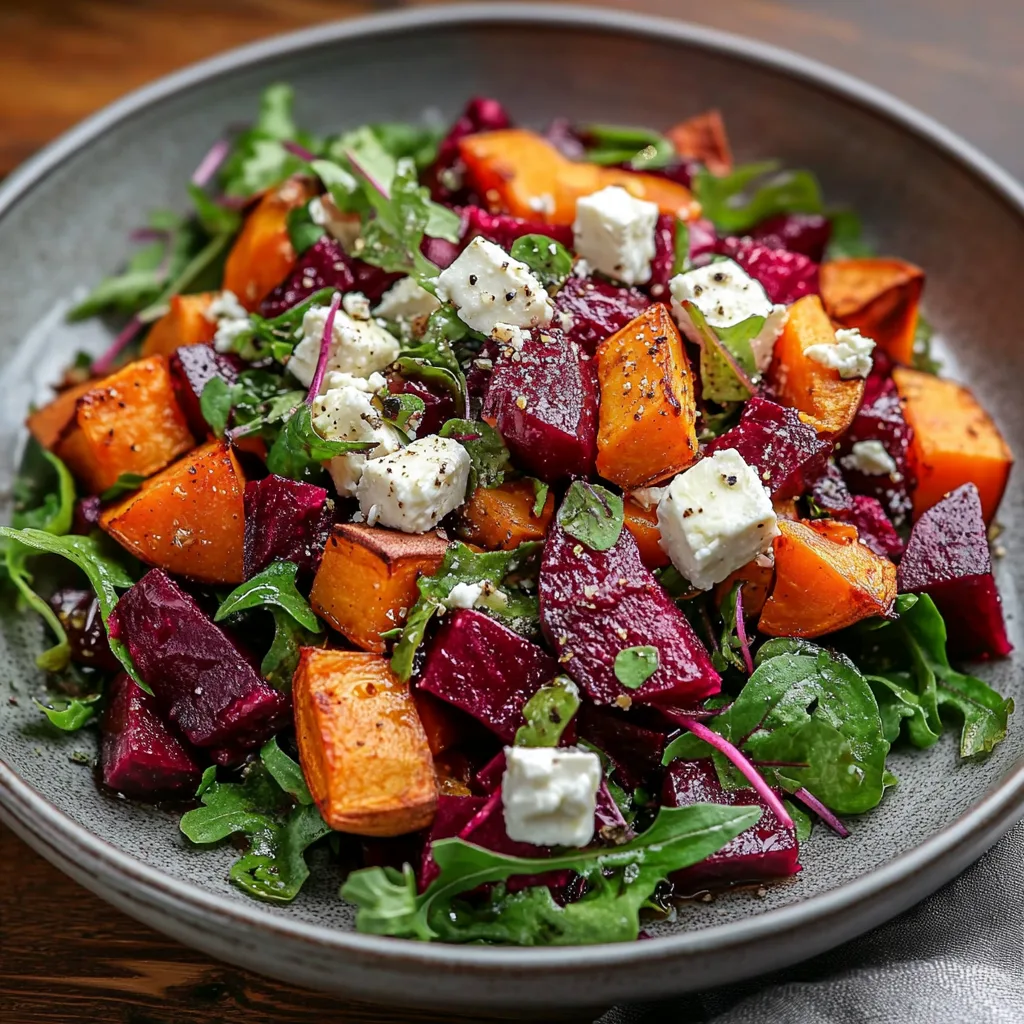
Creamy Roasted Beet Salad with Sweet Potato & Feta is a vibrant dish that marries earthy sweetness with tangy crumbles and creamy richness. Born from my need to repurpose farm-fresh beets and sweet potatoes into something celebrating harvest flavors, this salad has become a staple in our family dinners. The unexpected combination of roasty root vegetables and tangy feta will surprise even the most reluctant beet-lovers, while the dressing—think Greek yogurt blended with honey and lemon—ties every element into a cohesive, satisfying bite.
What makes this salad unique? It’s the way the roasting process caramelizes the beets and sweet potatoes, bringing out their natural sweetness, then the feta adds an assertive contrast that keeps things interesting. The optional toasted walnuts add a welcome crunch, and the dressing’s bright lemonness cuts through the richness for perfect balance. Whether you’re a beginner hesitant to tackle beets or a party planner searching for a gluten-free main dish, this is your new go-to recipe.
What is Creamy Roasted Beet Salad with Sweet Potato & Feta?
This is an American-style salad that defies expectations. While beet salad is often associated with Eastern European tzaziki-based versions, this iteration leans into modern farm-to-table simplicity and roasted vegetable magic. The core is a duo of sweet and earthy vegetables—beets for their ruby color and natural sugars, sweet potatoes for subtle nuttiness. The crumbled feta adds a bold, briny counterpoint that’s often compared to the surprise of a “bitter twist in a candy shop” by first-time tasters. The creamy dressing, made from yogurt, honey, and Dijon mustard, acts as both a binding agent and flavor amplifier for the whole dish.
Though beets have long been part of Middle Eastern and Eastern European cuisines, this roasted presentation owes more to American comfort food traditions. The combination of roasted root vegetables in a salad format has been popularized by farm-to-table chefs and social media food trends, evolving into a healthy yet indulgent dish. What sets this apart from standard roasted vegetable salads is the specific beet-sweet potato alliance, which creates a complementary sweetness much less common than beets paired with citrus or goat cheese.
Reasons to Try Creamy Roasted Beet Salad with Sweet Potato & Feta
You should try this salad if you’re looking for a recipe that works overtime in your kitchen. First, it’s incredibly versatile—serve it warm as a main dish with grilled chicken or as a room-temperature spread at a picnic. Second, the ingredients are pantry-friendly: olive oil, garlic, and neutral cheeses mean no fancy shopping. Lastly, it’s packed with antioxidants from the beets and fiber from the sweet potatoes, making it one of those rare salads that feels both virtuous and indulgent at the same time.
This dish has become a favorite in my kitchen for two specific reasons. First, it’s extremely beginner-friendly—roasting vegetables takes care of themselves in the oven, and the dressing is as simple as whisking a few ingredients. Second, it’s a crowd-pleaser at family gatherings, even when adults try to politely avoid “salads” they assume are bland. The arrival of a punchy, colorful dish with this one makes even my picky nephew ask, “Can I have seconds?”
Ingredients Needed to Make Creamy Roasted Beet Salad with Sweet Potato & Feta
- 2 medium beets, peeled and diced
- 2 medium sweet potatoes, peeled and diced
- 4 oz feta cheese, crumbled
- 2 cups baby spinach or arugula (optional for leafy texture)
- ¼ cup walnuts or pecans, toasted
- 2 tablespoons olive oil
- ¼ teaspoon salt
- ¼ teaspoon black pepper
- ½ cup Greek yogurt
- 2 tablespoons mayonnaise
- 1 tablespoon honey or maple syrup
- 1 tablespoon lemon juice
- 1 teaspoon Dijon mustard
- 1 garlic clove, minced (about 1 teaspoon)
- 1–2 tablespoons water (optional for thinner dressing)
All ingredients should be at room temperature for best results, though feta can be slightly chilled to maintain its texture. The walnuts are optional but highly recommended for the textural contrast they provide—think of them like the crunch in a peanut butter sandwich. For the dressing, use full-fat Greek yogurt and mayonnaise for richness; if you substitute Greek yogurt for mayonnaise, reduce water accordingly to avoid a runny texture.
Instructions to Make Creamy Roasted Beet Salad with Sweet Potato & Feta – Step by Step
Step 1: Roast the vegetables for maximum caramelization. While prepping, remember roasting is the unsung hero here—beet greens can sometimes clump, but when roasted, their natural sugars become concentrated in each bite. Work quickly: after peeling, dice the beets and sweet potatoes into 1-inch cubes (if they’re too small, they’ll cook unevenly). Toss them with olive oil, salt, and pepper using your hands in a large bowl. The oil moderation is crucial—too little and they won’t brown, too much and the yogurt dressing will struggle to stick later. Spread them on a parchment-lined baking sheet—don’t crowd the pan, as they need space to develop caramelized edges.
Step 2: For the dressing while the vegetables cook. While the oven is on, let’s tackle the dressing. This is where kitchen alchemy happens. In a large bowl, whisk together the Greek yogurt, mayonnaise, honey, and lemon juice. Notice the temperature after whisking—the slight warmth from mixing means it’ll pour more easily now than after chilling. Add the minced garlic last, squeezing the garlic bulb over a knife to get all the usable bits. If you’re using a food processor for mincing (especially if you’re a garlic-hater), pulse just until chopped, not pureed, to avoid a bitter, over-processed taste. Create a dull peak in the mixture by examining it against a white background—if it doesn’t hold a shape but flows in a steady stream, add 1 tablespoon water. If it’s still too tight, add the second, but don’t overdo it or the yogurt’s assertiveness will be diluted.
Step 3: Toast the nuts for depth and safety in texture. This is an easy step to overlook, but trust your taste buds here. Place the walnuts in a dry skillet. If you’re a me—distraught about borderline burnt elements—I suggest setting a timer for 2 minutes and tasting: the perfect toast smells just like you’re in the middle of a cozy forest in fall. Stir constantly for the first 2 minutes, then every 30 seconds until they turn golden. Once you smell the faint crunchiness aroma, they transfer the nuts to a small bowl to cool. This cooling prevents them from continuing to toast in an airtight environment, which would drive their flavor bitter secondary.
Step 4: Combine everything for vibrant, Kelly green (or arugula-red) presentation. Let the roasted vegetables cool for about 5 minutes—this step, counterintuitive as it sounds, is crucial. If you toss while they’re still hot, the feta will start to melt into a gooey pile rather than staying distinct crumbles. This is what differentiates a “messy” version from the presentable one. Now, add the crumbled feta and optional greens to the mixing bowl. Use the flat side of your hands (not fingers, to avoid breaking too much feta) to gently fold the ingredients together. The goal is a marbled effect, keeping some glossy beet and sweet potato chunks exposed. Taste and adjust salt—it’s easy to be conservative since beets are naturally salty, but the feta provides the perfect counterbalance to this kitchen trick.
Step 5: Final assembly with strategic garnish techniques. Sprinkle the cooled toasted nuts on top like irregular confetti. For a finishing touch, drizzle any remaining dressing along the plate edges (they’ll soak into fibers as the salad rests). I often chill the salad for 20–30 minutes so flavors can meld, but it’s equally delicious served warm with a hint of steam—give your nose a chance to sniff the aroma before your mouth realizes it’s been out of the oven.
Step 6: Optional upgrades for presentation. If serving as a main course, elevate it by placing on a platter surrounded by deviled eggs or a small bowl of sour cream-dill dip. For dinner parties, edible flowers or microgreens add visual flair. In fact, I once served this as the center of a “healthy hors d’oeuvre” table and got so many recipe requests that no one remembered the cheese board!
Chef’s Tips for a Perfect Result
- For best caramelization, roast the vegetables at 425°F (220°C) for 25 minutes before lowering to 375°F (190°C) for 10 more minutes. This two-temperature method creates a golden crust without over-drying.
- Use a food processor just until the garlic is coarsely chopped—over-processing makes it bitter and sharp. Check against a white plate as a cheap visual clue.
- Crumble feta yourself instead of using pre-crumbled packets—the texture is dramatically silkier and looks more elegant in the finished dish.
- Let the salad rest for 10–15 minutes after tossing, allowing flavors to penetrate the vegetables. This is similar to letting a steak “rest” before serving.
- For added moisture, glug olive oil directly over the salad just before serving—if this fails, add the dressing about 30 minutes earlier so it has time to soak in.
- Chill the finished salad for at least 30 minutes to allow the fats in the dressing to firm slightly, preventing the salad from becoming soggy from warm vegetables.
Variations and Substitutions
Vegan Option: Swap feta for crumbled tofu or a vegan cheese alternative, and use vegan mayonnaise in the dressing. I’ve had great results with nutritional yeast as a feta substitute—use about 2 tablespoons and toss with a pinch of salt like you’re making Italian-style seasoning.
Nut-Free Adaptation: Replace walnuts with toasted pumpkin seeds or sunflower seeds for a similar crunch. If you choose to skip walnuts entirely, the salad remains satisfying—many of our meals don’t have nuts, and my toddler gobbled this all down without them.
Low-Carb Version: Increase the proportion of arugula or add watercress instead of baby spinach. Skip the greens entirely if you’re low-carb and toss the roasted vegetables with the dressing for a protein-rich grain alternative to grain-based salads.
Gluten-Free Confirmation: This salad is naturally gluten-free, but always check your mayonnaise and Dijon mustard labels—some brands contain malt vinegar with barley traces.
How to Serve and Pair
This salad sings when paired with aromatics and proteins that contrast its earthiness. For a complete meal, pair with grilled chicken breasts brushed with herb butter or pan-seared salmon fillets with dill. At room temperature, it works as an appetizer with crusty sourdough bread or crustless quiches. Presentation-wise, serve in a wide, flat bowl to highlight the vibrant red and orange colors—think of it as festive enough for a holiday but simple enough for a weekend lunch. For adventurous hosting, serve it as a “build-your-own” appetizer by placing the components in separate bowls and letting guests layer their own portions. This is especially popular with kids, who love feeling like chefs for the day.
Storage and Reheating
Refrigerator
Store leftovers in an airtight container in the fridge for up to 3 days. To maintain crunch, store the roasted vegetables and dressing in separate containers—mix them just before serving. For up to 2 additional days, keep the dressing in the fridge but test for separation and re-whisk if needed. I often notice the dressing thickens slightly when chilled, so add a splash of water when you reassemble the salad.
Freezer
This salad is best enjoyed fresh, but you can separately freeze the roasted vegetables (no dressing) for up to 2 months. Place them in a single layer on a parchment-lined tray first, then transfer to a zip-top bag for partial reheating. A common mistake is re-freezing already cooled vegetables, which loses flavor concentration and texture—better to freeze plain roasted vegetables for future based salad recipes.
Room Temperature
Though not ideal for the dressing to separate, the assembled salad can sit at room temperature for up to 2 hours. If you must, serve it in a cool spot and keep the nuts separate until final plating to avoid moisture softening them.
Reheating
Reheating is best done with already separated components. Roast the vegetables in a 350°F (175°C) oven for 10–15 minutes until mistakenly warm again. The dressing should be served at room temperature for the best balance—imagine trying to drizzle warm, intact dressing over hot vegetables. For a quicker option, reheat in the microwave in 30-second intervals, checking texture to avoid melting the cheese into a gluey mass.
Nutritional Values
Per serving (6 portions):
- Calories: 280
- Protein: 9g
- Carbohydrates: 4g
- Fat: 23g
- Fiber: 2g
- Approximate values.
Frequently Asked Questions
Can I substitute Greek yogurt with mayonnaise in the dressing?
Yes, you can use double the amount of mayonnaise to replace Greek yogurt for a thicker, tangier version. For best texture, use full-fat mayonnaise as the dresser can sting as a light version might not provide the same creamy body for the salad.
How do I know when the roasted vegetables are fully cooked?
They should be tender enough that a fork goes in easily without resistance, with caramelized edges that are golden-brown rather than just brown. If only the outside has charred, they’re still firm inside. This test ensures both sweet and roasted depth inside each piece for the best flavor.
Why does the feta become rubbery in my recipe?
Feta becomes rubbery from overcooking or over-handling. If you toss the salad while the vegetables are still hot (above 140°F/60°C), the feta will start melting instead of crusting. I suggest letting the vegetables cool for 5 minutes before gently folding in the cheese so its texture remains delightfully crumbly and sharp.
Can I make the dressing in advance?
Absolutely. In fact, the flavors will meld and brighten up in the fridge for up to 3 days. Just stir well before using, as separation is natural in emulsified dressings when chilled. For better consistency, add a small splash of water to adjust if it thickens too much.
How can I add more texture to the salad?
Increase the crunch factor by adding toasted breadcrumbs or croutons on top. I like using panko breadcrumbs for more surface area to capture dressing. Another favorite is crumbled potato chips for a salty, greasy element that couple with the yogurt balance.
Conclusion
Creamy Roasted Beet Salad with Sweet Potato & Feta is where roasted vegetables and unexpected flavor combinations shine. Whether you’re new to beets or looking for a versatile side dish, this recipe delivers balance, texture, and aesthetic appeal. Give it a try—the blend of roasty beets, sweet spuds, and zesty dressing will feel like a warm hug from the kitchen of every person who loves you.
Print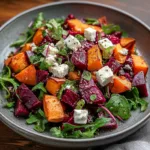
Creamy Roasted Beet Salad with Sweet Potato & Feta
- Total Time: 45
- Yield: 4 servings 1x
- Diet: Vegetarian
Description
A vibrant and satisfying salad featuring caramelized roasted beets and sweet potatoes, complemented by tangy feta and a Greek yogurt-based dressing. Perfect as a main or side dish, it balances sweet, tangy, and creamy elements for a modern twist on harvest flavors.
Ingredients
2 medium beets, peeled and cubed
1 medium sweet potato, peeled and cubed
1 teaspoon olive oil
1 clove garlic, minced
Salt and pepper to taste
1/2 cup crumbled feta cheese
1/4 cup chopped walnuts (optional)
For the dressing: 1/2 cup plain Greek yogurt
1 tablespoon honey
1 teaspoon lemon juice
1/2 teaspoon Dijon mustard
1 clove garlic
1/2 teaspoon olive oil
Salt and pepper to taste
Instructions
Preheat oven to 400°F (200°C)
Toss beet and sweet potato cubes with olive oil, garlic, salt, and pepper
Spread evenly on a lined baking sheet
Roast for 25-30 minutes, flipping halfway, until tender and caramelized
While roasting, prepare dressing by blending Greek yogurt, honey, lemon juice, Dijon mustard, garlic, olive oil, salt, and pepper in a small bowl
Once roasted, let vegetables cool slightly
In a serving bowl, toss roasted vegetables with crumbled feta and chopped walnuts (if using)
Pour dressing over the salad and gently toss to coat
Serve warm or at room temperature
Notes
To maximize flavor, roast the beets and sweet potatoes on the same sheet.
For a gluten-free version, ensure all ingredients are certified gluten-free.
Leftovers can be stored in an airtight container in the refrigerator for up to 2 days.
- Prep Time: 15
- Cook Time: 30
- Category: Dinner
- Method: Roasting
- Cuisine: American
Nutrition
- Serving Size: one serving
- Calories: 340
- Sugar: 10g
- Sodium: 300mg
- Fat: 18g
- Saturated Fat: 4g
- Carbohydrates: 38g
- Fiber: 5g
- Protein: 8g
- Cholesterol: 25mg