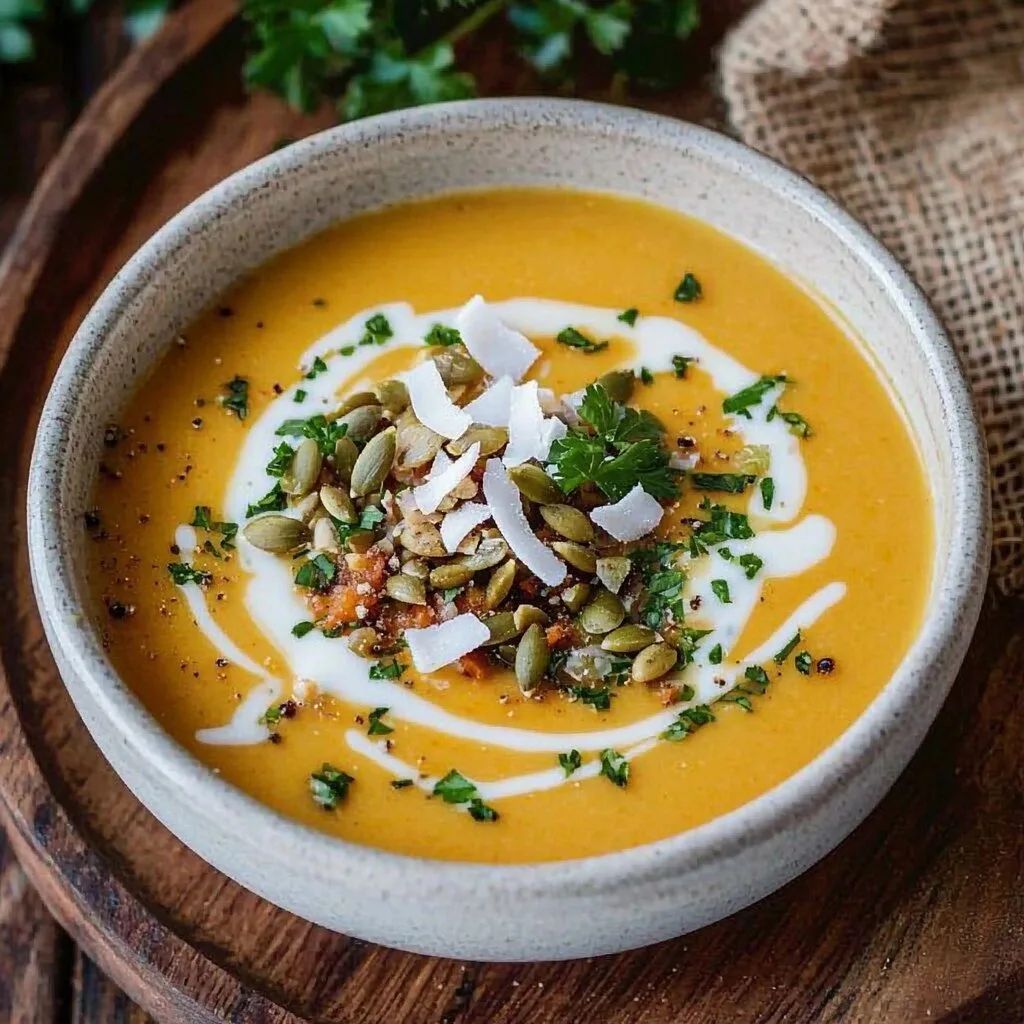
Roasted Butternut Squash Soup with Coconut Milk is exactly the kind of meal that wraps you in a hug when the temperatures start to drop. There is something magical about taking a humble, hard-shelled squash and coaxing out all that natural sweetness through the heat of your oven. When you blend that caramelized goodness with the silky richness of coconut milk, you end up with a bowl of pure comfort that feels special enough for guests but is easy enough for a Tuesday night dinner with my kids.
I remember learning about the importance of roasting vegetables from my days working on the farm, where we didn’t let a single sprout go to waste. Bringing out those deep, nutty flavors through roasting creates a base for this Roasted Butternut Squash Soup with Coconut Milk that stovetop boiling just can’t replicate. It is simple, satisfying, and honestly, it is the dish I reach for whenever I need a little bit of nourishment without spending all evening standing over the stove.
What is Roasted Butternut Squash Soup with Coconut Milk?
This soup is a velvety, dairy-free take on a classic autumnal dish. Unlike traditional versions that might rely on heavy cream or butter, we use full-fat coconut milk to achieve an incredibly luscious texture that pairs perfectly with the earthiness of butternut squash. The addition of ginger and a hint of cinnamon rounds out the flavor profile, giving it a gentle warmth that lights up your taste buds.
Originating from the desire to make garden-fresh produce shine, this recipe focuses on letting the natural sugars of the squash caramelize in a hot oven. By roasting the garlic and squash together, every spoonful feels deep and complex. It is a hearty blend that bridges the gap between comforting home cooking and a restaurant-quality starter.
Reasons to Try Roasted Butternut Squash Soup with Coconut Milk
You should try this recipe because it is remarkably forgiving. If you have spent a long day chasing kids or finishing work projects, this soup requires very little active time. Once the squash is in the oven, you are basically free until the final blend, making it perfect for busy families who still want a wholesome, homemade meal on the table.
Beyond its ease, the flavor is phenomenal. The coconut milk adds a subtle tropical note that cuts through the sweetness of the squash, while the ginger adds a bright, zesty finish. It is naturally plant-based, filling, and keeps incredibly well in the fridge, meaning your lunch prep for the rest of the week is basically taken care of with one pot.
Ingredients Needed to Make Roasted Butternut Squash Soup with Coconut Milk
- 1 large butternut squash (about 3 pounds, look for one with a firm neck)
- 4 tablespoons olive oil (divided for roasting and sautéing)
- 1 ½ teaspoons salt (plus a pinch extra if needed)
- ½ small sweet onion (finely diced for a mild base)
- 3 garlic cloves (finely minced)
- 1 ¼ teaspoons fresh ginger (finely minced for that spicy kick)
- 1 (13.5-ounce) can full-fat coconut milk (the secret to the creamy texture)
- 1 ½ cups vegetable broth (use a good quality stock)
- ⅛ teaspoon cayenne pepper (adds a tiny bit of heat)
- ¼ teaspoon cinnamon (the secret spice that makes it smell like fall)
- Fresh flat-leaf parsley (for a fresh, herbal garnish)
- Roasted and salted pumpkin seeds (adds a lovely crunch)
Instructions to Make Roasted Butternut Squash Soup with Coconut Milk – Step by Step
Step 1: Start by preheating your oven to 425°F. While that is warming up, carefully cut your butternut squash in half lengthwise—if it feels tough, I usually use a heavy chef’s knife and a bit of patience. Scoop out the seeds and stringy pulp in the middle and toss them into the compost. Drizzle the insides with about 2 tablespoons of olive oil and rub it in well to make sure the flesh is coated, then hit it with a teaspoon of salt.
Step 2: Line a baking sheet with parchment paper, which saves you from scrubbing later. Place your squash cut-side down—this traps the steam and helps the flesh become tender and caramelized. Roast it for about 40 to 45 minutes. You are looking for a deep golden-brown color on the edges and a fork that slides into the thickest part of the neck with absolutely no resistance.
Step 3: While the oven does the hard work, grab a large pot and heat the remaining 2 tablespoons of olive oil over medium heat. Toss in your diced onions and cook them for a few minutes until they are soft and translucent. Add your minced garlic and ginger, letting them cook for just about 30 seconds until your kitchen smells amazing. Do not let the garlic brown too much, otherwise it can get a bit bitter.
Step 4: Pour in the coconut milk and the vegetable broth. Use a wooden spoon to scrape up any little bits of flavor from the bottom of the pot. Stir in the remaining salt, the cayenne pepper, and that dash of cinnamon, then cover the pot and let it simmer on low heat for about 5 minutes to let the spices marry.
Step 5: When the squash is cool enough to handle, scoop the soft flesh out of the skin and discard the peels. Carefully place the roasted squash and the coconut milk base into a high-speed blender or a food processor. Whirl it for 2 to 3 minutes; you want to go until the mixture is completely velvety and smooth. If your blender isn’t huge, feel free to do this in two batches to avoid an explosion.
Step 6: Finally, pour the soup back into your pot and heat it on medium-low for a few minutes so it is piping hot. Serve it in bowls topped with a sprinkle of roasted pumpkin seeds and some fresh parsley for a refreshing finish. It really is that simple to make something so elegant.
Chef’s Tips for a Perfect Result
- Use room-temperature coconut milk for better blending, which ensures the soup remains silky and clump-free.
- If your squash is particularly large, increase your roasting time by 10 minutes to guarantee the deepest caramelization.
- Don’t be afraid to taste as you go, adding a final squeeze of lemon or lime juice if you find the flavor needs brightening.
- Always strain your soup through a fine-mesh sieve if you prefer an ultra-refined, restaurant-style texture, though I personally love the rustic quality of a standard blend.
Variations and Substitutions
- Vegan Option: This recipe is already vegan as written, just ensure your vegetable broth is certified plant-based and contains no animal stock components.
- Gluten-Free Alternative: This recipe is naturally gluten-free, but always double-check your vegetable broth packaging to ensure there aren’t hidden thickeners or wheat-based additives.
- Low-Carb Version: Keep the recipe as is, but watch your portion size; butternut squash is naturally sweet and higher in carbohydrates than green vegetables.
- Budget Swap: If fresh ginger isn’t on hand, you can substitute 1/2 teaspoon of ground dry ginger, though fresh definitely provides a better zing.
How to Serve and Pair
This soup is best served in wide, shallow bowls to show off the garnish of deep green parsley and autumn-hued pumpkin seeds. Pair it with a slice of crusty sourdough bread to swipe up every last drop, or serve it alongside a fresh kale salad with pomegranate seeds for a nice contrast in textures. It is perfect for a cozy Sunday lunch or as the starting act for a holiday dinner party.
Storage and Reheating
Refrigerator
Allow the soup to cool completely before placing it in an airtight container. It keeps beautifully in the fridge for up to 3 to 4 days, and the flavors actually get better the longer it sits.
Freezer
You can freeze this soup for up to 2 to 3 months. Ideally, freeze it in individual portions so you can grab a quick lunch whenever you need it, skipping the need to thaw the whole batch at once.
Reheating
Reheat on the stovetop over medium-low heat, stirring occasionally to prevent the bottom from scorching. If using the microwave, heat in 60-second bursts, stirring in between each interval to ensure the heat is distributed evenly.
Nutritional Values
- Calories: 194kcal
- Protein: 2g
- Carbohydrates: 29g
- Fat: 10g
- Fiber: 5g
Approximate values.
Frequently Asked Questions (FAQ)
Can I use coconut cream if I don’t have full-fat coconut milk?
Yes, you can use coconut cream, but it will make the soup much thicker and richer. You may want to add a splash more vegetable broth to thin it out to your preferred consistency.
How can I tell when the butternut squash is fully roasted?
The squash is done when the edges are turning deep brown or amber and a fork slides into the thickest part of the neck with absolutely no resistance.
What should I do if my soup is too thick after blending?
Simply stir in small amounts of additional vegetable broth until you reach your desired thickness. Add the liquid 1/4 cup at a time so you don’t overshoot your goal.
Can I roast the squash a day before making the soup?
Yes, you can roast the squash in advance and store it in an airtight container in the fridge for up to 24 hours. When you are ready to eat, just proceed with the stovetop sautéing and blending steps as described.
How can I make the topping more interesting?
Beyond pumpkin seeds, you can top the soup with crispy fried onions, a drizzle of balsamic glaze, or even a dash of smoked paprika for an extra layer of depth.
CONCLUSION
Roasted Butternut Squash Soup with Coconut Milk is truly the gold standard for easy, comforting fall meals. I hope this recipe gives you the confidence to get into the kitchen and create something that is both nutritious and incredibly delicious. The delicate dance between the sweet, earthy roasted squash and the creamy, aromatic coconut milk makes this a dish you will reach for all season long.
Print
Roasted Butternut Squash Soup with Coconut Milk
- Total Time: 60
- Yield: 4 servings 1x
- Diet: Vegan, Dairy-Free, Gluten-Free
Description
This velvety, dairy-free soup is a comforting autumnal staple that elevates the humble butternut squash by roasting it to caramelized perfection. Infused with aromatic ginger, garlic, and rich coconut milk, this soup offers a silky texture and a deep, nutty flavor profile. It is a wholesome, plant-based meal that is as easy to throw together on a busy weeknight as it is impressive enough for dinner guests.
Ingredients
1 large butternut squash (about 3 pounds, peeled and cubed)
4 tablespoons olive oil (divided)
1 ½ teaspoons salt
½ small sweet onion, finely diced
3 garlic cloves, minced
1 tablespoon fresh ginger, grated
1 can (13.5 oz) full-fat coconut milk
3 cups vegetable broth
¼ teaspoon ground cinnamon
Black pepper to taste
Fresh cilantro or toasted pumpkin seeds for garnish
Instructions
Preheat your oven to 400°F (200°C).
Toss the cubed butternut squash with 2 tablespoons of olive oil and 1 teaspoon of salt on a baking sheet.
Roast for 30-35 minutes until the squash is golden brown and tender.
In a large pot, heat the remaining 2 tablespoons of olive oil over medium heat.
Sauté the onion, garlic, and ginger until fragrant and translucent.
Add the roasted squash to the pot along with the vegetable broth, coconut milk, and cinnamon.
Simmer the mixture for 10 minutes to allow flavors to meld.
Use an immersion blender to puree the soup until completely smooth.
Season with remaining salt and black pepper, and serve warm with desired toppings.
Notes
For a smoother soup, use a high-speed countertop blender ensuring you vent the steam. Store in an airtight container in the refrigerator for up to 4 days or freeze for up to 3 months. If the consistency is too thick, add a splash of vegetable broth.
- Prep Time: 15
- Cook Time: 45
- Category: Dinner
- Method: Roasting and Simmering
- Cuisine: Modern Fusion
Nutrition
- Serving Size: 1.5 cups
- Calories: 280
- Sugar: 6g
- Sodium: 750mg
- Fat: 18g
- Saturated Fat: 12g
- Carbohydrates: 32g
- Fiber: 6g
- Protein: 4g
- Cholesterol: 0mg